
Introduction: The Dawn of AI in Business Education
The business world is undergoing a profound transformation, driven by the rapid advancements in Artificial Intelligence (AI). Tools like ChatGPT have moved AI from the theoretical to the practical, compelling organizations to re-evaluate their operations and strategies. This seismic shift necessitates a corresponding evolution in higher education, particularly in business schools, to equip students with the competencies required to navigate and lead in this AI-centric landscape. Simply put, universities must proactively integrate AI knowledge and practical skills into their curricula to remain relevant and prepare graduates for the future of work.
Recognizing this imperative, USC Marshall School of Business has launched a pioneering initiative: the Business of AI (BUAI) undergraduate program. This program stands out for its distinctive interdisciplinary approach, meticulously blending the rigorous technical development of AI with a robust understanding of business acumen. The curriculum is designed to foster graduates who are not only proficient in AI technologies but also capable of strategically applying them to solve complex business challenges. A key strategic move to enrich this educational experience is the partnership with Automus Consulting, Inc. This collaboration is specifically designed to provide BUAI students with unparalleled access to cutting-edge AI data and invaluable real-world project experience, alongside crucial internship opportunities within the dynamic tech industry.
This proactive approach by USC Marshall is not an isolated effort. Across the nation, universities and governmental bodies are increasingly recognizing the critical need to integrate AI into educational frameworks. These efforts aim to cultivate AI literacy, enhance educator training, and foster innovation at a foundational level. The USC Marshall BUAI program, with its forward-thinking curriculum and strategic industry partnerships, serves as a salient example of how higher education is adapting to the AI revolution, setting a benchmark for how business schools can effectively prepare students for an increasingly intelligent future.
USC Marshall’s BUAI Program: A Model for Future AI Education
First, let’s consider the specifics of USC Marshall’s Business of AI (BUAI) program. This program is a joint development with the Viterbi School of Engineering, a collaboration that immediately highlights its strategic advantage: an interdisciplinary nature that bridges the technical intricacies of AI development with a solid foundation in business strategy and application. Professor Charlie Hannigan, Assistant Professor of Clinical Data Sciences and Operations and Director of the BUAI program, has emphasized the program’s proactive launch, noting that it was initiated just two months before the public announcement of ChatGPT. This foresight has positioned the BUAI program as a unique undergraduate curriculum that other emerging AI programs are striving to emulate, a testament to its innovative design and forward-thinking approach.
The partnership with Automus Consulting is central to the program’s ability to deliver on its promise of real-world application. This collaboration grants BUAI cohorts direct access to cutting-edge data, enabling them to engage with and contribute to real-world projects. Simply put, it moves students beyond theoretical learning into practical problem-solving. Specifically, the partnership provides students with hands-on experience using Oracle Cloud applications, allowing them to develop and innovate in real-time environments. This direct engagement with industry-standard tools and platforms is crucial for building practical skills and a tangible portfolio of work.
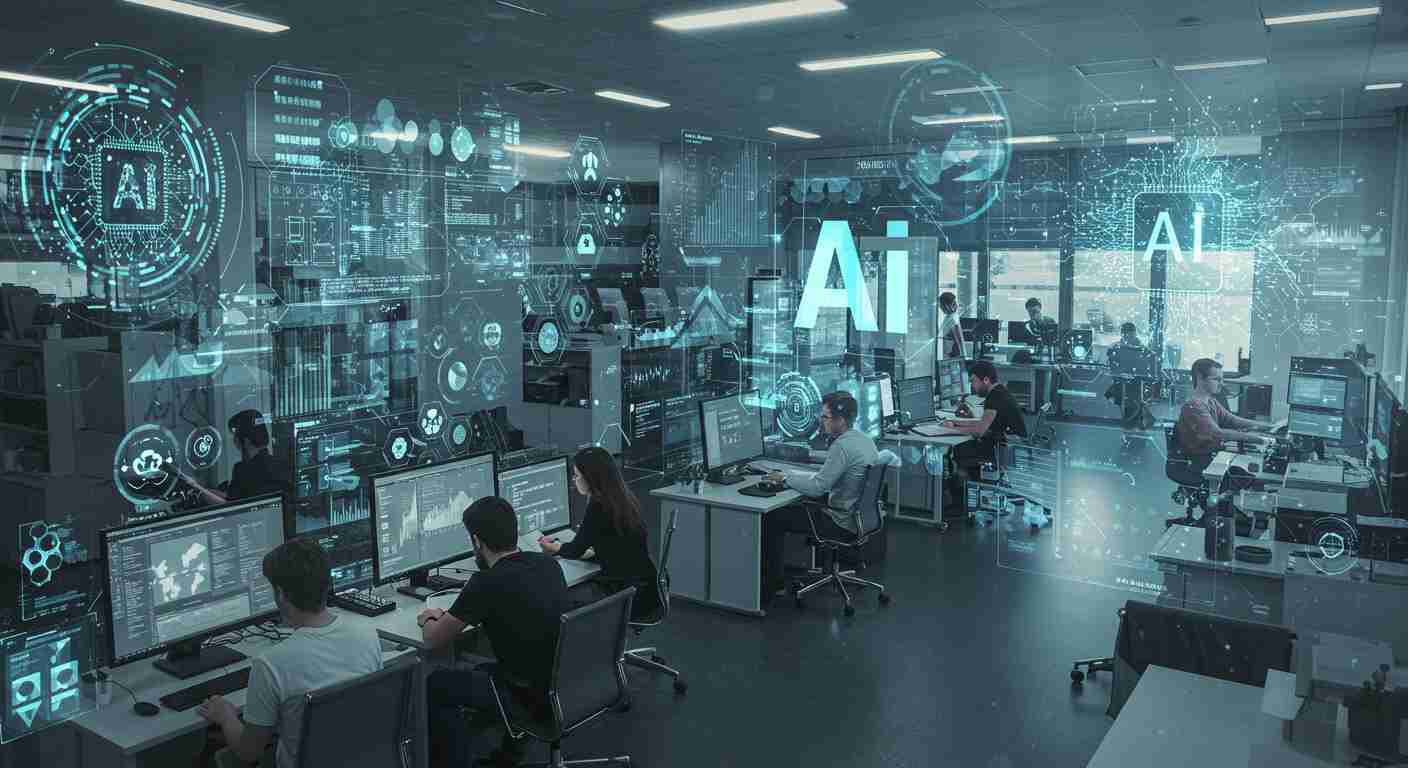
The tangible benefits for students are multifaceted. They gain invaluable experience in applying AI methodologies to solve contemporary business challenges, developing solutions that have actual market relevance. This practical application of knowledge is what distinguishes the BUAI program. Furthermore, the collaboration with Automus Consulting opens doors to internship opportunities, providing students with a crucial stepping stone into the tech industry and offering them a chance to apply their learnings in a professional setting.
The role of alumni in strengthening program development and industry connections is notably exemplified by David Binkley ’97, CEO and founder of Automus. His deep connection to USC Marshall not only facilitates this vital partnership but also underscores the power of alumni engagement. Binkley’s perspective highlights how alumni can serve as bridges between academia and industry, offering insights that are critical for program relevance and student success. He has praised the BUAI program for its distinctive focus on integrating technical depth with business acumen and its emphasis on hands-on learning. His observation that BUAI students demonstrate a practical curiosity and entrepreneurial spirit further validates the program’s effectiveness in cultivating sought-after professional qualities. This synergy between educational institutions and industry leaders, often facilitated by engaged alumni, is instrumental in shaping curricula that are both academically rigorous and professionally pertinent.
The Broader Landscape: Industry Partnerships and National AI Education Initiatives
The strategic importance of industry-university partnerships in shaping AI education is increasingly evident, offering a crucial pathway to bridge the gap between academic learning and real-world application. These collaborations are not merely beneficial; they are becoming essential for fostering innovation, ensuring equitable access to AI technologies, and accelerating the translation of research into tangible societal impact. Let’s consider this carefully: institutions are actively forging these connections to cultivate a future-ready workforce, addressing the growing demand for AI talent across various sectors.
Several universities are pioneering this approach. The City University of New York (CUNY) has launched its AI Academic Hub, a comprehensive initiative designed to lead innovation and promote inclusion in AI education. CUNY’s mission is grounded in human-centered AI principles, emphasizing augmentation rather than replacement of human intelligence, and ensuring equity and transparency. The hub’s “Impact” pillar specifically focuses on forging strategic partnerships with industry leaders and research institutions, exemplified by their receipt of a significant AI research grant from the Simons Foundation and the “Building Bridges of Knowledge” faculty fellowship program, which develops open educational resources for ethical AI engagement. This program, developed in collaboration with industry professionals from EY, JP Morgan, and Amazon, aims to provide students with foundational AI understanding and practical project experience, underscoring the value of industry involvement.
Similarly, Georgia Tech’s Tech AI initiative is dedicated to fast-tracking the practical applications of artificial intelligence across industries and government sectors. Positioned as a premier AI gathering in the Southeast, Tech AI Fest brings together academics, industry professionals, government officials, and students to foster collaborative opportunities. The initiative’s structure is built on four strategic pillars: applied research, industry partnerships, AI engineering, and workforce development. By connecting top researchers with public and private sector partners, Georgia Tech aims to translate scientific advancements into concrete societal benefits, ranging from optimizing supply chains to improving healthcare systems. A significant challenge Tech AI addresses is the shortage of highly skilled talent, and it is dedicated to preparing the next generation of AI innovators through advanced educational programs and training, directly helping to bridge the talent gap.
On a national level, the White House has recognized the critical need for widespread AI literacy and expertise. The Executive Order on Advancing Artificial Intelligence Education for American Youth, issued by President Trump, aims to significantly enhance AI education by promoting its integration into curricula, providing comprehensive AI training for educators, and encouraging early exposure to AI concepts. A key component of this order is the establishment of the White House Task Force on Artificial Intelligence Education, tasked with coordinating federal efforts and implementing the order’s objectives. Furthermore, the order prioritizes public-private partnerships with AI industry leaders and academic institutions to develop online resources for K-12 students, focusing on foundational AI literacy and critical thinking. Federal agencies are directed to seek these collaborations to identify federal funding mechanisms and support K-12 AI education. The order also emphasizes enhancing AI training for educators, directing the Secretary of Education and the NSF to prioritize AI in teacher training programs to help integrate AI fundamentals across all subject areas. The Secretary of Labor is tasked with increasing participation in AI-related Registered Apprenticeships and engaging industry organizations to develop AI skills and support work-based learning.
These national efforts and university-specific initiatives collectively underscore a broader trend: the vital role of partnerships in creating a robust AI educational ecosystem. Such collaborations provide students with diverse learning opportunities, including access to proprietary resources, mentorship from industry experts, and invaluable exposure to ethical AI frameworks. By embedding practical experience and industry insights into academic programs, universities can effectively address the talent gap, preparing graduates who are not only technically proficient but also ethically grounded and ready to contribute meaningfully to the AI-driven future. These partnerships are instrumental in shaping a generation of professionals equipped to harness AI’s transformative potential responsibly and effectively.
Conclusion: Cultivating the Next Generation of AI-Savvy Business Leaders
Finally, the integration of technical AI skills with comprehensive business acumen is paramount for cultivating the next generation of leaders in this rapidly evolving field. The emphasis on hands-on, real-world project experience, as demonstrated by initiatives such as UConn’s pioneering work in decentralized AI through its “BittBridge” program and St. John’s University’s innovation challenge that encourages students to develop solutions aligned with global sustainability goals, underscores a critical pedagogical shift. These programs immerse students in practical application, allowing them to tackle tangible business challenges and develop innovative solutions, thereby building a strong foundation for their future careers.
Furthermore, the vital role of strategic partnerships with industry leaders and the active engagement of alumni networks cannot be overstated. Institutions like Boston University‘s Questrom School of Business leverage their extensive alumni networks to provide students with invaluable career insights, mentorship, and direct pathways to professional opportunities, recognizing that personal recommendations and industry connections are critical in today’s competitive job market. Similarly, the University of Redlands‘ Office of Career and Professional Development actively connects students and alumni with employers and professional resources, fostering a lifelong support system. These collaborations not only ensure program relevance by aligning curricula with current industry demands but also significantly enhance student success by providing them with exposure to real-world scenarios and professional guidance.
Looking ahead, the landscape of AI education is in constant flux. Universities must remain agile and adaptive, proactively evolving their programs to meet the ever-increasing demands of an AI-driven future. This necessitates a continuous commitment to interdisciplinary learning, hands-on experience, and robust industry and alumni engagement. By embracing these principles, educational institutions can ensure that their graduates are not merely equipped with theoretical knowledge but are also empowered to lead, innovate, and drive transformative change in the complex and exciting world of artificial intelligence.
Reference:
- USC Marshall’s Business of AI Program Partners with Automus Consulting
- CUNY Launches AI Academic Hub to Foster Innovation and Equity in Higher Education
- Georgia Tech Launches Tech AI to Accelerate Real-World Impact of Artificial Intelligence
- The Power of Alumni Networks in a Changing Economic Landscape
- University of Redlands Office of Career and Professional Development Empowers Students and Alumni
- UConn Pioneers Experiential Learning in Decentralized Artificial Intelligence Through Yuma Partnership
- St. John’s University Students Showcase Innovation in Pitch Competition