
Introduction to UMD’s AI Initiative
The University of Maryland (UMD) is embarking on a transformative journey with its ambitious plan to expand its Artificial Intelligence Interdisciplinary Institute (AIM) by hiring 40 new faculty members. This significant faculty expansion, announced on November 14, 2024, marks one of the largest initiatives in the university’s history and reflects a robust commitment to enhancing AI research and education. The motivation behind this expansion is clear: UMD aims to position itself at the forefront of AI innovation, addressing critical societal challenges through a multidisciplinary lens. This initiative is not merely about increasing faculty numbers; it is about fostering a diverse array of perspectives that can inform and enrich AI research.
The decision to hire 40 new faculty members is part of a broader strategy to invest over $100 million in AIM over the next decade. This investment underscores UMD’s dedication to exploring the intersections of AI with pressing issues such as accessibility, sustainability, social justice, and learning. By integrating diverse disciplines, UMD seeks to cultivate a collaborative environment where scholars from fields such as arts, education, journalism, business, engineering, and social sciences can come together to tackle the complexities of AI technologies. This interdisciplinary approach is crucial; as AI continues to evolve, so too must the frameworks we use to understand its implications and applications.
Hal Daumé III, the director of AIM, emphasizes the importance of this collaborative ethos. He envisions a research ecosystem where faculty members bring their unique backgrounds and experiences to the table, allowing for a richer examination of AI’s potential and pitfalls. This diversity of thought is essential for addressing the multifaceted challenges posed by AI, particularly those that intersect with ethical considerations and societal impact. As AI technologies increasingly permeate various aspects of life, it is imperative that research and education reflect a variety of viewpoints to ensure that solutions are equitable and inclusive.
UMD’s commitment to integrating advanced AI research with interdisciplinary education signals a proactive approach to preparing students for a technology-rich future. The new faculty members will contribute to the development of innovative programs, including new AI majors, certificates, and graduate degrees. Such initiatives not only enhance academic offerings but also align with UMD’s mission to equip students with the skills necessary to navigate and contribute to an increasingly AI-driven world. This focus on education is particularly timely, as the demand for AI competencies continues to grow across industries, necessitating a workforce that is well-versed in both technical skills and ethical considerations.
The implications of UMD’s initiative extend beyond the university itself; they resonate throughout society. By prioritizing interdisciplinary collaboration and ethical frameworks in AI research and education, UMD is positioning itself as a leader in shaping the future of AI technology. This leadership role is vital as institutions grapple with the ethical challenges that accompany AI advancements, including issues of bias, accountability, and the potential for exacerbating existing inequalities. As UMD moves forward with its ambitious hiring plans, it sets a precedent for how universities can engage with the complexities of AI in a manner that is both responsible and forward-thinking.
In summary, UMD’s significant faculty expansion for its AIM is a pivotal step in advancing AI research and education. By embracing an interdisciplinary approach, the university is not only enhancing its academic offerings but also addressing the broader societal challenges that arise from the integration of AI technologies. This initiative lays the groundwork for a future where AI is developed and utilized in ways that are ethical, inclusive, and beneficial to all communities.
The Importance of Interdisciplinary Collaboration in AI Research
Interdisciplinary collaboration is increasingly recognized as a cornerstone of effective artificial intelligence (AI) research, and universities are at the forefront of this movement. The integration of diverse academic disciplines—such as psychology, sociology, engineering, and the arts—enables a more comprehensive understanding of AI technologies and their societal implications. This collaborative approach is exemplified by initiatives at institutions like the University of Maryland (UMD), UC Santa Cruz, and the University of Oxford, which are all committed to fostering interdisciplinary research that addresses complex challenges in AI.
At UMD, the establishment of the Artificial Intelligence Interdisciplinary Institute (AIM) is a significant step toward promoting interdisciplinary collaboration. The university’s initiative to hire 40 new faculty members across various fields aims to integrate insights from different disciplines into AI research. Hal Daumé III, the director of AIM, emphasizes the importance of diverse perspectives in examining AI technologies. By bringing together experts from arts, education, journalism, and social sciences, UMD is creating an environment that encourages innovative solutions to the ethical and practical challenges posed by AI. This approach aligns with findings from the article “Interdisciplinary Research in Artificial Intelligence: Challenges and Opportunities,” which underscores the necessity of interdisciplinary methods to navigate the complexities of AI and its applications across sectors like healthcare, education, and urban planning.
Similarly, UC Santa Cruz has embarked on interdisciplinary projects that leverage AI to tackle pressing issues like climate change. Funded by the National Science Foundation, these projects unite geoscientists, computer scientists, and mathematicians to develop AI models for weather and climate predictions. Assistant Professor Ashesh Chattopadhyay’s work on improving the accuracy of climate models illustrates how insights from various fields can lead to significant advancements in AI applications. By combining rigorous physics-based models with AI techniques, researchers at UC Santa Cruz are not only enhancing predictive capabilities but also addressing critical environmental challenges. This initiative highlights the potential for interdisciplinary collaboration to produce innovative solutions that benefit society as a whole.
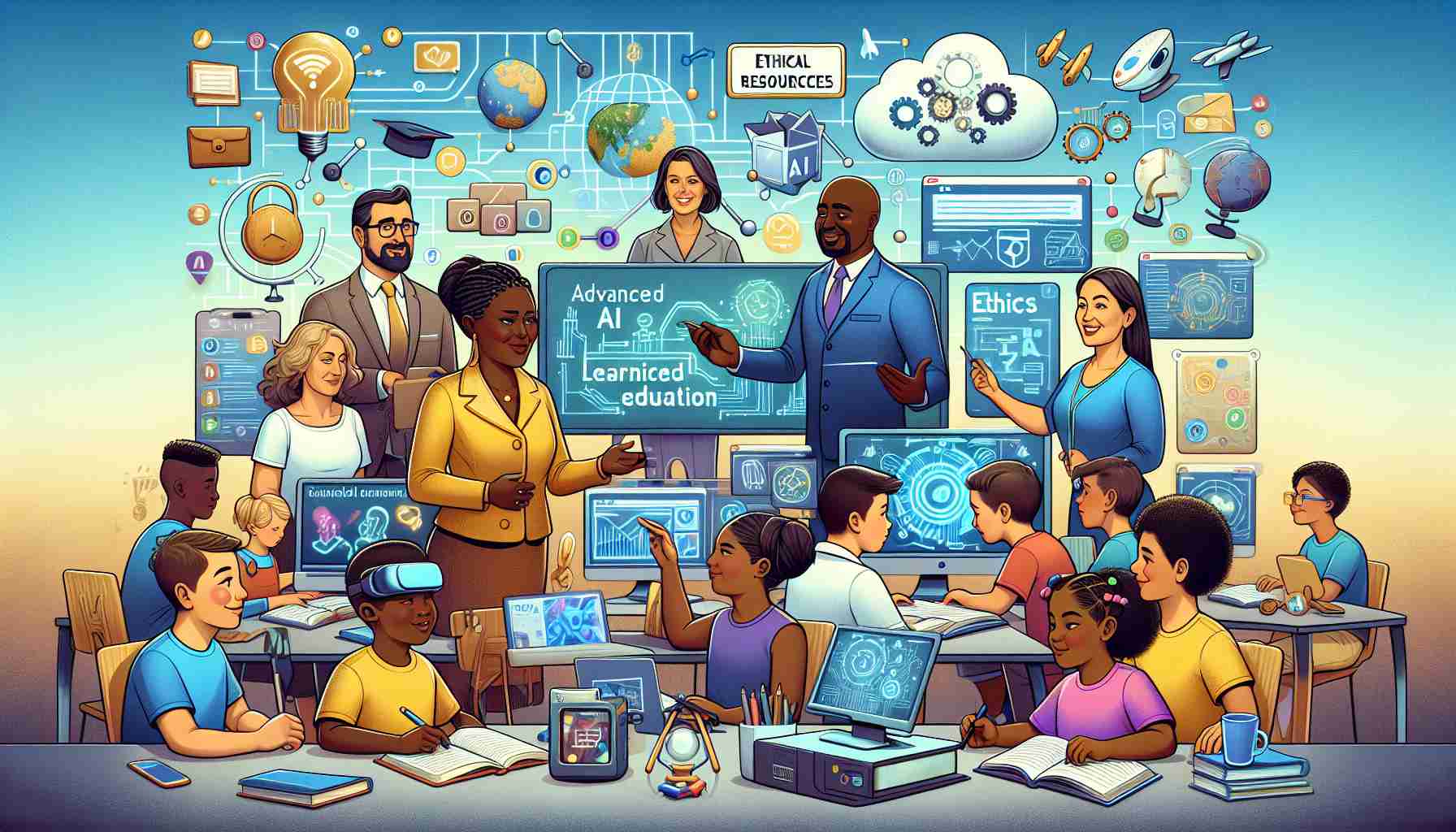
The University of Oxford also exemplifies the critical role of interdisciplinary collaboration in AI research through its newly launched research hubs focusing on AI and child development. These hubs aim to create a research-informed, ethical framework for integrating AI into educational settings. By involving educators, learners, and industry partners, Oxford’s initiative fosters dialogue and collaboration that can lead to best practices in the application of AI in education. This aligns with the findings from the Stanford Center for Racial Justice, which emphasizes the need for ethical considerations in AI deployment, particularly in addressing existing inequalities in education.
The integration of interdisciplinary insights is not only vital for the development of effective AI systems but also for addressing the ethical challenges associated with these technologies. As highlighted in the article “Addressing Equity and Ethics in Artificial Intelligence,” the potential for AI to perpetuate biases necessitates a diverse range of expertise to inform ethical guidelines and decision-making processes. Psychologists, sociologists, and ethicists play crucial roles in understanding the societal impacts of AI, advocating for transparency, accountability, and fairness in algorithmic decision-making.
Moreover, interdisciplinary collaboration can enhance AI education, ensuring that future professionals are equipped with the necessary skills to navigate the complexities of AI technologies. As organizations increasingly seek employees with a blend of technical and ethical competencies, educational institutions must adapt their curricula to reflect this demand. Initiatives like UMD’s AIM not only prepare students for careers in AI but also emphasize the importance of ethical considerations, fostering a new generation of AI practitioners who are mindful of the societal implications of their work.
In summary, the critical role of interdisciplinary collaboration in AI research cannot be overstated. By integrating insights from various fields, universities like UMD, UC Santa Cruz, and Oxford are paving the way for innovative solutions to the challenges posed by AI technologies. This collaborative approach not only enhances the effectiveness of AI systems but also ensures that ethical considerations are at the forefront of AI development. As the landscape of AI continues to evolve, fostering interdisciplinary partnerships will be essential for addressing the complexities and implications of these powerful technologies.
Ethics and Social Justice in AI Education
The ethical implications of artificial intelligence (AI) are becoming increasingly prominent as the technology permeates various facets of society, highlighting the urgent need to incorporate ethical considerations into AI education. Research indicates that AI systems can perpetuate biases and exacerbate inequalities, underscoring the importance of establishing ethical frameworks that govern the use of AI in educational contexts. This section will explore the necessity for ethical guidelines in AI education, the potential for AI to promote social justice, and the role of educational institutions in ensuring equitable access to AI technologies.
Studies reveal that AI, while possessing the potential to enhance efficiency and accessibility, can also reinforce existing societal biases. For instance, algorithms trained on biased datasets can lead to discriminatory outcomes in hiring practices, law enforcement, and educational assessments. The article “Exploring the Ethical, Social, and Educational Implications of AI in Higher Education” illustrates this concern, noting that stakeholders in higher education recognize the need for ethical guidelines to govern AI usage. The findings underscore that without a comprehensive understanding of AI’s ethical implications, institutions risk perpetuating inequalities rather than alleviating them.
Incorporating ethical considerations into AI education is not merely an academic exercise; it is vital for preparing future professionals who will navigate the complexities of AI technologies. The American Psychological Association emphasizes that AI’s dual potential to harm and help necessitates a rigorous examination of its ethical applications. This includes understanding how biases can manifest in AI systems and implementing strategies to mitigate these risks. Educational institutions must prioritize ethical training alongside technical skills, ensuring that students are equipped to critically assess the implications of their work in AI.
Moreover, initiatives aimed at promoting social justice through AI are gaining traction. For instance, organizations and educational institutions are increasingly focusing on equitable access to AI technologies, recognizing that disparities in digital literacy and technology access can exacerbate existing inequalities. The Stanford Center for Racial Justice has highlighted the potential of AI to improve educational outcomes for marginalized students, provided that ethical considerations are integrated into its deployment. Programs like the Ready to Learn initiative demonstrate how AI can be harnessed to support low-income students, showcasing the technology’s capacity to promote equity when implemented thoughtfully.
The role of educational institutions in fostering equitable access to AI technologies cannot be overstated. As highlighted in the report “Mind the AI Divide,” disparities in access to digital infrastructure and quality education can hinder the benefits of AI adoption, particularly in underrepresented communities. To address these challenges, universities must actively engage in initiatives that promote digital equity, ensuring that all students have the opportunity to develop AI competencies. This includes providing resources for AI literacy and creating partnerships with community organizations to bridge the digital divide.
Furthermore, the ethical use of AI in education necessitates community engagement and collaboration among various stakeholders. The article “Embracing Blackness, Faith, and Justice in Public Interest Technology for an Equitable AI Future” advocates for involving diverse voices in the development of AI tools and frameworks. By engaging with community leaders and organizations, educational institutions can ensure that AI technologies are designed to meet the needs of all students, particularly those from historically marginalized backgrounds.
In conclusion, the integration of ethical considerations into AI education is essential for addressing the potential biases and inequalities inherent in AI technologies. By developing comprehensive ethical guidelines and promoting social justice initiatives, educational institutions can play a pivotal role in shaping a future where AI serves as a tool for equity and inclusion. As the demand for AI competencies continues to grow, it is crucial that universities prioritize ethical training alongside technical skills, preparing students to navigate the complexities of AI in a manner that is responsible and socially conscious. The collaborative efforts of universities, organizations, and communities will be vital in ensuring that AI technologies are developed and utilized in ways that promote fairness and equity across society.
Trends in Workforce Development for AI Professionals
As artificial intelligence (AI) continues to reshape the landscape of the modern workforce, universities are increasingly recognizing the need to prepare students for a job market that is rapidly evolving due to technological advancements. Institutions like the University of Maryland (UMD) and the New Jersey Institute of Technology (2025 USNews Ranking: 84) (NJIT) are at the forefront of this shift, implementing innovative strategies to equip their students with the skills necessary to thrive in an AI-driven economy. Central to these efforts are reskilling and upskilling initiatives, which are becoming essential as industries demand a workforce that is adept in AI competencies.
The integration of AI into various sectors is driving a growing demand for professionals who possess both technical skills and an understanding of the ethical implications of AI technologies. UMD’s recent announcement to hire 40 new faculty members for its Artificial Intelligence Interdisciplinary Institute (AIM) is a testament to this trend. By expanding its academic offerings to include new AI majors, certificates, and graduate programs, UMD aims to cultivate a workforce that is not only proficient in AI but also equipped to address the ethical challenges that accompany its use. The university’s commitment to interdisciplinary collaboration ensures that students will gain insights from diverse fields, preparing them for the multifaceted nature of AI applications in the workforce.
Similarly, NJIT’s investment of over $10 million in AI initiatives reflects a proactive approach to workforce development. The establishment of the Grace Hopper AI Research Institute and a Center for Educational Innovation Excellence exemplifies NJIT’s strategy to enhance its educational offerings and foster a culture of continuous learning. By focusing on how AI can improve educational curricula and teaching methodologies, NJIT is ensuring that its students are well-prepared to meet the demands of an evolving job market.
The changing landscape of employment is further underscored by the findings from various reports, including Microsoft’s Work Trend Index, which reveals that a significant portion of the global workforce is now utilizing AI tools. This shift highlights the necessity for continuous learning and adaptability among employees. As organizations increasingly prioritize AI competencies in hiring practices, the emphasis on reskilling and upskilling becomes paramount. Companies are seeking candidates who not only possess foundational technical skills but also demonstrate a willingness to engage in lifelong learning—a trend that is expected to define the workplace by 2025.
Moreover, the integration of AI in human resources practices is revolutionizing talent assessment and management. AI-driven talent assessment tools are being employed to provide objective evaluations of employee skills and performance, thereby reducing biases that can arise from traditional evaluation methods. This evolution in HR practices is crucial for organizations striving to create equitable development opportunities for their workforce. As AI continues to augment decision-making processes, the demand for professionals who can navigate this technology responsibly will only increase.
The implications of these trends extend beyond individual job roles; they reflect a broader societal shift toward recognizing the importance of ethical considerations in AI deployment. As highlighted in the article “Addressing Equity and Ethics in Artificial Intelligence,” the potential for AI to perpetuate biases necessitates a workforce that is not only technically skilled but also socially conscious. Educational institutions play a vital role in fostering this awareness, ensuring that students are equipped to critically assess the implications of AI technologies in their respective fields.
In conclusion, the current trends in workforce development for AI professionals underscore the importance of reskilling and upskilling initiatives as universities adapt to the demands of an AI-driven job market. By investing in interdisciplinary education and promoting ethical considerations in AI, institutions like UMD and NJIT are preparing their students to navigate the complexities of the evolving workforce. As the landscape of employment continues to change, the emphasis on continuous learning and adaptability will be essential for both individual career resilience and organizational success. The collaboration between academia and industry will be crucial in shaping a future where AI technologies are developed and utilized in ways that benefit society as a whole, fostering an inclusive and equitable workforce.
Conclusion: The Future of AI at UMD and Beyond
In reflecting on the University of Maryland’s (UMD) ambitious initiatives to enhance its Artificial Intelligence Interdisciplinary Institute (AIM), it is clear that the university is positioning itself as a leader in the evolving landscape of AI research and education. By committing to hire 40 new faculty members and investing over $100 million into AIM, UMD is not only expanding its academic offerings but also reinforcing its dedication to addressing critical societal challenges through interdisciplinary collaboration. This initiative emphasizes the importance of integrating diverse perspectives from various fields, including arts, education, and social sciences, which is essential for developing AI technologies that are ethical, equitable, and beneficial to all communities.
The broader implications of UMD’s initiatives extend into the future of AI technology in society. As AI continues to permeate various aspects of life, the ethical considerations surrounding its use become increasingly critical. UMD’s focus on responsible AI development, particularly in relation to accessibility, sustainability, and social justice, sets a precedent for how educational institutions can engage in these complex discussions. By fostering an environment where interdisciplinary collaboration thrives, UMD is equipping its students and faculty to tackle the ethical challenges posed by AI advancements head-on.
Moreover, UMD’s commitment to ethical AI goes hand-in-hand with the need for ongoing dialogue among stakeholders, including educators, policymakers, industry leaders, and community members. This dialogue is essential to ensure that AI developments are inclusive and serve the interests of all communities, particularly those historically marginalized by technological advancements. As UMD leads the charge in shaping future AI research and education, it highlights the necessity for collaborative efforts that prioritize fairness, transparency, and accountability in AI applications.
In summary, UMD’s initiatives signal a transformative approach to AI research and education, emphasizing the importance of interdisciplinary collaboration and ethical considerations. As the university continues to advance its mission, it reinforces its role as a leader in shaping the future of AI technologies. The call for ongoing dialogue among various stakeholders is crucial to ensuring that AI advancements are not only innovative but also serve as a force for good in society. By prioritizing inclusivity and ethical frameworks, UMD is paving the way for a future where AI technology can truly benefit all communities, fostering a more equitable and just society for generations to come.
Reference:
- UMD Announces Major Faculty Expansion for AI Institute
- Interdisciplinary Research in Artificial Intelligence: Challenges and Opportunities
- UC Santa Cruz Research Projects Utilize AI to Address Climate Change Challenges
- Department of Education Researchers Awarded Funding for AI and Child Development Hubs
- Exploring the Ethical, Social, and Educational Implications of AI in Higher Education
- Addressing Equity and Ethics in Artificial Intelligence
- Mind the AI Divide: Shaping a Global Perspective on the Future of Work
- How AI Will Impact Racial Disparities in Education
- Embracing Blackness, Faith, and Justice in Public Interest Technology for an Equitable AI Future
- NJIT Invests Over $10 Million in Artificial Intelligence Initiatives
- Amazon Invests $110 Million in AI Research at Universities Using Trainium Chips
- Binghamton University Upgrades AI Research Computing Cluster with Donor Support
- Revolutionizing Workforce Development with AI-Driven Talent Assessment
- 8 Workplace Trends That Will Define 2025
- AI at Work: Transforming the Workplace in 2024