
Introduction: The Evolving Landscape of Higher Education Experiences
As our world continues to evolve, so too does the way we prepare young minds for the future. Higher education is no longer just about the years spent on campus; it’s increasingly about the foundational experiences that shape a student’s trajectory long before they enroll. In this light, pre-college programs have emerged as a vital component, offering immersive, skill-building opportunities that resonate with the growing demand for practical knowledge and personal growth. These programs are becoming indispensable, much like the increasing focus on hands-on learning in STEM fields and the broader emphasis on developing strong leadership qualities.
Take, for instance, Brown University‘s Pre-College Programs, which recently concluded a successful summer. These programs welcomed a remarkable array of approximately 6,000 students from 74 countries and nearly every U.S. state. This global reach is a testament to the universal appeal of providing high school students with a taste of rigorous academic life and a chance to explore diverse fields. From English and engineering to ecology and economics, Brown offered a wide spectrum of disciplines, allowing participants to dive deep into subjects that spark their curiosity. The experience of living on campus or engaging remotely provided a multifaceted introduction to the demands of a Brown education and the vibrant environment of a research university. The transformative potential of such programs is immense, shaping young perspectives and equipping them with invaluable skills for their academic and professional journeys ahead. These experiences often introduce themes of hands-on learning and career exploration, which we will delve into more deeply. It’s a chance for students to really test the waters and see what resonates, to build confidence and clarity about their future path. Take a deep breath; it’s all part of the journey.
The Power of Experiential and Hands-On Learning in STEM and Beyond
The effectiveness of pre-college programs, like those offered at Brown University, often hinges on pedagogical approaches that move beyond traditional classroom lectures. A significant contributor to their success is the emphasis on hands-on, experiential learning. This is a philosophy echoed by initiatives like the LEGO Education Science program, which aims to reignite natural curiosity and equip students with essential 21st-century skills through playful, engaging experiences. Their research, inspired by constructivism, highlights how active engagement, problem-solving, and real-world applications can profoundly enhance learning outcomes, particularly in STEM fields. Instead of merely memorizing facts, students are encouraged to explore, build, experiment, and present, fostering creativity, critical thinking, and collaboration.
For example, a student like Alyssa Kim, participating in Brown’s ‘Antibiotic Drug Discovery: Identifying Novel Soil Microbes to Combat Resistance’ course, found the hands-on nature a stark contrast to traditional lectures. Interacting with instructors actively involved in microbiology research provided a tangible connection to potential career paths. Similarly, Eshaan Mandy’s focus on DNA techniques in molecular biology within the ‘STEM for Rising 9th & 10th Graders’ program allowed him to gain practical skills directly applicable to his aspirations in DNA and gene therapy. These experiences are not just about acquiring knowledge; they are about building an understanding of scientific processes and fostering a deeper connection to the material.
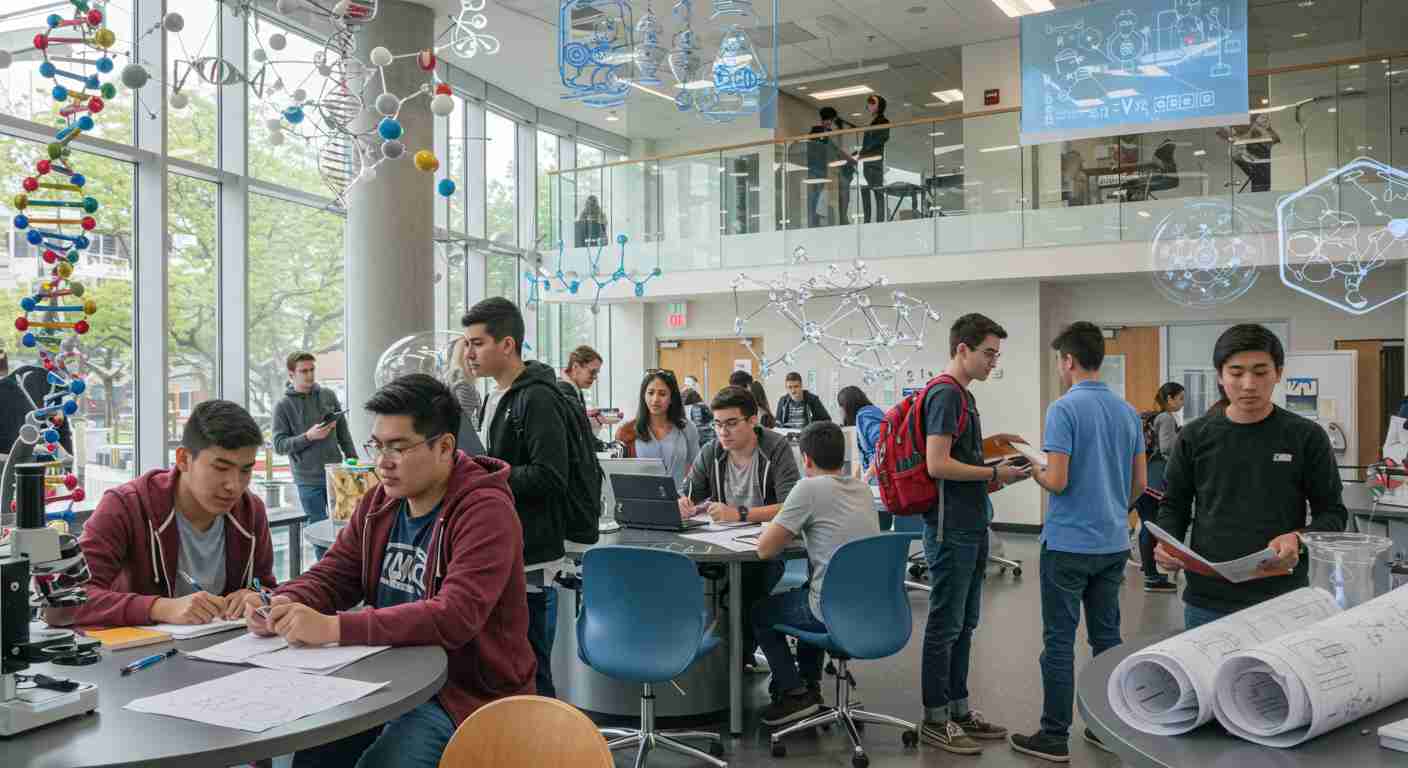
This approach aligns beautifully with the University of Miami’s ‘hands-on, minds-on’ philosophy for early science education. Professor Daryl Greenfield champions this method, encouraging children to learn by doing—growing plants and observing cause-and-effect relationships rather than just memorizing plant parts. This active engagement builds foundational scientific literacy and cultivates a lasting interest in science from a young age. Research from Frontiers in Education further supports the impact of such methods, suggesting that repeated exposure to hands-on, culturally relevant STEM activities can significantly boost students’ engagement, foster stronger STEM identities, and help bridge educational disparities. While short interventions can spark interest, sustained, practical experiences are crucial for long-term growth in confidence and self-efficacy in STEM.
The value of this experiential learning is evident when students engage directly with real-world issues. Gyselle Ready’s experience in Brown’s ‘Environmental Leadership Lab: Rhode Island,’ where she experienced the food system firsthand, offered a depth of understanding far beyond textbook learning. This direct engagement, as well as learning about the impact of public policy from an expert, provided a clarifying perspective on how academic concepts translate into tangible real-world consequences. It’s about connecting the dots and seeing how knowledge can be applied to make a difference.
Furthermore, the importance of culturally relevant content in engaging diverse student populations cannot be overstated. As highlighted in the research from Frontiers in Education, adapting lessons to local contexts and student experiences can significantly enhance engagement and learning. When students see themselves and their communities reflected in the curriculum, their interest and investment naturally grow. It’s a gentle reminder that learning is most powerful when it feels personal and relevant. So, take a moment to appreciate the richness that hands-on, relevant experiences bring to education; it truly makes a world of difference.
Charting Future Pathways: Career Exploration and Leadership Development
As we look towards shaping future leaders and innovators, it’s clear that preparation begins much earlier than college itself. Pre-college programs are increasingly becoming pivotal in equipping high school students with essential skills and insights for their academic and professional journeys. This focus on foundational development mirrors broader educational trends, particularly in STEM fields and the cultivation of leadership capabilities. Brown University’s Pre-College Programs, with their impressive global reach of nearly 6,000 students from diverse backgrounds, exemplify this trend. The programs offer a rich tapestry of academic exploration, from English and engineering to ecology and economics, providing participants with a genuine taste of university-level study and the environment of a research institution.
Beyond academic immersion, these programs offer a crucial window into potential career paths. For instance, a student like Alyssa Kim, who delved into antibiotic drug discovery at Brown, found direct inspiration from interacting with active researchers. This exposure can illuminate career trajectories that might otherwise remain unseen. The American Society for Microbiology (ASM) notes a growing trend of individuals pursuing microbiology careers with just a bachelor’s degree, underscoring the value of early exposure and hands-on experience in specialized fields. They emphasize that curiosity and active exploration are key to finding rewarding paths, encouraging students to attend career panels and connect with professionals. Similarly, NASA provides a wealth of learner opportunities across STEM fields, from high school internships focused on Earth and space research to opportunities for undergraduates in space life sciences and robotic exploration. These initiatives are designed to nurture talent and provide practical experience, offering a glimpse into the diverse roles available within these expansive sectors.
This early exploration of career possibilities is complemented by a growing emphasis on developing leadership skills. Institutions are actively fostering these capabilities through interactive and experiential learning, preparing students not just for college but for the broader challenges ahead. For example, the University of North Carolina at Charlotte (2025 USNews Ranking: 152) is developing an AI model to evaluate and enhance leadership skills, aiming to move beyond subjective perceptions to analyze objective behaviors. Researchers are identifying specific linguistic patterns indicative of ethical, transformational, charismatic, and even destructive leadership, offering a data-driven approach to development. This work recognizes that leadership isn’t just about what you say, but how you say it, and how your actions manifest in different contexts, especially relevant in today’s hybrid work environments.
Harvard Kennedy School’s Center for Public Leadership, through its fellowships, offers what is described as a transformative journey, pushing individuals to refine their leadership approaches with intensity and purpose. By fostering an environment rich in resources and populated by high-caliber individuals, these programs challenge participants to think beyond traditional frameworks and adapt to evolving complexities. Mentorship from experienced leaders and interactions with alumni provide invaluable practical insights, creating a robust support system for leadership growth.
At the undergraduate level, Bowdoin College’s iLead program serves as an excellent example of how institutions are actively cultivating leadership capabilities. This eight-week program focuses on building leadership skills through interactive and experiential learning, empowering students to recognize their influence within the college community and beyond. By covering topics like self-awareness, courageous decision-making, and teamwork, the program makes leadership accessible and inclusive, emphasizing that it’s a skill that can be cultivated through practice. These programs also often integrate practical life skills, such as navigating dorm living and managing time effectively, as noted in the Brown program summary. These elements are crucial for a holistic preparation, ensuring students are not only academically ready but also personally equipped to handle the new responsibilities and independence that college life brings. It’s all part of a larger picture of holistic development. Drink more water, stress less; these are the foundational steps for any journey.
The Broader Societal Impact: Policy, Equity, and Future Directions
When we consider the broader societal implications and future trajectories of these educational trends, it’s helpful to frame them within the larger context of public policy. Understanding historical context is crucial here; frameworks used for analyzing sport policy, for instance, can offer valuable insights into how educational policies are shaped and implemented. Just as public opinion can influence government decisions, the collective experience and perceived effectiveness of educational programs like those at Brown can, over time, inform policy adjustments and funding priorities. This is where issues of equity in education become particularly important. We can draw parallels with social justice principles, recognizing the imperative to ensure that quality STEM learning and enriching experiences are accessible to underserved communities. As discussed in the Frontiers in Education article and highlighted by the University of Miami, tailored and culturally relevant approaches are key to addressing these disparities and fostering a more inclusive educational landscape.
Furthermore, the potential of advanced alternative methods in research, as advocated by organizations like the Physicians Committee for Responsible Medicine, can be linked to the innovative approaches seen in leadership development and scientific inquiry. Moving beyond traditional, sometimes less effective, models to embrace more human-specific and accurate methodologies is a forward-thinking trend that can benefit many areas of education and research. Looking ahead, institutions like Brown, through their robust pre-college programs, contribute significantly not only to individual student development but also to the cultivation of a more informed, engaged, and capable future citizenry. This, in turn, can influence future research funding opportunities, as highlighted by initiatives from the National Science Foundation (NSF) and NASA, which often seek to support programs that foster emerging talent and drive scientific progress. It’s a ripple effect, where enriching early experiences can pave the way for greater societal advancement. Relax, and let’s think about the possibilities.
Reference:
- Brown University Pre-College Programs Equip High Schoolers with New Knowledge and Experiences
- LEGO Education Science Ignites Curiosity and Empowers Future Scientists with Hands-On Learning
- Culturally Relevant STEM Learning Boosts Underserved Students’ Engineering Skills and Identity
- University of Miami Professor Daryl Greenfield Revolutionizing Early Science Education
- Pursuing Microbiology Careers With a Bachelor’s Degree
- Mitochondrial DNA Editing Emerges as Promising Treatment for Neurodegenerative Diseases
- Base and Prime Editing Revolutionize Precision Medicine: From Bench to Bedside
- Transgenic Mice: Ineffective Models for Human Disease, Advocating for Advanced Alternatives
- UNC Charlotte Researchers Develop AI to Evaluate and Enhance Leadership Skills
- Beyond Leadership: A Transformative Journey with the Center for Public Leadership at Harvard Kennedy School
- iLead Program Cultivates Student Leadership Skills at Bowdoin College