
Northeastern’s Three Seas Program: A Deep Dive into Experiential Marine Biology
Northeastern University‘s Three Seas program stands as a preeminent example of immersive marine biology education. First, let’s consider this carefully: for four decades, this program has been actively transforming students into capable scientists. Its core structure is notably distinct, revolving around an intensive, accelerated academic year that transports graduate-level students through three remarkably different ocean environments. Simply put, students spend time in the Gulf of Maine, utilizing Northeastern’s Nahant campus, before moving to the Caribbean Sea, specifically off the coast of Panama, and finally concluding their year in the Puget Sound in Washington state.
Second, this geographical rotation is not merely a change of scenery; it is fundamental to the program’s pedagogy. By immersing students in these diverse settings – from the temperate waters of the Gulf of Maine and Puget Sound with their kelp forests and rocky intertidal zones, to the tropical coral reefs of the Caribbean – Three Seas provides unparalleled hands-on experience with a wide array of marine ecosystems. This intensive fieldwork is a cornerstone, pushing students beyond theoretical knowledge into direct engagement with the marine environment. The writer notes that since its inception, over 800 students have participated, gaining practical experience in these varied habitats.
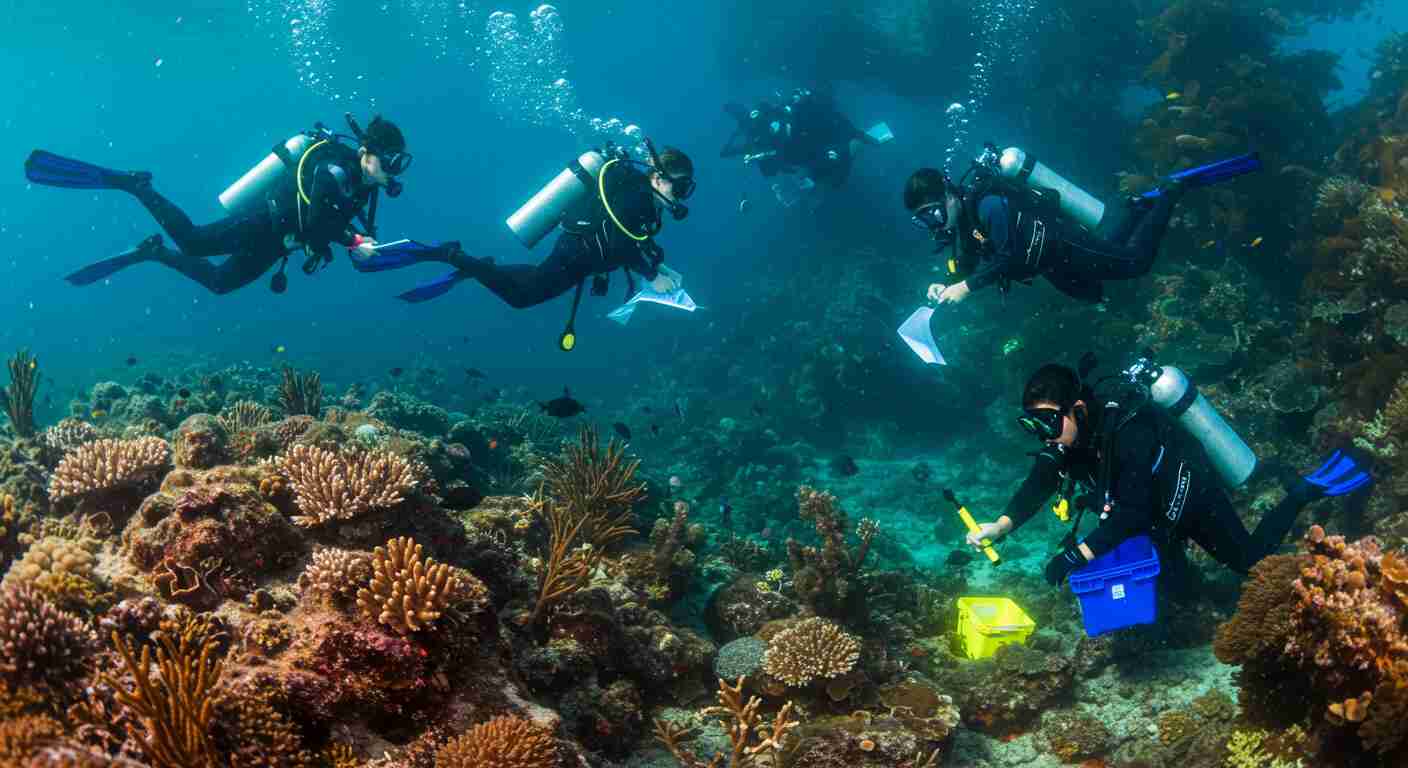
Finally, a significant and defining element of the Three Seas program is its strong emphasis on scientific diving. This is not merely recreational activity; it is a crucial tool for data collection and observation in marine research. The program requires students to become proficient scientific divers, earning certifications that are essential for careers in many marine science fields. Students spend substantial time underwater, conducting research and surveys. The challenging nature of this diving, which often involves carrying significant gear and performing detailed tasks, is a testament to the program’s commitment to producing scientists equipped with practical, in-the-field skills. While the accelerated nature of the program is demanding, the extensive hands-on experience gained in these diverse marine ecosystems, coupled with the rigorous scientific diving training, provides a unique and powerful foundation for aspiring marine biologists.
Beyond the Classroom: The Transformative Power of Fieldwork and Cohort Learning
Building on this foundation, the transformative power of the Three Seas program lies significantly in its pedagogical approach, particularly its commitment to field-based learning and its distinctive cohort model. First, let’s consider this carefully: direct experience in diverse marine environments is not just supplementary; it is central to deepening understanding and cultivating essential scientific skills. The writer notes that programs elsewhere, such as the University of Southern Mississippi (2025 USNews Ranking: 342) ‘s Summer Field Program, similarly underscore the value of intensive, hands-on experiences in coastal research. As highlighted in a USM news release, immersing students in the field builds crucial skills, enhances confidence, and profoundly deepens their understanding of ocean ecosystems. Simply put, learning directly alongside marine scientists in their natural environment is presented as an exceptionally effective way to launch careers in marine science. Similarly, research into fields like phycology, as discussed in a William & Mary article, emphasizes the need to engage students in meaningful research experiences to demonstrate the importance of organisms like algae in various ecosystems. This active engagement, moving beyond traditional classroom settings, allows students to grapple with the complexities and variability of real-world marine systems, fostering a more intuitive and practical understanding of ecological principles.
Second, the Three Seas program’s structure, which involves relocating its operational base every three months, provides an exceptional breadth of exposure. This unique approach, as mentioned by Steve Vollmer, a former student and now an instructor, allows students to experience a wider variety of ecosystems compared to programs that remain anchored in a single location. From the dynamic intertidal zones and colder waters of the Gulf of Maine and Puget Sound to the vibrant coral reefs of the Caribbean, students encounter diverse marine life and habitats, learning to adapt their research methods and observations to different conditions. This hands-on engagement in varied settings prepares them to be versatile and adaptable researchers, capable of working in a wide range of marine environments. Testimonials from students and alumni, as featured in the original article, underscore the impact of this exposure. Megan Hilbert, a current student, appreciates the opportunity to experience different locations and observe a variety of marine life, highlighting the contrast between the flora and fauna in the San Juan Islands and the potential to spot orcas. This direct interaction with different ecosystems fosters a deeper appreciation for biodiversity and the interconnectedness of marine environments.
Third, the program’s cohort model is a significant factor in its success. The writer points out that students spend the entire academic year together, forging a strong bond. Let’s consider this carefully: this shared, intensive experience creates a built-in support system and fosters a collaborative learning environment. Research into cohort-based learning, such as a pilot study on graduate public health students published in Frontiers in Education, indicates that participants feel more connected to their programs and peers, which cultivates a collaborative and welcoming classroom atmosphere. This is perceived as beneficial for developing critical thinking skills, enhancing learning experiences, and improving the ability to work effectively in diverse groups. The study also revealed that bonding and exposure to new perspectives within cohorts lead to easier learning and increased professional development opportunities. Students appreciate the opportunity to work closely with both similar and diverse peers, fostering in-depth discussions and mutual support. The University of Nevada, Reno’s Sustainability Certificate program, as reported in a university news article, also highlights the value students place on the intimate learning environment and small class sizes, noting that this setting contributes to the development of strong relationships and a sense of community among students.
Finally, the cohort model in the Three Seas program goes beyond academic support; it encourages personal and professional growth. Steve Doo, a 2020 graduate and now an assistant professor, attests to this, stating that the program and its cohort helped him realize his potential for a career in academia, a path he hadn’t initially considered. The strong peer bond encourages students to push their boundaries and consider career paths they might not have envisioned on their own. The environment within the cohort can resemble a professional setting, preparing students for the collaborative nature of scientific work. Simply put, the shared challenges, successes, and the constant interaction within the cohort create a dynamic learning environment where students not only learn from instructors and the marine environment but also from each other, building a network of peers that can last a lifetime. This synergy between intensive fieldwork and the supportive, collaborative cohort model is a powerful engine for transforming students into confident, capable scientists.
Scientific Diving and Career Pathways: Equipping Future Marine Scientists
Building on the foundational experiences of fieldwork and cohort learning, the Three Seas program places a significant emphasis on scientific diving, a skill that is both rigorous and essential for a wide array of marine science careers. First, the writer notes that, with few exceptions, students graduate having completed between 40 and 50 scientific dives. This is a substantial amount of underwater experience. Simply put, this is not recreational diving; it is diving with a specific scientific objective, requiring specialized training and certifications.
Second, the program’s diving training is comprehensive and progressive. It begins with fundamental skills, even practicing with weighted blocks in the initial stages at Nahant, and advances to more complex tasks like diving with delicate scientific equipment in clearer waters, such as those in Panama. This phased approach ensures that students develop proficiency and confidence in diverse underwater conditions. The certifications acquired through the Three Seas program are crucial, particularly the authorization from the American Academy of Underwater Sciences (AAUS). Let’s consider this carefully: AAUS authorization is a widely recognized standard in scientific diving in the United States and is often a prerequisite for participating in scientific diving operations at research institutions, universities, and government agencies. Programs like the one at the University of Southern California‘s Wrigley Institute, through their Scientific Diving Discovery Program (SDDP), specifically highlight the value of AAUS authorization in opening pathways to internships, graduate programs, and employment opportunities in ocean science and conservation. Similarly, the Florida State University Coastal and Marine Laboratory’s Academic Diving Program emphasizes adherence to AAUS training guidelines and requires a minimum of 100 hours of cumulative training, including at least 12 dedicated training dives, for authorization. The rigorous training within Three Seas, culminating in AAUS authorization, positions its graduates competitively in the field.
Third, the practical skills gained through scientific diving, such as conducting underwater surveys, counting species, and collecting data, are directly applicable to numerous career paths. These are the skills required by researchers in academic institutions, government agencies, and non-governmental organizations focused on conservation and environmental management. The program’s exposure to diverse research areas across three distinct environments further broadens students’ perspectives and skill sets, preparing them for varied roles. Mark Losavio, a 2019 graduate, highlights how the program prepared him for his current role as a conservation policy manager, emphasizing how the focus on interpreting research for the public influenced his career path. This demonstrates how the program’s emphasis on practical research skills can lead to careers beyond traditional academic research.
Fourth, the networking opportunities inherent in the Three Seas program are invaluable for career development. Students interact with various researchers and faculty across the different locations, building connections that can lead to future collaborations, internships, or employment opportunities. Megan Hilbert, a current student, specifically notes the benefit of networking with different researchers for career planning. This exposure to the broader marine science community provides students with insights into different career trajectories and helps them identify potential mentors and employers.
Finally, Three Seas graduates pursue a diverse range of careers. As highlighted in the original article, alumni like Steve Vollmer have gone on to significant careers in academia and research. Others, like Mark Losavio, are working in conservation policy, translating scientific findings into actionable strategies. The skills and experiences gained in the program are also relevant to roles in research institutions and potentially even maritime industries, which value individuals with practical marine experience and technical skills, as indicated by the types of programs offered at institutions listed in the Marine Insight article on top maritime colleges. The rigorous training in scientific diving, coupled with broad exposure to diverse marine ecosystems and ample networking opportunities, effectively prepares Three Seas graduates for a wide spectrum of professional roles dedicated to understanding, protecting, and managing the marine environment.
Three Seas in the Context of Global Marine Science: Addressing Challenges and Fostering Diversity
Finally, placing the Three Seas program within the larger context of marine science education reveals its crucial role in preparing individuals to address complex global challenges. First, let’s consider this carefully: studying diverse marine ecosystems, from coral reefs to kelp forests and deep-sea environments, presents inherent complexities. As highlighted in the Frontiers in Marine Science article, implementing conservation strategies in marine environments lags behind terrestrial systems due to challenges like data scarcity, connectivity, scale issues, and the difficulty in integrating diverse social values. Effective marine science education must equip students to navigate these complexities, and the Three Seas program’s exposure to varied environments directly contributes to this by providing firsthand experience with the distinct challenges of each.
Second, marine science is intricately linked to global issues like biodiversity loss and the sustainable provision of ecosystem services. The WHO underscores that biodiversity is fundamental to healthy ecosystems, providing essential services and underpinning human well-being, yet it faces unprecedented loss. Understanding and mitigating this loss requires scientists capable of working across different ecosystems and translating scientific understanding into conservation action. Programs like Three Seas, by immersing students in diverse habitats and emphasizing hands-on research, cultivate the practical skills and ecological understanding necessary to tackle such critical issues.
Third, the pursuit of a more effective and equitable marine science community necessitates a focus on Diversity, Equity, and Inclusion (DEI). The npj Ocean Sustainability article emphasizes that diversity is essential for high-quality interdisciplinary marine science and identifies risks to inclusivity, including unequal access to education and the persistence of practices like ‘parachute science.’ Let’s consider this carefully: programs like Three Seas can play a vital role in fostering a more inclusive scientific community by actively recruiting and supporting students from diverse backgrounds, providing them with the essential skills and experiences, such as scientific diving certification, that may have historically been barriers to entry. By promoting access and providing a supportive cohort environment, Three Seas contributes to building a more representative and collaborative scientific landscape.
Finally, the enduring impact of the Three Seas program lies in its continued relevance in training future generations to tackle critical ocean issues. By combining rigorous academic study with intensive fieldwork in diverse marine environments, a strong emphasis on practical skills like scientific diving, and fostering a supportive cohort community, the program produces graduates who are not only scientifically capable but also adaptable and equipped to address the multifaceted challenges facing our oceans in a rapidly changing world.
Reference:
- Three Seas at 40: How Northeastern’s immersive marine biology program transforms students into scientists
- Southern Miss Summer Field Program Returns for its 78th Year Providing Unforgettable Educational Experiences
- It’s time for new perspectives on algae – W&M News
- Cohort-Based Learning in Graduate Public Health: A Pilot Study
- Lake Tahoe Students Celebrate Earning Sustainability Certificates at University of Nevada, Reno
- Breaking Barriers: Students share their journeys in scientific diving
- Florida State University Coastal and Marine Laboratory Academic Diving Program
- The Challenge of Implementing the Marine Ecosystem Service Concept
- Biodiversity and Human Health: An Interconnected Crisis
- Fostering diversity, equity, and inclusion in interdisciplinary marine science