
Introduction: Texas A&M’s Ascendancy in Creative Innovation
Texas A&M University’s recent recognition as one of Fast Company’s Most Innovative Companies marks a significant milestone in its journey as a hub for groundbreaking ideas. This prestigious acknowledgment highlights the university’s pioneering efforts in augmented and virtual reality (AR/VR), placing it alongside industry giants and underscoring its commitment to innovation across diverse disciplines. Let’s consider this carefully; this achievement is a testament to the university’s forward-thinking approach and its dedication to shaping the future of creative innovation.
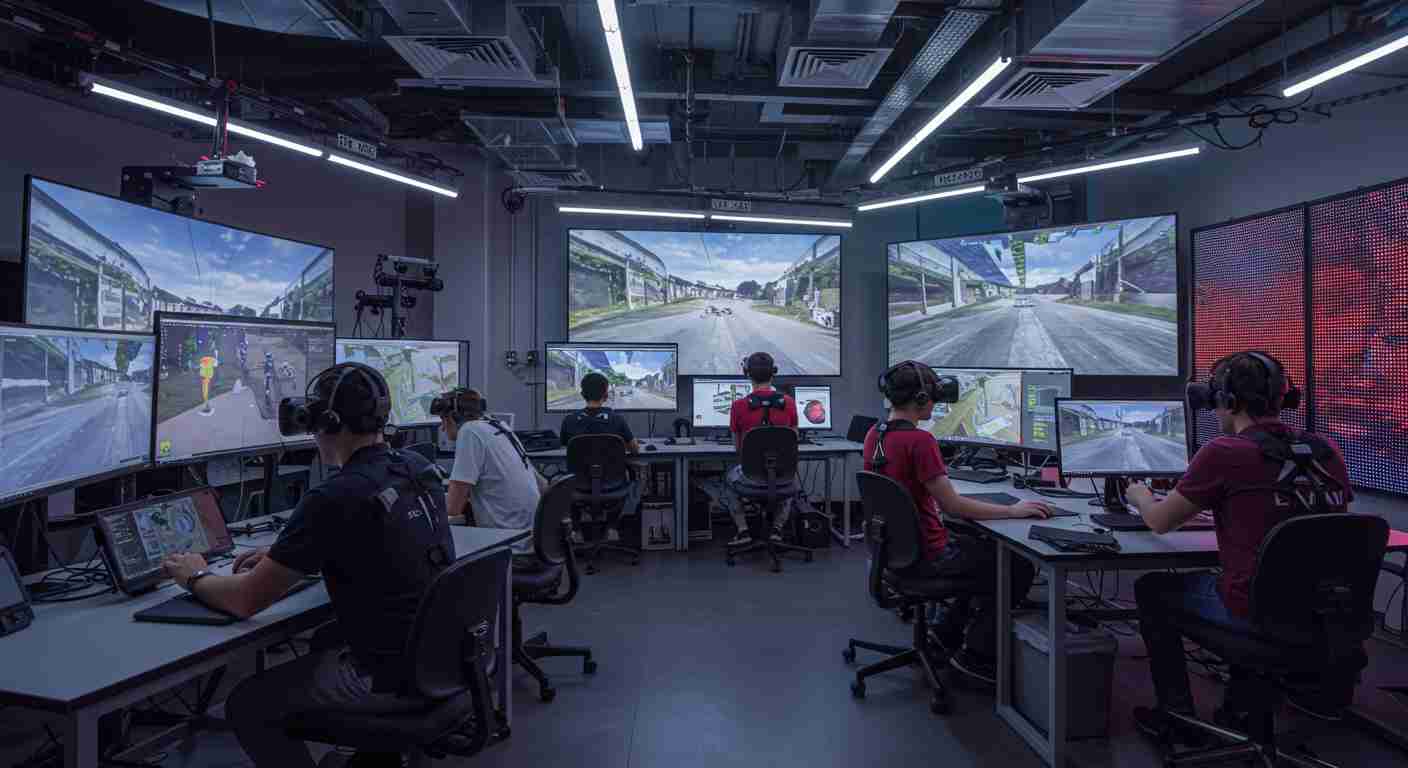
A key figure in this transformation is Tim McLaughlin, Dean of the College of Performance, Visualization and Fine Arts. His leadership has been instrumental in fostering an environment where fine arts, technology, and immersive storytelling converge. McLaughlin’s vision has led to the establishment of the Virtual Production Institute (VPI), a groundbreaking initiative that leverages real-time digital environments, extended reality, and AI-driven visualization.
Simply put, the VPI serves as a catalyst for revolutionizing various sectors, from medical training to aerospace simulations and workforce development. The institute’s focus extends beyond traditional media and entertainment, aiming to address workforce gaps in critical areas. McLaughlin emphasizes the importance of preparing students to not only meet the demands of the current job market but also to become agents of change who redefine it.
First, the College of Performance, Visualization and Fine Arts fosters an interdisciplinary approach that brings together diverse talents. Historians, theorists, performers, visual artists, designers, technologists, and engineers collaborate to tackle real-world challenges. This convergence of disciplines is crucial for fostering innovation and developing comprehensive solutions.
Second, under McLaughlin’s guidance, programs such as animation, visual effects, game design, and AR/VR consistently rank among the top public university programs. This recognition reflects the high quality of education and the cutting-edge research conducted at Texas A&M.
Finally, the university’s commitment to innovation extends beyond the classroom. Texas A&M aims to empower students to transform how people perceive, experience, and solve global challenges through creative technology and immersive media. This vision positions the university as a leader in shaping the future of creative innovation and workforce development.
The Evolution of Digital Storytelling: From Hollywood to Higher Education
The writer will now delve into the evolution of digital storytelling, tracing the career of Tim McLaughlin and the advancements in visual effects that have shaped the entertainment industry.
McLaughlin’s journey began at Industrial Light & Magic (ILM), a name synonymous with cinematic innovation. His contributions to blockbuster films such as Star Wars, Jumanji, and Avatar placed him at the epicenter of digital creature creation during a period of unprecedented technological advancement. The writer notes that ILM, founded by George Lucas, has consistently pushed the boundaries of what’s possible on screen, and McLaughlin was part of that legacy.
Let’s consider this carefully. The evolution of digital creature creation in film is a story of relentless innovation. Early CGI characters often appeared rudimentary compared to today’s standards. However, milestones like Gollum in The Lord of the Rings marked a turning point. Andy Serkis’s performance, captured through groundbreaking performance capture technology, imbued Gollum with a depth of emotion rarely seen in digital characters. This achievement set a new benchmark for character animation, demonstrating the power of seamlessly blending human performance with digital artistry. The writer emphasizes that Gollum’s success hinged not just on technological prowess but also on the emotional resonance of the character.
Following Gollum’s success, characters like Davy Jones from Pirates of the Caribbean further refined the art of digital creature creation. The seamless integration of Bill Nighy’s real eyes with the CGI model of Davy Jones was a groundbreaking achievement, allowing audiences to connect with the character on a deeper emotional level. The writer points out that this fusion of practical and digital effects blurred the lines between reality and illusion, enhancing the overall believability of the character. The Academy Award won by the film for its visual effects is a testament to its innovative approach.
Avatar represented another quantum leap in visual effects. James Cameron’s visionary film pioneered performance capture technology and virtual photography, creating the immersive world of Pandora and its inhabitants, the Na’vi. The writer observes that Avatar wasn’t just about creating visually stunning creatures; it was about building an entire ecosystem, a believable and vibrant alien world. The level of detail, from the bioluminescent flora to the nuanced expressions of the Na’vi, set a new standard for digital filmmaking and influenced the future direction of cinematic storytelling.
This editor notes that these examples – Gollum, Davy Jones, and the Na’vi – illustrate a clear progression in digital creature creation. Each character pushed the boundaries of technology, demanding innovative solutions and setting new standards for visual storytelling. From motion capture to advanced rendering techniques, the film industry has continually sought to create more realistic and emotionally engaging digital characters.
Recognizing the growing demand for professionals skilled in both art and technology, McLaughlin returned to Texas A&M in 2007. His mission was to transform the university’s visualization program into a nationally recognized center of excellence. This editor finds this transition from Hollywood to higher education particularly compelling, as it represents a commitment to nurturing the next generation of creative innovators.
The writer emphasizes that McLaughlin’s efforts at Texas A&M focused on bridging the gap between artistic vision and technological expertise. He understood that true innovation requires individuals who can not only imagine groundbreaking concepts but also possess the technical skills to bring them to life. The program aimed to equip students with a comprehensive understanding of both the artistic and technological aspects of digital storytelling.
Advancements in CGI and virtual production techniques have profoundly influenced storytelling and entertainment. Virtual production, in particular, has revolutionized filmmaking by allowing directors and visual effects artists to make real-time adjustments to lighting, colors, and environments during filming. The writer believes that this real-time feedback enhances creative control and streamlines the production process.
The writer notes that films like Interstellar utilized LED screens to display space travel animations, allowing actors to react in real-time to the visuals. This technique creates a more immersive and authentic experience for both the actors and the audience. The Mandalorian, a Star Wars spin-off series, was filmed almost entirely on soundstages using virtual production techniques, demonstrating the potential for creating expansive and believable worlds without extensive location shoots.
Simply put, these advancements have not only enhanced the visual spectacle of films and television shows but have also opened up new creative possibilities for storytellers. Digital creature creation and virtual production techniques have empowered filmmakers to bring their most imaginative visions to life, creating immersive and engaging experiences for audiences worldwide. This editor finds this to be a crucial point: technology serves the story, not the other way around.
Texas A&M’s Interdisciplinary Ecosystem: Fostering Innovation Through Collaboration
This section will delve into the interdisciplinary nature of Texas A&M’s approach to creative innovation. It will describe how the university brings together historians, theorists, performers, visual artists, designers, technologists, and engineers to address real-world challenges. The section will explore the benefits and challenges of interdisciplinary collaboration in higher education, drawing on examples from other universities like the University of Maryland, Baltimore County (UMBC) and Baylor University. It will also discuss how collaborative infrastructures, such as the CoNavigator tool at UMBC, can enhance interdisciplinary teaching and research. The importance of integrating diverse perspectives and methodologies to solve complex problems will be emphasized.
Texas A&M’s approach to creative innovation is deeply rooted in interdisciplinary collaboration. The university recognizes that many of the most pressing challenges facing society today require solutions that transcend traditional disciplinary boundaries. To this end, Texas A&M actively fosters an environment where historians, theorists, performers, visual artists, designers, technologists, and engineers can come together to address real-world issues. This editor finds that this diversity of perspectives is not merely a desirable attribute but an essential ingredient for groundbreaking innovation.
Let’s consider this carefully. The benefits of interdisciplinary collaboration in higher education are numerous. First, it allows for a more comprehensive understanding of complex problems. Each discipline brings its unique perspective, methodologies, and knowledge base to the table. By integrating these diverse viewpoints, researchers and students can develop more nuanced and holistic solutions.
Second, interdisciplinary collaboration fosters creativity and innovation. When individuals from different backgrounds come together, they are more likely to challenge assumptions, think outside the box, and generate novel ideas. The writer notes that the cross-pollination of ideas can lead to unexpected breakthroughs and the development of entirely new fields of inquiry.
Third, interdisciplinary collaboration prepares students for the complexities of the modern workforce. As industries become increasingly interconnected, employers are seeking individuals who can think critically, solve problems collaboratively, and communicate effectively across disciplinary boundaries. This editor believes that interdisciplinary education equips students with the skills and competencies they need to thrive in this dynamic environment.
However, interdisciplinary collaboration is not without its challenges. Communication barriers, differing methodologies, and conflicting priorities can all hinder the collaborative process. It requires a willingness to learn from others, to compromise, and to bridge disciplinary divides.
The writer emphasizes the importance of creating collaborative infrastructures to support interdisciplinary teaching and research. These infrastructures can include shared workspaces, joint research projects, and interdisciplinary courses and programs. Additionally, collaborative tools, such as the CoNavigator tool developed at the University of Maryland, Baltimore County (UMBC), can enhance interdisciplinary collaboration by facilitating communication, coordinating tasks, and aligning expectations.
UMBC’s Interdisciplinary Consortium for Applied Research in Ecology and Evolution (ICARE) program provides a compelling example of how collaborative infrastructures can support interdisciplinary education. The ICARE program brings together students and faculty from environmental science, engineering, and social science to address environmental problems. The program incorporates virtual sessions, orientation activities, and community-building events to foster a sense of community and collaboration among participants.
This editor notes that the ICARE program also utilizes CoNavigator sessions to enhance interdisciplinary collaboration. These sessions involve activities such as mapping ideas, setting goals, and building bridges between different perspectives. The study found that trainees often took on significant responsibilities in shaping the collaborative process, acting as mediators between various stakeholders.
Baylor University also offers several examples of successful interdisciplinary programs, demonstrating a commitment to breaking down traditional academic silos. The Interdisciplinary Core at Baylor, for example, brings together faculty from different disciplines to teach foundational courses that explore complex issues from multiple perspectives.
Simply put, the integration of diverse perspectives and methodologies is essential for solving complex problems. Whether it’s addressing environmental challenges, developing new technologies, or creating innovative works of art, interdisciplinary collaboration allows us to leverage the collective intelligence of individuals from different backgrounds. Texas A&M’s commitment to fostering this type of collaboration positions the university as a leader in creative innovation.
The Virtual Production Institute: Revolutionizing Industries Beyond Entertainment
The Virtual Production Institute (VPI) at Texas A&M represents a significant investment in the future of creative technology, extending its reach far beyond the traditional boundaries of media and entertainment. The institute leverages real-time digital environments, extended reality (XR), and AI-driven visualization to revolutionize various industries, from medical training to aerospace simulations and workforce development. This editor notes that the VPI’s mission is to apply cutting-edge entertainment technologies to address real-world challenges across diverse sectors.
First, let’s consider the application of virtual production in medical training. Traditional medical education often relies on cadavers or simulated scenarios that may lack the realism and complexity of actual surgical procedures. Virtual production offers a solution by creating immersive, interactive training environments that allow medical students and professionals to practice complex surgeries and procedures in a safe and controlled setting. The writer emphasizes that this not only enhances their technical skills but also improves their decision-making abilities and confidence.
Second, virtual production is transforming aerospace simulations. Designing and testing new aircraft and spacecraft is an expensive and time-consuming process. Virtual production allows engineers and designers to create highly realistic simulations of flight conditions, aerodynamic forces, and system performance. This enables them to identify potential problems early in the design process, reducing the need for costly physical prototypes and accelerating the development cycle. This editor finds that this application of VP can significantly reduce costs and improve the safety and reliability of aerospace vehicles.
Third, virtual production is playing an increasingly important role in workforce development. As industries become more technologically advanced, there is a growing need for workers with the skills to operate and maintain complex equipment and systems. Virtual production can be used to create interactive training programs that simulate real-world work environments, allowing employees to learn new skills and procedures in a safe and engaging way. The writer notes that this is particularly valuable in industries such as manufacturing, construction, and energy, where hands-on training is essential.
The trend of hybrid virtual production is also gaining momentum, combining elements such as LED walls, in-camera visual effects (ICVFX), and mixed reality (MR) to create more immersive and flexible production environments. Companies like Sony Electronics, Blackmagic Design, and Ross Video are at the forefront of this trend, developing innovative technologies and workflows that enable filmmakers, broadcasters, and advertisers to create stunning visual content more efficiently and cost-effectively.
Let’s consider this carefully. Sony’s Verona line of modular LED displays, featuring Crystal LED technology, provides realistic imagery and flexible LED solutions for broadcast, cinema, and virtual production projects. Blackmagic Design is meeting the demand for locational flexibility with cloud-based workflows and high-quality LED wall displays using high-resolution cameras. Ross Video is emphasizing control and integration across elements with its XPression Tessera platform, enabling real-time content changes during live events and creating multiuse studio environments.
These examples illustrate the increasing adoption of virtual production across various industries. Broadcast programming, motion pictures, and advertising are all benefiting from the cost and time savings, remote collaboration capabilities, and early access to marketing assets that virtual production offers. This editor believes that these benefits are driving the rapid growth of the virtual production market.
Magicbox, for instance, is providing mobile VP solutions with its uniquely equipped trailers, enabling producers to save money by providing additional production space for alternate takes and key lines, matching the lighting and other aspects of the main studio. The writer emphasizes that this flexibility allows for greater creative control and efficiency in the production process.
Simply put, virtual production is revolutionizing content creation and transforming industries beyond entertainment. Its ability to create immersive environments, reduce costs, and facilitate remote collaboration makes it an increasingly valuable tool for businesses and organizations across a wide range of sectors. As technology continues to advance, this editor anticipates that virtual production will play an even more significant role in shaping the future of work and entertainment.
Empowering Future Innovators: Texas A&M’s Vision for Workforce Development
Texas A&M’s commitment to workforce development extends to sectors vital to the modern economy, including healthcare, digital twins, aerospace, and the military. At the heart of this commitment lies Tim McLaughlin’s leadership philosophy, which emphasizes preparing students to be individuals of character, excellence, and impact, ready to redefine the job market. This editor believes that this focus on character and impact sets Texas A&M apart, ensuring its graduates are not just technically proficient but also ethically grounded and socially conscious.
Let’s consider this carefully. Success in the rapidly evolving digital world demands a diverse range of skills and competencies. Beyond technical expertise, employers are seeking individuals who possess strong problem-solving abilities, critical thinking skills, and the capacity for lifelong learning. Texas A&M aims to equip its students with these essential skills, ensuring they are well-prepared to adapt to the changing demands of the 21st-century workforce.
The writer notes that universities like Lovely Professional University (LPU) are also recognizing the importance of preparing students for careers in the digital realm. LPU offers comprehensive programs in multimedia, animation, gaming, and UI/UX design, aligning its curriculum with the demands of the modern market. LPU’s emphasis on practice-based teaching methods, including live projects and industry-based curricula, provides students with valuable hands-on experience. The high placement rates of LPU graduates in top companies demonstrate the effectiveness of this approach.
This editor highlights that these programs provide students with the technical skills and creative abilities needed to succeed in these fields. Moreover, LPU’s focus on industry connections and experiential learning ensures that students are well-prepared for the challenges and opportunities of the modern workplace.
Simply put, Texas A&M’s vision for empowering students extends beyond the acquisition of technical skills. The university seeks to cultivate individuals who can drive meaningful change across various industries through digital storytelling, creative technology, and immersive media. This editor believes that this vision aligns with the growing recognition that creativity and innovation are essential drivers of economic growth and social progress. Through the College of Performance, Visualization and Fine Arts, Texas A&M provides students with the tools and opportunities to become leaders in their respective fields, shaping the future of creative innovation and workforce development.
Reference:
- Shaping The Future Of Creative Innovation – Texas A&M Stories
- 10 CGI Characters That Pushed Special Effects Teams to the Limit
- Building Collaborative Infrastructures for an Interdisciplinary Higher Education Master’s Program
- Interdisciplinary Studies: Preparing Students for a Complex World
- Hybrid Uses of Virtual Production Take Hold Industry-Wide
- Virtual Production Workflows Transform Content Creation
- Top Multimedia, Animation, Gaming & UI/UX Colleges | LPU