
Moving to the United States to study means learning a new academic system, a new culture and, often, a new language at the same time. For international students, these everyday adjustments now come alongside frequent changes in federal immigration policy. This guide explains the challenges students most often face, what support U.S. campuses typically offer, how the policy picture stands in November 2026, and practical steps that help students stay on track.
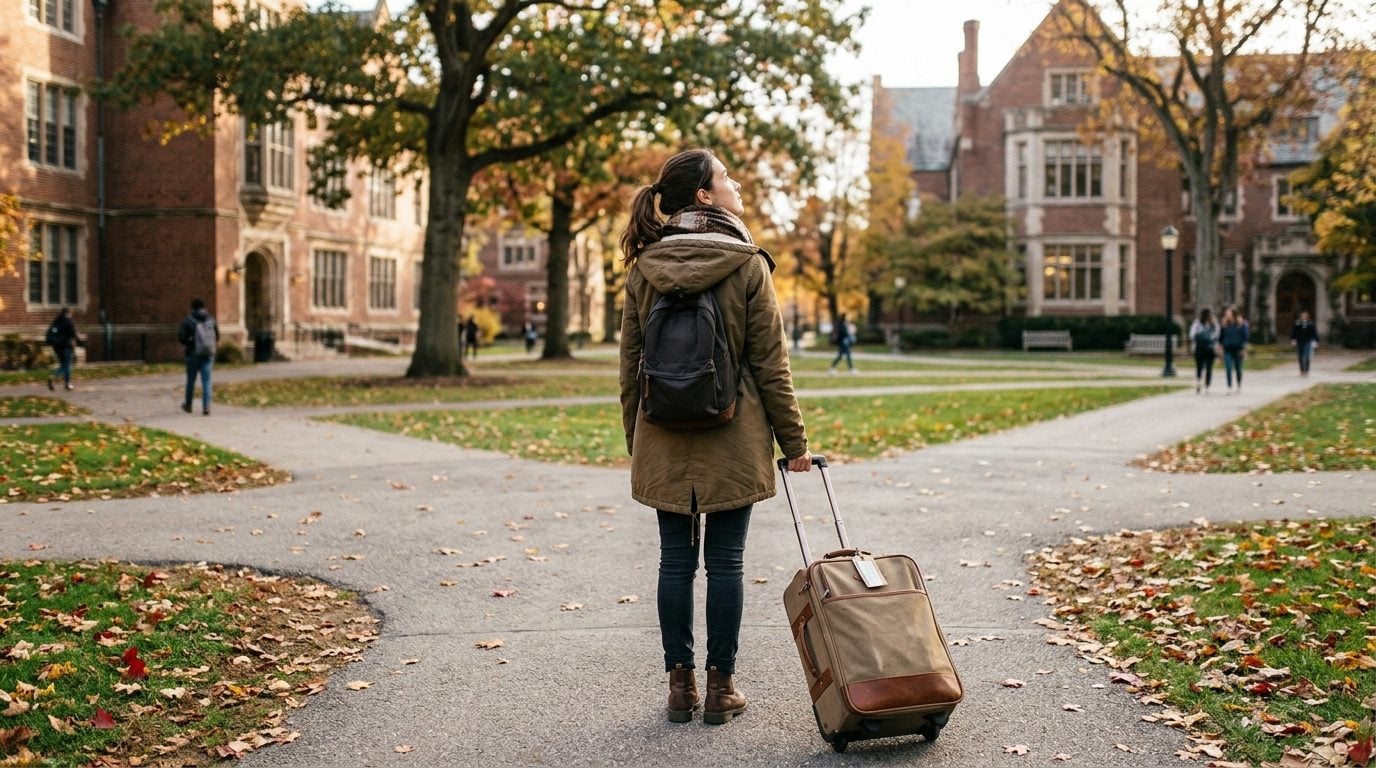
Common challenges in the first year
Different academic expectations
Many U.S. courses grade class participation, ask students to question readings and professors, and rely on group projects and frequent smaller assignments rather than one final exam. Students who come from systems where speaking up uninvited is seen as disrespectful can appear “quiet” even when they understand the material well. Learning the unwritten rules of office hours, participation, citation and academic integrity early prevents many first-semester problems.
Language beyond test scores
A strong TOEFL or IELTS score does not always prepare students for fast seminar discussions, slang, regional accents or discipline-specific writing. Most universities run writing centers, conversation partner programs and English for academic purposes courses; using them early is common and is not a sign of weakness.
Cultural adjustment and homesickness
Culture shock rarely happens all at once. Students often describe an exciting first few weeks followed by frustration with unfamiliar social norms, food, weather or bureaucracy, and then gradual adjustment. Homesickness tends to peak in the first semester and around holidays. Building a mix of friendships, with other international students and with domestic classmates, and keeping regular contact with family both help.
Local conditions nobody mentions in the admission letter
Climate and regional hazards can be a real adjustment. Ohio State doctoral student Suci Nazier, a Fulbright scholar from Jakarta, Indonesia, who had studied in Tanzania and the Netherlands before coming to Columbus, told Ohio State News that she had prepared for Midwestern winters but not for Ohio’s hot summers (Ohio State News, October 9, 2025). In Florida and along the Gulf and Atlantic coasts, hurricane season runs from June 1 to November 30, something many students have never experienced.
What campus support looks like: three examples
Ohio State: training faculty and staff with students’ own stories
Ohio State University‘s Office of International Affairs (OIA) has run an International Student Experience Workshop Series for faculty and staff since 2015, started in response to staff questions about how best to help international students. Each semester it offers two sets of three workshops on (1) pre-arrival, check-in and orientation, (2) cultural adjustment and (3) academics and career expectations. Each session combines OIA staff presentations on immigration rules with a panel of international students who answer audience questions. “Often, the people working with them don’t know what they don’t know,” program officer Caroline Omolesky said. International students make up about 10% of the Columbus campus student body (Ohio State News). The series continued in autumn 2026 (Ohio State OIA).
University of South Florida: preparing newcomers for hurricanes
During its fall 2025 Week of Welcome, the International Student Support team at the University of South Florida held a hurricane preparedness event on August 28, 2025, at the Marshall Student Center in Tampa, attended by more than 300 students from countries including Pakistan, Vietnam, Zimbabwe and the Bahamas. Students learned how to build a supply kit, how the university responds to storms, where to find reliable storm information and how flood zones affect off-campus housing, and received supply checklists. USF emergency management coordinator Rob Marlowe noted that many students had never experienced severe weather of this kind, and that the university has a responsibility to give them the information to make informed decisions (USF World, September 4, 2025).
Virginia Tech: inclusive teaching strategies
At Virginia Tech, faculty development programs share classroom strategies that help international students participate (Virginia Tech News, March 31, 2025):
- Language and Culture Institute instructor Mike Garrett invites quieter parts of the room to contribute, offers anonymous written responses so students can participate without feeling exposed, and treats silence as possible reflection rather than disinterest.
- Rob Emmett of the Cranwell International Center recommends explaining the “why” behind academic processes and offering several ways to demonstrate participation.
- Sharing discussion questions about 24 hours in advance gives non-native speakers time to prepare.
Students can use the same ideas from their side: read ahead, prepare one or two points before each discussion, and ask instructors in office hours how participation is graded.
The policy picture in November 2026
Federal rules affect how long students can stay, how they travel and what work options they have after graduation. The key items to watch:
- Duration of status (D/S): F-1 and J-1 students are still admitted for “duration of status.” The Department of Homeland Security published a final rule in July 2026 that would replace D/S with fixed admission periods tied to the program end date (generally capped at four years, with extensions filed with USCIS) and shorten the F-1 grace period from 60 to 30 days. It was scheduled to take effect September 15, 2026, but on September 14, 2026 a federal judge issued a nationwide preliminary injunction, so the previous rules remain in force while the lawsuit continues (Carnegie Mellon University Office of International Education; Faegre Drinker, July 2026).
- H-1B $100,000 payment: A September 2025 presidential proclamation required a $100,000 payment for certain new H-1B petitions. On June 8, 2026, a federal district court in Massachusetts set aside the implementing guidance, the First Circuit declined to pause that ruling in July 2026, and USCIS says it is complying with the decision but would collect the payment if the ruling is reversed (USCIS, H-1B Specialty Occupations).
- Proposed OPT fees: On October 8, 2026, DHS proposed new fees connected to Optional Practical Training ($70,000 for the first OPT request and $30,000 for later ones). This is a proposal only; the comment period closed November 9, 2026, and it is not in effect (Federal Register, October 8, 2026).
- Visa screening and travel restrictions: Since June 2025, F, M and J visa applicants must set their social media accounts to public for vetting (U.S. Department of State). Entry restrictions were expanded to 39 countries effective January 1, 2026 (Higher Ed Dive). Students from affected countries should talk to their international office before any travel.
Because these rules change quickly, treat your school’s international student office (often called ISSS, OIS or OIA) as the authority for your own case, and read its emails.
A practical checklist
- Before arrival: attend your school’s pre-arrival webinars, confirm the I-20 reporting date, and arrange housing and health insurance. See Study in the States: Form I-20.
- Stay in status: keep a full course load each term, get approval before dropping below full time, report address changes within 10 days, and get a travel signature before leaving the country (Study in the States: Maintaining Status). Check your I-94 record after every entry at CBP’s I-94 site.
- Use academic support early: writing centers, tutoring, office hours and academic advising are included in tuition.
- Look after your mental health: campus counseling centers offer free or low-cost sessions, and many have counselors experienced with international students. In a crisis anywhere in the U.S., call or text 988 (988 Suicide & Crisis Lifeline). A documented medical condition can qualify an F-1 student for a reduced course load with the DSO’s approval.
- Build a network: join international student orientation, conversation partner programs, cultural associations and at least one club unrelated to your home country.
- Learn local safety: sign up for campus emergency alerts, learn what severe weather is common where you live, and find out how your campus handles closures.
- Plan for work early: CPT, OPT and STEM OPT each have their own rules and deadlines; meet with your international office and career center in your first year (Study in the States: Working in the United States).
References
- International student perspectives are foundation of Ohio State workshops (Ohio State News, October 9, 2025)
- Autumn 2026 International Student Experience Workshop Series (Ohio State OIA)
- USF hosts hurricane preparedness event for international students (USF World, September 4, 2025)
- Helping international students thrive in the classroom (Virginia Tech News, March 31, 2025)
- Preliminary injunction on the F-1/J-1 duration of status rule (Carnegie Mellon University, September 2026)
- DHS final rule ending duration of status (Faegre Drinker, July 2026)
- H-1B Specialty Occupations (USCIS)
- Optional Practical Training Fees, proposed rule (Federal Register, October 8, 2026)
- Announcement of expanded screening and vetting for visa applicants (U.S. Department of State, June 2025)
- Trump expands travel bans and restrictions to 39 countries (Higher Ed Dive)
- Maintaining Status (Study in the States)
- 988 Suicide & Crisis Lifeline