
The Evolving Landscape of Education in the Age of AI
The integration of artificial intelligence (AI) into the workforce is not just a technological shift; it is a profound transformation that is reshaping the educational landscape and the very nature of college education. As industries increasingly adopt AI tools like ChatGPT, the demand for skills that complement these technologies is rising. Dr. Shrihari Sridhar, a senior associate dean at Texas A&M University’s Mays Business School, emphasizes that critical thinking and interpersonal skills will be paramount in this new era. He argues that while AI can handle repetitive tasks, it cannot replicate the nuanced human abilities that are essential for complex problem-solving and relationship-building in the workplace.
The concerns of young Americans, particularly those aged 18 to 24, regarding job security in an AI-driven job market are palpable. A recent survey by ADP Research highlights that many young individuals fear that AI could replace their job functions, prompting a shift in their career considerations towards vocational training or blue-collar jobs, which are perceived as more resistant to automation. This trend reflects a broader anxiety about the future of work, as young professionals grapple with the implications of AI on their career trajectories.
However, Dr. Sridhar cautions against undervaluing a college education in this context. He asserts that many roles requiring a college degree may not be as susceptible to AI displacement as commonly believed. For instance, while AI can efficiently manage initial customer inquiries in a call center, it is the human employees who will be needed to address more complex issues that require emotional intelligence and trust-building. This collaborative model, where humans and AI work together, underscores the importance of developing a skill set that includes not only technical proficiency but also the soft skills that AI cannot replicate.
The shift towards vocational training is understandable, especially in light of the immediate job security it seems to offer. Yet, Dr. Sridhar advocates for a balanced approach, suggesting that educational institutions must adapt their curricula to prioritize the development of critical thinking, creativity, and emotional intelligence. These competencies are typically cultivated in a college environment and are essential for navigating the complexities of an AI-augmented workplace. As AI takes over mundane tasks, the demand for employees who can think critically and communicate effectively will only increase.
Moreover, the evolving job market necessitates a re-evaluation of how educational institutions prepare students for future leadership roles. Dr. Sridhar raises important questions about the dynamics of leading teams that include both human workers and AI systems. He emphasizes the need for future managers to foster community, respect, and values within these teams, highlighting that understanding AI’s capabilities while enhancing human skills will be crucial for long-term success.
As we look ahead, it is clear that the role of a college education will be more significant than ever in an AI-driven world. The insights from Dr. Sridhar serve as a reminder that while technology evolves, the human elements of creativity, critical thinking, and emotional intelligence will remain irreplaceable. Educational institutions must rise to the challenge, adapting their approaches to ensure that students are not only equipped to thrive in a collaborative environment with AI but also prepared to lead in a future where human and artificial intelligence coexist.
The Importance of Critical Thinking and Interpersonal Skills
In the age of artificial intelligence (AI), the demand for specific human skills is becoming increasingly pronounced, as highlighted by various experts and studies. As AI technologies continue to evolve and integrate into the workplace, the need for competencies that machines cannot replicate—such as critical thinking, emotional intelligence, and effective communication—has surged. According to the Forbes Technology Council, while AI can automate numerous tasks, it lacks the nuanced understanding and creativity that human professionals bring to their roles. This distinction is crucial as organizations navigate the complexities of an AI-enhanced work environment.
Critical thinking stands out as one of the most essential skills in this new landscape. Professionals must be able to interpret AI-generated insights within the broader context of their industry, ensuring that decisions are informed and relevant. For instance, in sectors like pharmaceuticals, where compliance and accuracy are paramount, the ability to critically assess AI outputs is vital. AI can process vast amounts of data, but it is the human ability to reason and apply scientific thinking that ensures these insights lead to sound decisions. This necessity for human oversight is echoed in the World Economic Forum’s findings, which indicate that as AI takes over routine tasks, the demand for individuals who can analyze complex situations and develop innovative solutions will only grow.
Emotional intelligence is another irreplaceable skill in the workplace. As AI systems handle more analytical tasks, the ability to understand and respond to human emotions becomes increasingly important. In customer service roles, for example, AI can manage initial inquiries, but it is the human employee who must build trust and address more complex issues that require empathy and interpersonal skills. The ability to navigate challenging situations and foster genuine connections will set professionals apart in an AI-driven world. This sentiment is supported by research indicating that organizations will increasingly value employees who can effectively manage relationships and lead teams that include both human and AI members.
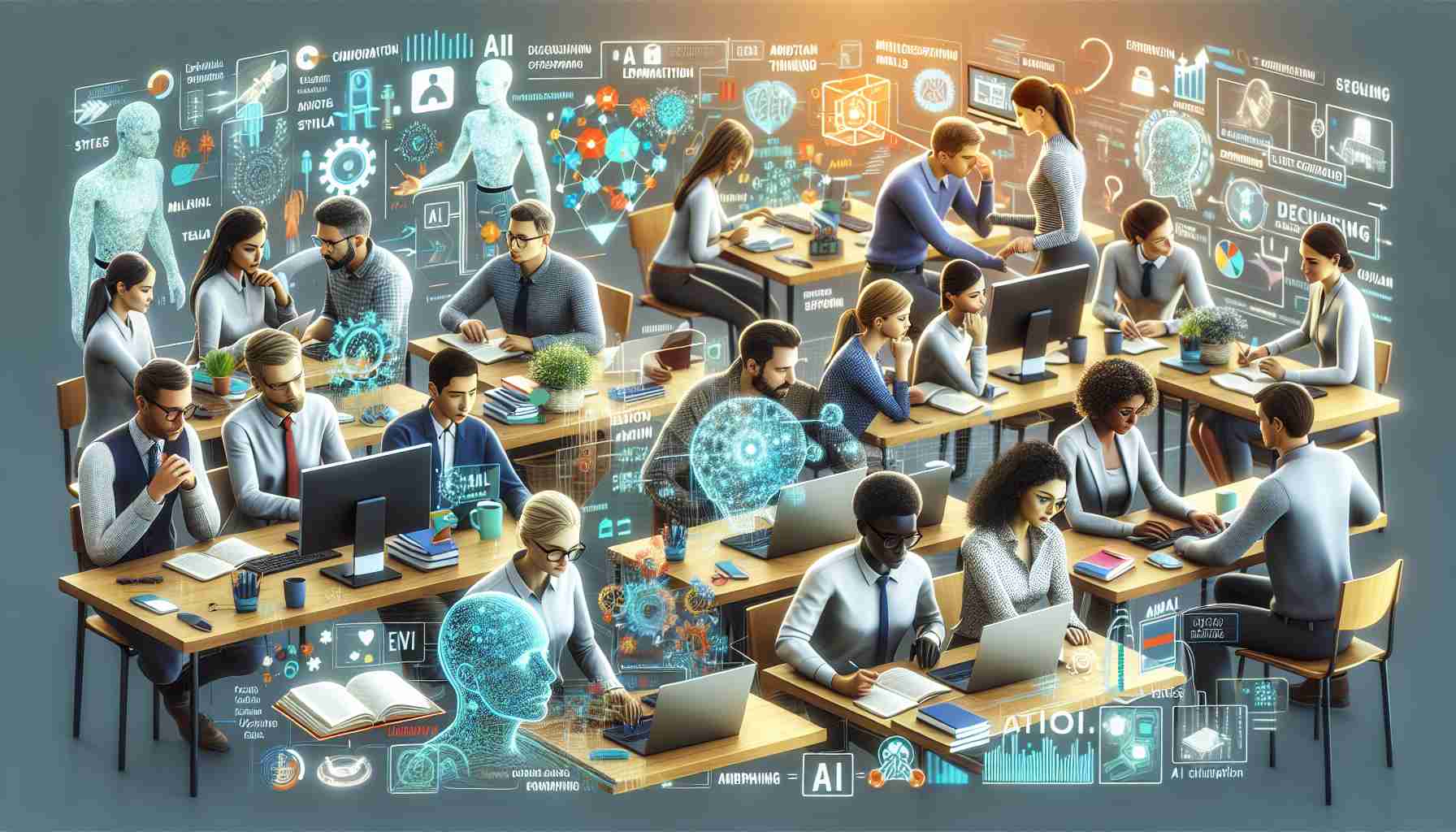
Effective communication skills are also paramount in this evolving landscape. As AI-generated content becomes more prevalent, the need for clear and precise communication to interpret and convey information accurately is critical. The adage “garbage in, garbage out” underscores the importance of human direction in ensuring that AI outputs are relevant and accurate. Strong communication skills enable professionals to evaluate AI-generated information critically, identify biases, and interpret results within the appropriate context. This capability is essential not only for individual success but also for maintaining organizational integrity in an era where misinformation can spread rapidly.
Moreover, the integration of AI into various sectors necessitates a shift in educational priorities. As Dr. Shrihari Sridhar from Texas A&M University emphasizes, educational institutions must adapt their curricula to prioritize the development of these competencies. While technical skills related to AI are undoubtedly important, the cultivation of broad-based skills such as problem-solving, creativity, and emotional intelligence should take precedence. This approach will better prepare students for the collaborative environments of the future, where they will work alongside AI systems.
The urgency for educational institutions to respond to these demands is further highlighted by the findings from the Cengage Group, which reveal that recent graduates are increasingly seeking more training in AI tools. As the job market evolves, graduates recognize the value of their education but also express a strong desire for enhanced training in AI technologies. This dual focus on technical proficiency and essential human skills will be crucial for ensuring that the next generation of workers is well-equipped to thrive in an AI-augmented workplace.
In conclusion, as AI continues to reshape the workforce, the emphasis on human skills such as critical thinking, emotional intelligence, and effective communication will only intensify. These competencies are not only irreplaceable but also essential for navigating the complexities of an AI-driven world. Educational institutions must prioritize these skills in their curricula to prepare students for the challenges and opportunities that lie ahead, ensuring that they can effectively collaborate with AI technologies and lead in a rapidly changing job market.
The Role of Vocational Training vs. College Education
The ongoing debate between vocational training and traditional college education has gained renewed urgency in the context of an AI-influenced job market. As artificial intelligence continues to reshape industries, young people are increasingly weighing their educational options against the backdrop of perceived job security. A recent survey by ADP Research highlights that many Americans aged 18 to 24 are concerned about the potential for AI to replace their job functions, prompting a significant shift in interest towards vocational training and blue-collar jobs, which are often viewed as more resistant to automation.
This trend is not merely anecdotal; it reflects a broader societal shift. According to the World Economic Forum, 70% of young workers believe that generative AI offers them opportunities to enhance their skills, yet 55% express concerns about job stability in the face of rapid technological changes. The urgency for young professionals to acquire AI-relevant skills is underscored by the fact that the skills required in AI-related occupations are evolving 25% faster than in other fields. This has led to a growing recognition of the importance of skills-first hiring practices, which prioritize abilities over traditional qualifications like degrees or work history.
The implications of this shift are profound. As educational institutions adapt to the changing landscape, they must recognize that both vocational training and traditional college education have unique strengths that can complement each other. Vocational training often provides direct pathways to employment, equipping students with practical skills that are immediately applicable in the workforce. This is particularly appealing in sectors where job security is paramount, as evidenced by a survey from Angi, which found that 91% of skilled tradespeople report high career satisfaction, largely due to their perceived job security against AI replacement.
Conversely, traditional college education fosters critical thinking, creativity, and interpersonal skills—qualities that are becoming increasingly essential in an AI-dominated workplace. Dr. Shrihari Sridhar from Texas A&M University emphasizes that while AI can handle repetitive tasks, the demand for human workers who can navigate complex problems and build relationships will only grow. As AI takes over mundane tasks, the need for employees with strong critical thinking and emotional intelligence will rise, underscoring the value of a college education.
Moreover, the trend towards skills-first hiring practices is reshaping the job market. A report from Indeed Hiring Lab indicates that as of January 2024, 52% of job postings did not specify any formal education requirements, reflecting a significant shift towards valuing skills over degrees. This trend allows a larger pool of candidates, particularly those without a bachelor’s degree, to access job opportunities. However, it also raises questions about the long-term viability of traditional educational pathways if employers increasingly prioritize skills over formal qualifications.
The integration of AI into various sectors further complicates this landscape. As organizations adopt AI technologies, they will require employees who can effectively collaborate with these systems. This necessitates a workforce that is not only skilled in technical competencies but also adept at managing the human aspects of work. Educational institutions must therefore prepare students for a future where they will need to lead teams that include both human workers and AI systems. This involves fostering a culture of continuous learning and adaptability, ensuring that graduates are equipped to thrive in an environment where the nature of work is constantly evolving.
In conclusion, the debate between vocational training and traditional college education is not a matter of one being superior to the other; rather, it is about recognizing the unique contributions of each pathway in preparing students for the future job market. As AI continues to influence hiring practices and job security perceptions, both educational models must evolve to meet the demands of a rapidly changing workforce. By embracing a collaborative approach that values both practical skills and critical thinking, we can better equip the next generation to navigate the complexities of an AI-driven economy.
Adapting Educational Curricula for AI Integration
As artificial intelligence (AI) continues to permeate various sectors, educational institutions face the pressing challenge of integrating AI into their curricula to adequately prepare students for a workforce increasingly influenced by this technology. Law schools, in particular, are at the forefront of this integration, recognizing the necessity of equipping future lawyers with the skills to navigate a legal landscape where AI plays a significant role. A recent survey by the American Bar Association revealed that over half of the law schools surveyed now offer courses on AI, with many introducing AI concepts from the very first day of law school. This proactive approach is essential, as it positions students to understand the intersection of law and technology, which is becoming increasingly relevant in legal practice.
For instance, the Sandra Day O’Connor College of Law at Arizona State University has developed a curriculum that includes classes focused on AI and a certificate in AI-focused legal operations, privacy, and ethics. Such initiatives not only enhance students’ understanding of AI but also prepare them for the demands of modern legal practice, where proficiency in AI tools is becoming a sought-after skill. However, the integration of AI into educational programs is not without its challenges. Many institutions grapple with uncertainties regarding policies governing AI use, particularly in admissions and classroom settings. For example, some law schools have implemented strict policies that limit the use of generative AI for assignments, reflecting a cautious approach to balancing the benefits of AI with concerns about academic integrity and ethical implications.
Beyond law schools, other educational programs are also recognizing the importance of AI training. Business schools, for example, are emphasizing the development of critical thinking and interpersonal skills alongside technical AI competencies. Dr. Shrihari Sridhar from Texas A&M University highlights that as AI takes over repetitive tasks, the demand for employees with strong human skills—such as problem-solving, creativity, and emotional intelligence—will rise. This perspective underscores the need for educational institutions to prioritize these competencies in their curricula while also encouraging students to engage with AI technologies.
However, the integration of AI into education raises significant ethical considerations. As institutions adopt AI tools, they must ensure that students are not only proficient in using these technologies but also equipped to critically evaluate AI-generated content. This includes fostering an understanding of biases inherent in AI systems and the potential for misuse. The challenge lies in developing comprehensive policies that guide the responsible use of AI in educational settings, ensuring that academic integrity is maintained while students learn to navigate an AI-driven landscape.
Moreover, the urgency for educational institutions to adapt is underscored by the evolving job market. A recent survey indicated that a significant percentage of recent graduates feel their education did not adequately prepare them for using new technology tools in the workforce, particularly AI. This sentiment is particularly pronounced among younger generations, who express a strong desire for more training in AI technologies. As employers increasingly seek candidates with AI experience, educational institutions must respond by integrating AI training into their programs to ensure that graduates are competitive in the job market.
In conclusion, the integration of AI into educational curricula is essential for preparing students for a future where AI is ubiquitous in the workplace. By embracing this challenge, educational institutions can equip students with the necessary skills to thrive in an AI-driven environment while addressing the ethical implications and maintaining academic integrity. As the landscape of work continues to evolve, the role of education in shaping a workforce capable of leveraging AI technologies will be more critical than ever.
The Future of Leadership in an AI-Integrated Workplace
As artificial intelligence (AI) continues to permeate various sectors, the dynamics of leadership and team management are undergoing significant transformations. Leaders are now faced with the challenge of managing teams that include both human workers and AI systems, necessitating a shift in traditional leadership approaches. This evolving landscape requires leaders to adapt their management styles to foster collaboration between human and AI capabilities, ensuring that both can coexist and thrive in the workplace.
One of the most critical aspects of this new paradigm is the need for leaders to cultivate an environment that values human skills alongside AI capabilities. While AI can efficiently handle repetitive tasks and analyze vast amounts of data, it lacks the emotional intelligence, creativity, and critical thinking that human workers bring to the table. As Dr. Shrihari Sridhar from Texas A&M University emphasizes, the demand for employees with strong interpersonal skills, problem-solving abilities, and emotional intelligence will only increase as AI takes over more mundane tasks. Leaders must recognize and nurture these human skills, ensuring that their teams can leverage the strengths of both AI and human workers.
Moreover, the integration of AI into the workplace necessitates a reevaluation of leadership development programs. Traditional leadership training often focuses on interpersonal skills and emotional intelligence, but as AI becomes more prevalent, there is a growing need for leaders to understand AI technologies and their implications for team dynamics. This understanding will enable leaders to make informed decisions about how to best utilize AI tools while also empowering their teams to adapt to these changes. A balanced approach that combines AI-driven insights with human coaching will be essential for effective leadership in this new context.
The role of leadership development will also evolve to include training on how to manage AI systems effectively. Leaders will need to be equipped with the skills to interpret AI-generated data and insights, ensuring that they can guide their teams in making informed decisions based on this information. This requires a commitment to continuous learning and adaptation, as the skills required to lead in an AI-enhanced environment will change rapidly. Organizations that prioritize leadership development in this area will be better positioned to navigate the complexities of an AI-integrated workforce.
Furthermore, fostering a collaborative environment will be crucial for the success of teams that include both human and AI members. Leaders must create a culture of respect and trust, where team members feel valued and empowered to contribute their unique skills. This involves encouraging open communication and collaboration, allowing human workers to engage with AI tools in ways that enhance their productivity and creativity. By promoting a sense of community within teams, leaders can help mitigate any fears or resistance to AI integration, ultimately leading to a more harmonious and effective workplace.
In conclusion, the implications of AI for leadership and team dynamics are profound. As organizations adapt to this new reality, leaders must embrace a dual approach that values both human skills and AI capabilities. By fostering a collaborative environment, prioritizing leadership development, and equipping themselves with the necessary skills to manage AI systems, leaders can navigate the complexities of an AI-enhanced workforce. The enduring value of a college education will play a pivotal role in preparing future leaders for these challenges, ensuring they possess the critical thinking and interpersonal skills needed to thrive in an increasingly automated world.
Reference:
A College Education Will Be ‘More Important Than Ever’ In Age Of AI
How Young Workers Can Thrive with AI by Developing the Right Skills
Why 91% of Skilled Tradespeople Report High Career Satisfaction
High-Demand Human Skills In The Ongoing Age Of AI
The Growing Importance of Communication Skills in the Age of AI
College Graduates Value Education but Demand More AI Training
Educational Requirements Are Gradually Disappearing From Job Postings
Law Schools Embrace AI Integration Amid Policy Uncertainty
How Generative AI is Reshaping Education in Asia-Pacific
The Future of Leadership Development: Balancing AI and Human Coaches