
Tuition is only part of what college costs. Rent, groceries, transportation and health care can push students into skipping meals or moving between friends’ couches, and surveys show this is common at U.S. colleges. This guide summarizes what the research says, what kinds of help colleges offer, and which programs international students can and cannot use.
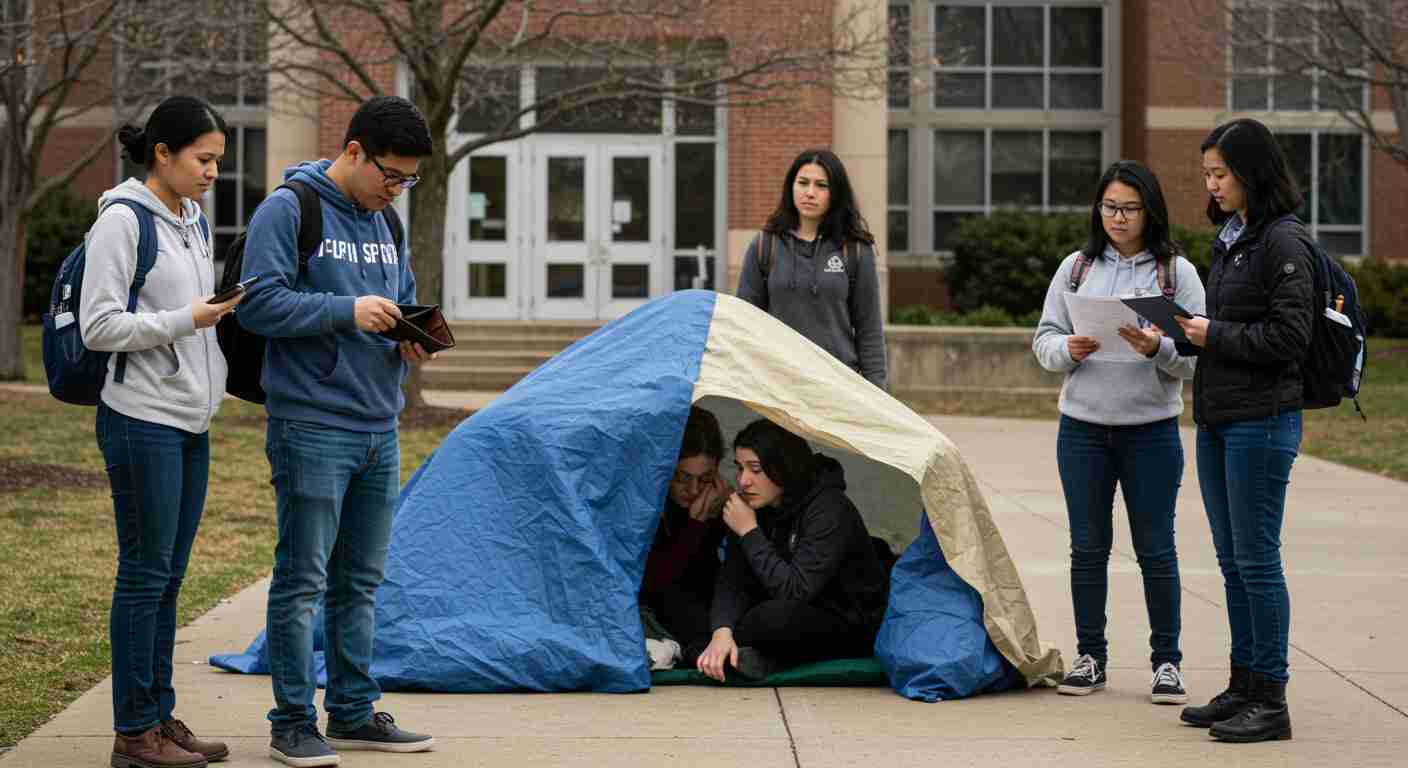
How common is basic needs insecurity?
- The Hope Center survey. The Hope Center for Student Basic Needs at Temple University surveyed 74,350 students at 91 colleges in 16 states between spring 2023 and summer 2024. In its report, published in February 2025, 59% of respondents had experienced at least one form of food or housing insecurity; adding mental health care, child care, transportation and internet or technology access raised the share to 73%. Forty-one percent were food insecure, 48% housing insecure and 14% had experienced homelessness. Almost two in three (65%) said they were unaware of available supports, and 51% of students with at least one form of basic needs insecurity did not receive any public benefits (Hope Center 2023-2024 Student Basic Needs Survey Report). The survey is not a random national sample, so the percentages describe participating students, not all U.S. students.
- Federal data. Using the U.S. Department of Education’s national student survey, the Government Accountability Office estimated that 23% of college students (3.8 million) experienced food insecurity in 2020. Fewer than two in five of them were potentially eligible for SNAP, the federal food benefit, and 59% of those potentially eligible did not report receiving it (GAO-24-107074, June 2024).
“Food insecurity” in these studies means not having reliable access to enough food, measured with the U.S. Department of Agriculture’s standard questions. “Housing insecurity” covers problems such as being unable to pay rent or utilities or moving frequently; “homelessness” includes staying in shelters, vehicles or temporarily with others because there is no place of one’s own.
What colleges offer
Many colleges now run some form of basic needs support. Common services include:
- Food pantries and free groceries. For example, UC San Diego’s Triton Food Pantry serves all registered students regardless of immigration status; see our guide to food support at UC San Diego. Ohio State opened the Monda Student Resource Center in April 2025, combining its food pantry with a free professional clothing closet; the university said 32% of its students experienced food insecurity and that pantry visits passed 8,500 in fiscal 2024, up 31% (Ohio State News, April 2025).
- Emergency grants and short-term loans for unexpected costs such as a rent gap, medical bill or travel emergency.
- Emergency housing for a few nights or weeks while a student finds a stable place to live.
- Help applying for public benefits such as SNAP, for students who are eligible.
- Dedicated programs for students without family support. The University of Maryland’s Fostering Terp Success program, started in 2019 by the Division of Student Affairs, serves students who have experienced homelessness, come from the foster care system or otherwise lack traditional family support. It connects them with tuition waivers (including Maryland’s Homeless Youth Tuition Waiver), housing funding, campus jobs, mental health services and mentors. In May 2025 it served 54 students, 11 of whom were graduating (Maryland Today, May 21, 2025).
Look for a “basic needs center,” “student resource center” or “dean of students” page on your college’s website. Services are usually confidential, and students do not need to prove an emergency to use a food pantry.
What international students should know
- Federal food benefits are generally not available. Students on F-1 visas cannot get SNAP (called CalFresh in California), even if they have an on-campus job or a Social Security number (Cal State LA CalFresh Outreach). Do not apply for public benefits without checking eligibility with your international student office first.
- Campus pantries and many campus programs are open to you. Most campus pantries serve any enrolled student, and some universities run programs specifically for international students; UC San Diego’s iTable, for example, gives short-term grocery e-cards to students in F-1 or J-1 status. Eligibility for emergency grants varies by fund, so ask whether international students qualify.
- Work limits. F-1 students may work on campus but not more than 20 hours per week while school is in session (Study in the States: Working in the United States). Off-campus work is not allowed without separate authorization.
- Severe economic hardship. If an unforeseen event (such as a sudden loss of family support or a currency collapse) leaves you unable to pay, and you have completed at least one full academic year, you can ask your designated school official (DSO) about off-campus work authorization based on severe economic hardship. If the DSO recommends you, you must file Form I-765 with USCIS within 30 days, and you cannot start working until USCIS approves it and issues an Employment Authorization Document (Study in the States).
- Talk to the international office early. Dropping below full-time enrollment because of money problems can put F-1 status at risk. The international student office can explain options such as payment plans, reduced course load rules and emergency funds before a problem becomes a status issue.
- Budget realistically before you arrive. The financial documents for your I-20 must cover the college’s estimated cost of attendance, but actual rent near campus can differ from those estimates. Use the college’s official cost of attendance and local rental listings, and keep an emergency reserve.
For each university’s cost of attendance and financial aid data, see its school page on Forward Pathway, for example our University of Maryland-College Park page.
References
- The Hope Center for Student Basic Needs: 2023-2024 Student Basic Needs Survey Report (February 2025)
- U.S. GAO: Supplemental Nutrition Assistance Program: Estimated Eligibility and Receipt among Food Insecure College Students (GAO-24-107074)
- Maryland Today: Carrying Students Through to Commencement (May 21, 2025)
- Ohio State News: Monda Student Resource Center opening (April 2025)
- Cal State LA: CalFresh Outreach
- DHS Study in the States: Working in the United States
- Forward Pathway: Food Insecurity at UC San Diego