
Running short of money for food is more common in American colleges than many new students expect. A federal Government Accountability Office (GAO) study estimated that 23% of U.S. college students, about 3.8 million people, experienced food insecurity in 2020, and that most of them (2.2 million) had very low food security (GAO-24-107074). At the University of California San Diego, 51% of undergraduates reported food insecurity in the 2024 UC Undergraduate Experience Survey (UC San Diego Today, April 15, 2025).
This guide explains how UC San Diego’s campus food support works, which programs international students can and cannot use, and how to get help at other U.S. universities.
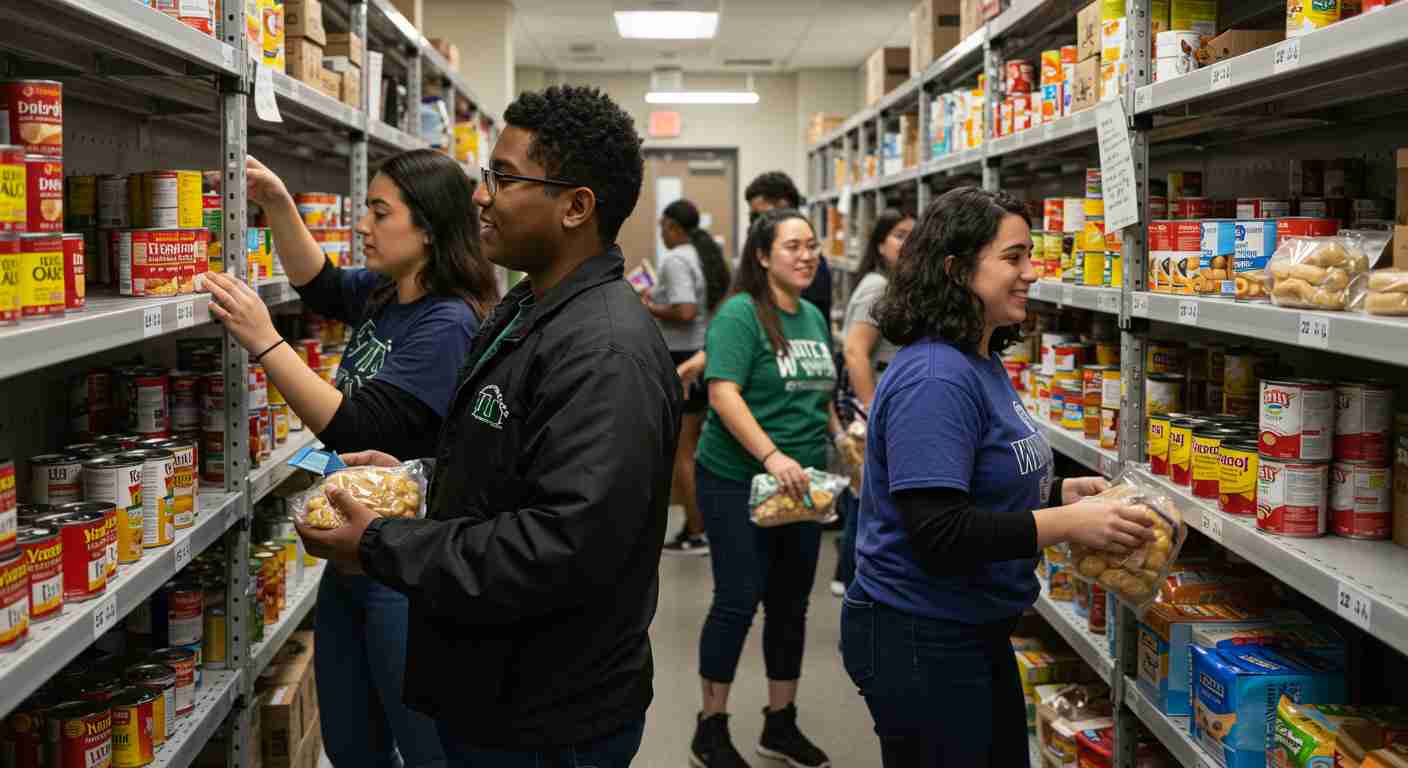
Why students run short of food
Food insecurity means not having reliable access to enough nutritious food. For students it usually comes from a mix of high rent, tuition and fees, limited work hours, and unexpected costs such as medical bills or a delayed transfer of money from home. It affects health, sleep and concentration, so it is worth treating as a practical problem to solve early rather than something to hide.
UC San Diego’s support system
Most help at UC San Diego runs through the Basic Needs Center, part of The Hub, at Student Center A (UC San Diego Basic Needs):
- Triton Food Pantry: free groceries, including fresh produce and culturally reflective ingredients, for “all registered UC San Diego Students, regardless of their status,” which includes international and undocumented students. There are locations at Student Center A and at One Miramar Street in graduate housing. Each student gets 15 points to shop with on one visit per week, and points reset every Monday. The pantry describes itself as a supplemental service (Triton Food Pantry).
- Basic Needs Assistance form: the starting point for longer-term help. Staff review the form, suggest resources and can arrange a one-on-one Basic Needs Consultation.
- Other services: CalFresh application help, iTable for international students, Yes! Food for undocumented students, free food distributions, emergency housing services, a Basic Needs Emergency Grant, a personal hygiene program and laptop lending.
- Contact: [email protected] or 858-246-2632.
CalFresh: the state food benefit and who can get it
CalFresh is California’s version of the federal Supplemental Nutrition Assistance Program (SNAP), which puts money for groceries on a card each month. UC San Diego said in 2025 that it provided up to $292 a month and that more than half of its students might be eligible. The Basic Needs Center’s student outreach team helps with applications, and approved student recipients at UC San Diego rose from 5,849 in November 2024 to 6,568 in March 2025. A student research project funded by a 2024 UC Essential Needs Research Grant worked on faster appointments, outreach through 62 student organizations, and approval of more campus programs as “Local Programs that Increase Employability,” one of the ways students can qualify (UC San Diego Today).
Students enrolled at least half-time must usually meet one extra condition, such as having work-study for the current year, working at least 20 hours a week, caring for a child under 12, or being in an approved employability program (UC Berkeley Basic Needs: CalFresh eligibility).
International students on F-1 visas cannot get CalFresh, even with an on-campus job or a Social Security number (Cal State LA CalFresh Outreach). Eligibility for some other non-citizen groups also narrowed: since April 1, 2026, groups including refugees, asylees and most parolees are no longer eligible for new applications or recertifications (UC Berkeley Basic Needs).
iTable: food support for international students
To fill that gap, UC San Diego’s International Services and Engagement Office (ISEO) and the Basic Needs Center launched the iTable Basic Needs Program in 2018. It gives short-term emergency grocery help as grocery e-cards emailed to the student; it is not cash aid and is not meant as long-term support (ISEO: iTable).
- Who can apply: full-time UC San Diego students (more than 12 units a term) in a nonimmigrant status such as F-1 or J-1, with UC San Diego as their home campus, who have not yet graduated. Extended Studies students, UC EAP reciprocity and Global Exchange students, and SDSU Joint Doctoral students with SDSU-issued I-20s are not eligible.
- How it works: apply through the iTable form (you can also refer a fellow student). Applications are reviewed each quarter; first-time applicants get priority at the start of the quarter, second-time applicants must meet with Student Affairs Case Management first, and third-time applicants are not guaranteed funding.
- In 2026 the Association of International Education Administrators gave iTable its Innovative Excellence in Internationalization Award (UC San Diego Today, May 14, 2026).
Practical steps for international students
- Budget realistically before you arrive. The financial documents for your I-20 must show you can cover a full year of costs, but actual rent and food prices can be higher than the school’s estimate. Check local rents and grocery prices, not just the cost-of-attendance table.
- Use the campus pantry early. Pantries at UC San Diego and many other universities are open to international students. They are university services funded by the campus and donors, not government benefit programs, and many students use them.
- Ask about emergency help as soon as a problem starts, for example when money from home is delayed. Emergency programs such as iTable have limited funds and work best for short-term gaps.
- Know your work limits. F-1 students can usually work on campus up to 20 hours a week while classes are in session; off-campus work requires specific authorization (Study in the States: Working in the United States). Do not take unauthorized jobs to cover food costs, because that can end your status.
- Talk to the international student office. If your finances have changed seriously, advisers can explain which campus options fit your visa status.
- At other universities, search the school’s site for “basic needs” or “food pantry.” Most large public universities now run a basic needs center, and several have programs specifically for students who are not eligible for SNAP.
References
- U.S. GAO: Supplemental Nutrition Assistance Program: Estimated Eligibility and Receipt among Food Insecure College Students (GAO-24-107074)
- UC San Diego Today: Advocating for their peers: student-driven efforts to end campus food insecurity (April 15, 2025)
- UC San Diego Basic Needs Center
- UC San Diego: Triton Food Pantry
- UC San Diego ISEO: iTable Basic Needs Program
- UC San Diego Today: iTable basic needs program wins international award (May 14, 2026)
- UC Berkeley Basic Needs Center: CalFresh eligibility
- Cal State LA: CalFresh Outreach Center
- University of California San Diego (Forward Pathway school page)