
The Data Driven Decision Making Program at Tufts University: A Model for Interdisciplinary Education
On July 22, 2024, Tufts University launched its Data Driven Decision Making (D3M) program, a groundbreaking initiative aimed at equipping graduate students with the skills necessary to leverage data science in addressing complex social and environmental challenges. Funded by a generous $3 million grant from the National Science Foundation, the D3M program has been operational since 2020 and has already trained 15 researchers while providing a robust educational framework in data science for a larger cohort of students. This program emphasizes problem-oriented learning, allowing students to engage directly with pressing issues such as the water contamination crisis in Flint, Michigan, and the intricate relationships between food, energy, water insecurity, and political instability.
The D3M program is notable for its interdisciplinary approach, drawing students from diverse fields including data visualization, environmental engineering, particle physics, and the humanities. Graduate student Joe Hilleary aptly noted that the multifaceted nature of these problems necessitates a cross-disciplinary perspective. The program’s first cohort focused on lead contamination in Flint’s water supply, ultimately developing a model to enhance communication between scientists and policymakers. This emphasis on effective communication is crucial, as it bridges the gap between research findings and actionable policy decisions.
In subsequent years, the D3M program has evolved its research focus. The second cohort examined misinformation in data dissemination, exploring the relationship between data analysis and narrative construction. The third cohort concentrated on selecting appropriate tools to tackle complex issues, employing integrated assessment models to investigate the interconnections among socio-economic factors, energy, food, and climate. Each successive group builds upon the work of its predecessors, fostering a community of lifelong learners dedicated to solving intricate social and environmental problems.
The Impact of the D3M Program on Interdisciplinary Education
The D3M program at Tufts University exemplifies the growing trend of interdisciplinary education in U.S. colleges. As the complexities of global challenges increase, the need for collaborative approaches that draw on multiple fields of study becomes ever more apparent. The D3M program not only prepares students to tackle specific issues but also cultivates a mindset that values diverse perspectives and collaborative problem-solving.
This interdisciplinary approach is mirrored in other initiatives across U.S. universities. For instance, the U.S. Department of Energy’s Technology Transition Office (OTT) announced its 2022 Summer Internship Program, which connects undergraduate students with the national laboratory system. This program, which spans ten weeks, aims to enhance students’ understanding of cutting-edge technologies and commercialization processes. Participants hail from various institutions, including Harvard University, Yale University, Cornell University, the University of Pennsylvania (2024 USNews Ranking: 6) , and Johns Hopkins University, and represent a wide array of disciplines such as environmental engineering, computer information systems, physics, and electrical engineering.
The diversity of backgrounds among the interns underscores the importance of interdisciplinary collaboration in addressing technological and environmental challenges. For example, Ezenia Diaz-Lembert, a sophomore electrical engineering student from Harvard, expressed her desire to understand the societal impacts of technological advancements and contribute to community service. Similarly, Lucas Loman from Yale, who focuses on environmental engineering, aims to study the commercialization of sustainable technologies. This cross-pollination of ideas and expertise is essential for fostering innovation and developing solutions that are both effective and sustainable.
The Role of Data Science in Addressing Environmental Issues
The Flint water crisis serves as a poignant example of how data science can be harnessed to address environmental issues. The D3M program’s initial research on lead contamination in Flint highlights the critical role that data-driven approaches can play in understanding and mitigating public health risks. The ability to analyze and interpret data related to water quality, pollution sources, and health outcomes is vital for informing policy decisions and implementing effective interventions.
In a related context, Zahra Saeed, a water data scientist with the Wisconsin Muslim Women’s Coalition, will be speaking at a virtual brunch on January 5, 2024, about the impact of forever chemicals on human health. Saeed’s work focuses on improving water quality and infrastructure, and she will discuss the dangers posed by PFAS (per- and polyfluoroalkyl substances), which are prevalent in many consumer products and have been linked to various health issues. Her insights underscore the importance of data science in identifying and addressing environmental contaminants that threaten public health.
The challenges posed by PFAS contamination are not unique to Flint; they are part of a broader trend of environmental degradation that affects communities across the United States. As Saeed points out, despite the abundance of freshwater resources in the Great Lakes region, water quality remains a pressing concern due to factors such as agricultural runoff, saltwater intrusion, and lead contamination from aging infrastructure. The D3M program’s focus on real-world issues equips students with the tools to analyze these complex problems and advocate for sustainable water management practices.
The Importance of Effective Communication Between Scientists and Policymakers
One of the key lessons from the D3M program is the necessity of effective communication between scientists and policymakers. In an era marked by climate change, public health crises, and digital transformation, the interface between science and policy has never been more critical. The ability to convey research findings in a manner that is accessible and actionable for policymakers can significantly influence the implementation of effective solutions.
Research conducted by CIDOB in October 2021 highlights the growing importance of urban areas in promoting scientific diplomacy, particularly in the context of sustainability and resilience. As urban populations are projected to increase significantly by 2050, cities are becoming pivotal players in the transition to sustainable development. While formal mechanisms for science policy at the urban level are still developing, cities like Barcelona, Geneva, Mexico City, Miami, and Kigali are actively engaging with local scientific, technological, and innovation ecosystems to foster scientific diplomacy.
Barcelona, for instance, has emerged as a leader in this arena by establishing a comprehensive scientific diplomacy strategy through platforms like SciTech DiploHub. This initiative promotes international collaboration and strengthens local science policy connections. Similarly, Mexico City has implemented scholarship programs to facilitate coordination between science and policy. These efforts demonstrate that cities are not only instrumental in branding and attracting talent but also play a crucial role in addressing global challenges such as climate change and public health through scientific diplomacy.
The D3M program’s emphasis on communication aligns with these trends, as students are trained to articulate their research findings to diverse audiences, including policymakers, community stakeholders, and the general public. By fostering a culture of collaboration and dialogue, the program empowers students to become effective advocates for data-driven solutions to complex societal issues.
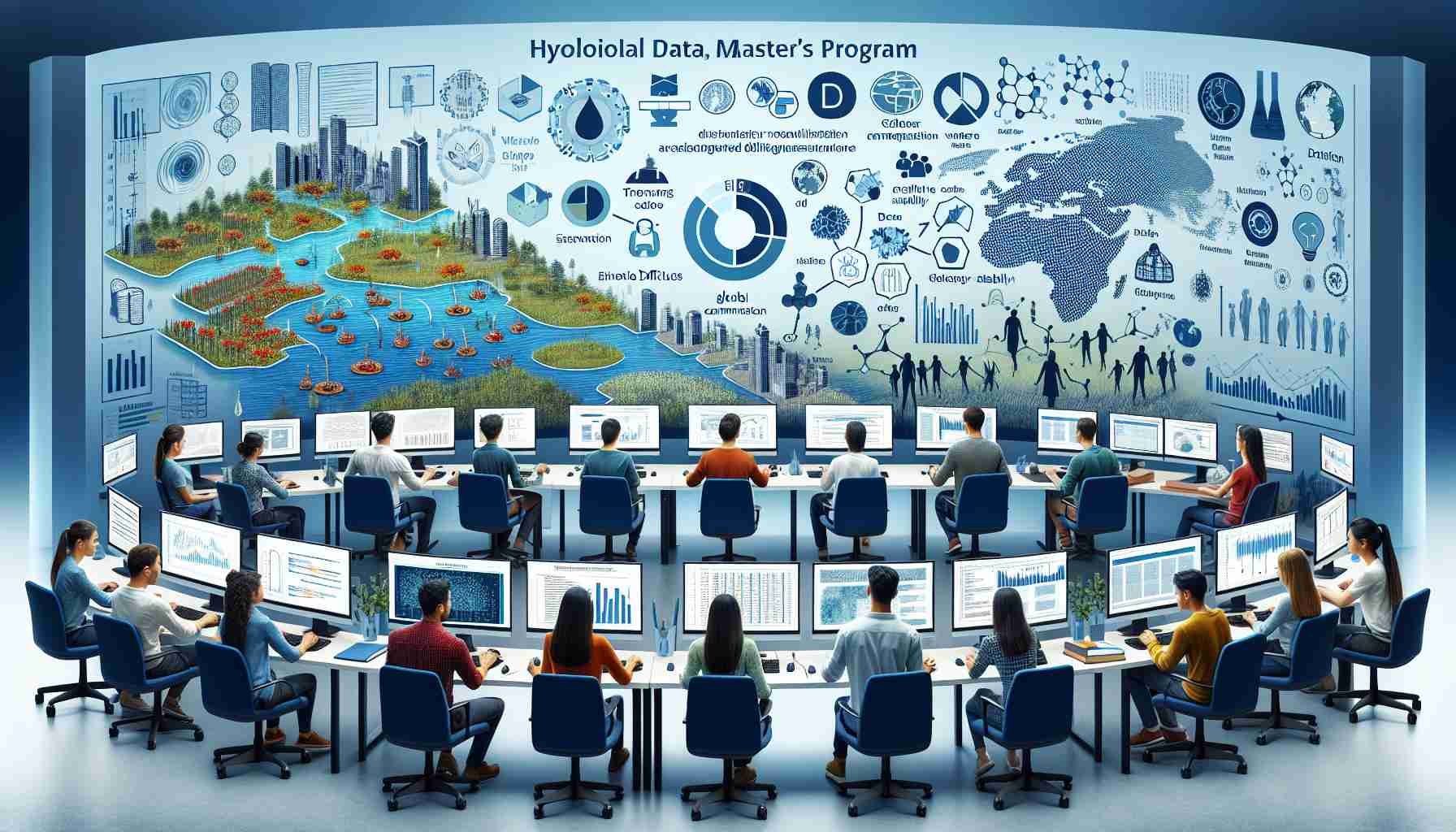
The Evolution of Research Topics in the D3M Program
The D3M program’s evolution over the years reflects the dynamic nature of research in response to emerging challenges. Each cohort builds upon the work of its predecessors, creating a cumulative body of knowledge that addresses a wide range of social and environmental issues. This iterative process not only enhances the depth of research but also fosters a sense of community among students who are committed to lifelong learning.
In its second year, the program’s focus on misinformation in data dissemination highlights the growing recognition of the importance of narrative in shaping public understanding of complex issues. As data becomes increasingly accessible, the potential for misinterpretation and misuse also rises. Students in the D3M program are equipped to critically analyze the narratives surrounding data and develop strategies for effective communication that promote informed decision-making.
The third year’s emphasis on selecting appropriate tools for addressing complex problems underscores the necessity of interdisciplinary collaboration in research. By employing integrated assessment models, students are able to explore the interconnections between socio-economic factors, energy, food, and climate. This holistic approach is essential for developing comprehensive solutions that consider the multifaceted nature of contemporary challenges.
The D3M program’s commitment to evolving research topics ensures that students are not only prepared to tackle current issues but are also equipped to anticipate and respond to future challenges. This adaptability is a hallmark of effective interdisciplinary education, as it encourages students to remain engaged with the latest developments in their fields and to apply their knowledge in innovative ways.
Conclusion
The Data Driven Decision Making program at Tufts University represents a significant advancement in interdisciplinary education, equipping students with the skills and knowledge necessary to address complex social and environmental challenges. By emphasizing problem-oriented learning and fostering collaboration across diverse fields, the D3M program prepares students to engage with pressing issues such as the Flint water crisis and the impact of environmental contaminants on public health.
The program’s focus on effective communication between scientists and policymakers is particularly crucial in today’s rapidly changing landscape, where the intersection of science and policy plays a pivotal role in shaping responses to global challenges. As cities increasingly become centers of scientific diplomacy, the D3M program’s commitment to fostering dialogue and collaboration positions its graduates as key players in the development of data-driven solutions.
Through its evolving research topics and emphasis on interdisciplinary collaboration, the D3M program cultivates a community of lifelong learners dedicated to addressing the complexities of our world. As the program continues to grow and adapt, it serves as a model for other institutions seeking to prepare students for the challenges of the future. In a time when data science is more critical than ever, the D3M program at Tufts University stands as a beacon of innovation and collaboration in higher education.