
The Personal Touch in a Digital Age: UF’s Handwritten Card Initiative
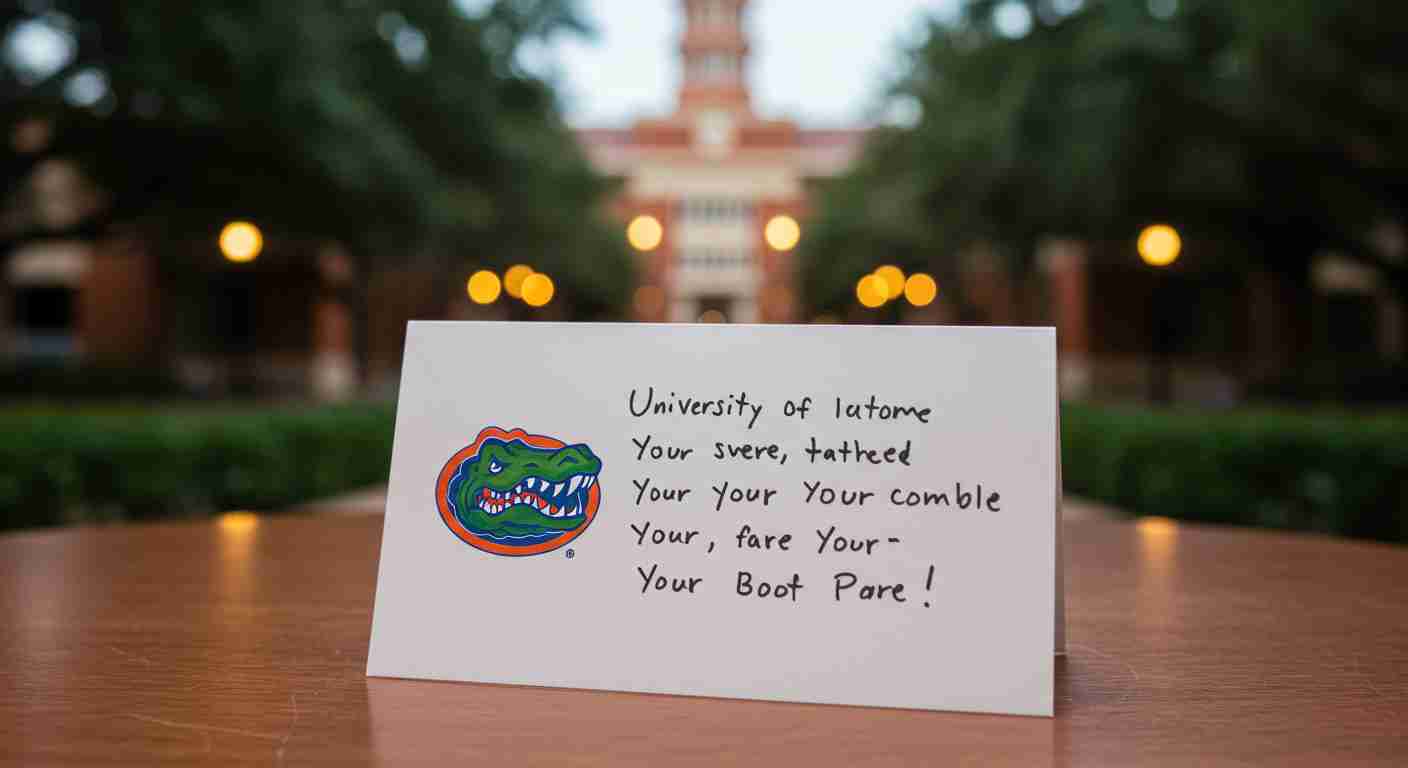
In the grand theater of college admissions, where institutions vie for the brightest minds, the University of Florida has orchestrated a delicate, yet profound, movement: the handwritten card. In an age dominated by digital communication, where emails flood inboxes and algorithms curate our experiences, the simple act of sending a personalized, handwritten greeting card stands out as a beacon of genuine connection. The UF Honors Program has embarked on this charming endeavor, dispatching missives to over 1,400 newly admitted honors students, each card carrying a message of welcome and encouragement.
The rationale behind this initiative is simple, yet deeply resonant: to make students feel seen, valued, and appreciated as individuals, not merely as statistics in a sea of applications. It is a recognition that the college decision is a pivotal moment in a young person’s life, fraught with uncertainty and anticipation. In this context, a handwritten card transcends the transactional nature of the admissions process, offering a personal touch that can sway a student’s decision and shape their perception of the university.
The impact of these cards is palpable. Terren Smith, a first-year student from Denver, Colorado, majoring in international business and Chinese studies, recalls the profound effect of receiving a handwritten letter. It made him feel like more than just a number, a sentiment echoed by many students navigating the often impersonal landscape of college admissions. Andrew Herberich, a first-year economics major from Charlotte, North Carolina, found his letter particularly encouraging, and it played a significant role in his choice to attend UF. So inspired was he that he now serves as an Honors Luminary ambassador, extending the same warm welcome to future generations of Gators. Avery Teman, an economics major and Honors Luminary, has dedicated herself to writing these welcome letters for three years, understanding the power of a personal message in shaping a student’s college decision.
The experience of these students underscores a fundamental truth about human connection: in an increasingly digital world, the value of personalized communication is amplified. The handwritten card represents a tangible expression of care and attention, a deliberate act of reaching out and making a connection. It speaks volumes about the values of the institution, signaling a commitment to fostering a supportive and welcoming community where students are seen as individuals, each with unique potential and aspirations.
This initiative also highlights a broader challenge in college admissions: how to make students feel valued beyond their application numbers. With acceptance rates declining and competition intensifying, the admissions process can feel impersonal and overwhelming. Students may feel like they are being reduced to a collection of scores and achievements, losing sight of their individuality and their potential to contribute to the university community. The handwritten card serves as a counterpoint to this trend, offering a reminder that behind every application is a person with dreams, hopes, and aspirations. It sets the stage for a college experience where students feel supported, encouraged, and empowered to pursue their passions and make a meaningful impact on the world.
UF Admissions Landscape: Selectivity, Early Action, and Holistic Review
The handwritten card initiative, however charming, operates within a much larger and increasingly competitive arena. The University of Florida, like many of its peer institutions, has witnessed a significant shift in its admissions landscape in recent years. The introduction of early action for the 2024-2025 admissions cycle marks a strategic move to attract top talent and better manage enrollment planning. This decision, unveiled by former UF President Ben Sasse, arrived on the heels of a period of intensified application volume and declining acceptance rates. Since 2013, UF has experienced a remarkable 46% surge in first-year student applications, while the acceptance rate has nearly halved, plummeting from approximately 47% to around 25% in the fall of 2023. This increasing selectivity underscores the pressure on universities to identify and recruit the most promising students.
The personalized card initiative, therefore, is not an isolated act of kindness, but rather a carefully considered component of UF’s broader recruitment strategy. It aims to resonate with high-achieving students who are likely considering multiple options, each vying for their attention and enrollment. By adding a personal touch, UF seeks to differentiate itself from other institutions and cultivate a sense of belonging among prospective students. It’s a recognition that in a highly competitive market, emotional connection can be a deciding factor.
Furthermore, UF, like many leading universities, employs a holistic review process, evaluating applicants based on a range of factors beyond academic metrics alone. While GPA, standardized test scores, and class rank remain important, admissions officers also consider factors such as essays, extracurricular activities, leadership experience, and letters of recommendation. This approach acknowledges that academic achievement is not the sole indicator of a student’s potential for success. The handwritten card initiative aligns with this philosophy by recognizing the individual behind the application and signaling that UF values qualities beyond quantifiable metrics.
Comparing UF’s admissions data with that of other Florida universities and peer institutions provides valuable context. The University of Central Florida (UCF), for example, has also seen its acceptance rate tighten, achieving a selectivity rate of 39.5% in the fall of 2023. While still higher than UF’s, this figure reflects UCF’s growing competitiveness and appeal. Similarly, the University of South Florida (2025 USNews Ranking: 91) (USF) received a record number of applications and welcomed a high-achieving class of incoming students, with an average high school GPA of 4.23 and average SAT score of 1306. These figures highlight the overall trend of increasing competition for enrollment at Florida’s leading public universities.
The introduction of early action adds another layer of complexity to the admissions process. By allowing students to apply early and receive decisions sooner, universities can gain a clearer picture of their potential enrollment yield. This, in turn, can inform financial aid decisions, resource allocation, and overall strategic planning. Sara Downey, the owner of At-Home Tutoring Services, astutely observes that early action is a strategic move that aids UF in planning for the next year’s student population and potentially improving financial decision-making. Early deadlines benefit students who have a clear first-choice, while regular deadlines allow others to strengthen their applications.
Different recruitment strategies inevitably impact planning and financial decision-making for the university. Initiatives like the handwritten cards, while seemingly small, require resources to implement, including staff time and materials. The potential return on investment, however, is significant if these efforts contribute to attracting and enrolling high-achieving students who are more likely to succeed academically and contribute to the university community. These students, in turn, can boost the university’s reputation, attract further funding, and enhance its overall standing. Therefore, each element of the admissions strategy is weighed to try to optimize recruitment success and student matriculation.
Beyond the Card: Benefits and Opportunities in the UF Honors Program
Beyond the personalized cards and the broader admissions strategies, the true allure of the University of Florida lies in the wealth of opportunities awaiting students within the Honors Program. These advantages extend far beyond a simple welcome; they represent a comprehensive ecosystem designed to nurture intellectual curiosity, foster personal growth, and prepare students for future success.
One of the most significant benefits of the UF Honors Program is the access to knowledgeable faculty advisors. These mentors provide personalized guidance, helping students navigate the complexities of academic life, explore research opportunities, and make informed decisions about their future careers. This close interaction with faculty is often cited as a hallmark of top-tier honors programs, providing students with a level of support and mentorship that is not always available in larger, less personalized settings. Kettering University, for instance, emphasizes dedicated university honors program faculty advisors who provide academic and professional coaching, tailoring the experience to meet individual needs.
Furthermore, UF Honors students have access to unique honors courses designed to challenge and inspire. These courses often feature smaller class sizes, discussion-based learning, and opportunities for in-depth exploration of complex topics. This mirrors the approach taken at the Eileen G. Jones Honors College at Commonwealth University, which emphasizes seminar-style classes and close interaction with faculty, fostering a community of high-achieving scholars. The interdisciplinary curriculum, combined with the opportunity to engage in independent capstone projects, allows students to delve into their passions and develop critical thinking skills that are highly valued in today’s competitive job market.
Early registration privileges are another valuable perk for UF Honors students. This allows them to secure coveted spots in popular courses and build a schedule that aligns with their academic and extracurricular interests. This advantage can be particularly beneficial for students pursuing majors with demanding course sequences, ensuring they have access to the classes they need to stay on track for graduation.
The supportive peer network within the UF Honors Program is equally important. Honors students are surrounded by like-minded individuals who share a passion for learning and a commitment to excellence. This creates a collaborative and stimulating environment where students can challenge each other, share ideas, and build lifelong friendships. This sense of community is a key component of successful honors programs, fostering a sense of belonging and encouraging students to reach their full potential. Arizona State University’s Barrett Honors College, for example, prides itself on providing a smaller residential college experience within a large university, complete with luxurious housing and numerous events designed to foster community engagement.
Beyond the academic realm, UF Honors students have access to a wealth of extracurricular opportunities, research programs, and study abroad options. These experiences allow students to broaden their horizons, develop new skills, and gain a global perspective. The Center for Undergraduate Research Opportunities (CURO) at the University of Georgia, supported by the Morehead Honors College, provides undergraduates with opportunities to pursue faculty-mentored research, preparing them for graduate studies and careers in research-intensive fields. Similarly, study abroad programs offer students the chance to immerse themselves in different cultures, learn new languages, and gain a deeper understanding of global issues. The University of South Carolina’s Honors College, known for its health sciences and international business programs, offers exclusive honors courses and the ability to design a major that includes unique study abroad experiences.
These combined advantages, coupled with the personal touch of the handwritten cards, contribute to a comprehensive and enriching college experience at UF. By fostering a welcoming and supportive environment, providing access to exceptional academic resources, and encouraging students to pursue their passions, the UF Honors Program empowers students to become leaders, innovators, and engaged citizens of the world. Ultimately, the success of the program lies in its ability to cultivate a community of scholars who are not only academically gifted but also driven by a desire to make a meaningful difference in the world.
The Power of Personalization: Comparing UF’s Strategy with Other Universities
The University of Florida’s approach is not unique; many institutions recognize the importance of personalized outreach. The University of Kansas (KU) exemplifies this philosophy, striving to create a welcoming atmosphere that makes prospective students feel at home even before enrolling. Lisa Pinamonti Kress, the director of KU Admissions, emphasizes that personalized communication is key to attracting students. Their strategy involves a multi-pronged approach, including phone calls, handwritten notes, and individualized meetings. This ensures students feel valued and well-informed, establishing a solid connection with the university.
KU’s commitment extends beyond traditional methods, incorporating digital platforms to enhance personalization. Social media interactions, virtual campus tours, and customized online content offer engaging introductions to campus life. These digital strategies complement more personal touches like handwritten postcards and welcome packets featuring university-branded stickers and game day flags. The goal is clear: to make students feel like part of the “Jayhawk family” from the moment they apply.
The effectiveness of these personalized approaches is not just anecdotal. While quantifying the direct impact on enrollment can be challenging, institutions closely monitor student engagement and feedback. The resources required for such initiatives can be substantial, encompassing staff time, training, and the costs of materials and technology. However, the potential return on investment, in terms of increased enrollment, improved student retention, and a stronger institutional reputation, makes it a worthwhile endeavor.
Technology plays an increasingly significant role in personalization. Virtual tours offer prospective students the chance to explore campus facilities from the comfort of their homes, while customized online content provides tailored information based on their academic interests and extracurricular activities. These tools allow universities to reach a broader audience and provide a more personalized experience for each prospective student. However, they must be carefully integrated with more traditional approaches, such as handwritten cards, to maintain a genuine sense of connection.
Another crucial aspect of creating a welcoming environment is addressing the growing trend of multilingualism and diversity. Universities are recognizing the importance of catering to students from diverse linguistic and cultural backgrounds. This can involve offering multilingual admissions materials, providing translation services, and creating inclusive campus environments that celebrate diversity. Ensuring that all students, regardless of their background, feel welcomed and supported is essential for fostering a sense of belonging and promoting academic success. The ability to communicate effectively with students in their native language, or at least demonstrate a commitment to inclusivity, can be a significant factor in their college decision. As noted in a HowStuffWorks article, multilingualism is valued in college admissions, with students who speak more than one language often possessing an edge, especially at competitive institutions, as they bring a unique perspective to the student body.
Building a Future: Career Opportunities and the Long-Term Impact of a Welcoming Start
The seeds of success, sown during a student’s formative college years, often blossom into fulfilling careers. The University of Florida recognizes this connection, actively fostering opportunities that extend beyond the classroom. Initiatives like the FINS Talent Pipeline program exemplify this commitment, streamlining the pathway to national defense jobs for engineering graduates. By pre-screening students, providing mentorship, and connecting them with potential employers early on, UF ensures its graduates are well-positioned to contribute to critical sectors upon graduation. Similarly, the Thompson Earth Systems Institute cultivates sustainable STEM careers in Florida by equipping students with skills in science communication, leadership, and advocacy. These programs not only enhance students’ resumes but also instill a sense of purpose and direction.
The broader job market landscape in Florida further underscores the value of a UF education. Cities like Tallahassee and Gainesville are experiencing robust growth in hiring, particularly in sectors like education and government administration. This creates a fertile ground for college graduates to launch their careers, contributing to the economic vitality of the state. The presence of major universities like UF acts as an economic engine, attracting talent and fostering innovation.
Ultimately, the themes of personalization, opportunity, and community converge to create a powerful force for student success. A welcoming start to college, marked by personal connections and access to enriching experiences, can have a lasting impact on a student’s academic trajectory and professional prospects. As future trends increasingly emphasize interdisciplinary skills and adaptability, the ability to foster personal connections and navigate complex challenges will become even more critical. The University of Florida, through its commitment to personalized outreach, robust academic programs, and a supportive community, is equipping its students with the tools they need to thrive in an ever-evolving world, ensuring that their journey from handwritten card to fulfilling career is one marked by purpose, passion, and profound impact.
Reference:
- Personalized, Handwritten Cards Welcome Honors Students to Gator Nation
- UF Introduced Early Action: Here’s How It’s Going
- UCF Joins Elite Florida Colleges with Tighter Acceptance Rate
- USF Receives Record Number of Applications, Welcomes High-Achieving Class of Incoming Students
- How KU Admissions Makes Students Feel at Home Even Before Enrollment
- Do College Admissions Officers Value Students Who Speak More Than One Language?
- Kettering University Honors Program: An In-Depth Look
- Eileen G. Jones Honors College at Commonwealth University: Expanding Opportunities for High-Achieving Students
- UF Engineering Initiative Streamlines Path to National Defense Jobs
- UF’s Thompson Earth Systems Institute Helps Students Build Sustainable STEM Careers in Florida
- Tallahassee and Gainesville Among Best U.S. Cities for College Grads to Begin Careers