
Navigating the Georgetown Experience: A Comprehensive Student Guide
Georgetown University (2025 USNews Ranking: 24) understands that embarking on higher education is a significant undertaking, and to help its students navigate this exciting journey, it has compiled “The Ultimate Guide for Students at Georgetown University.” This comprehensive resource isn’t just a collection of dry facts; it’s a dynamic, living document crafted by the students themselves. Think of it as your insider pass, delivered straight from fellow Hoyas who have walked the very paths you’re about to tread. Released on August 18, 2025, this guide aims to be your go-to manual for everything from surviving your first week on the Hilltop to making the most of your four years in Washington D.C.
The guide is thoughtfully structured, offering a panoramic view of the Georgetown experience. It kicks off with “Setting Yourself Up for Success,” a crucial section brimming with advice on everything academic. Here, students share their candid experiences with Georgetown’s core curriculum – often a point of anxiety for many – and offer practical tips for acing those challenging study sessions. Beyond the classroom, the guide delves into professional development, providing insights gleaned from high-stakes consulting recruiting and invaluable internship experiences, including the coveted “Hillternships” right in the heart of D.C.
Transitioning into campus life, “Making the Most of Student Life” is your roadmap to truly making Georgetown feel like home. It covers the essential social integration aspects, from finding student jobs and navigating campus traditions to simply figuring out how to unwind. For those still pondering their academic future, the “Choosing Your Major” section is a treasure trove of peer-to-peer advice. It highlights Georgetown’s commitment to allowing students ample time to explore diverse fields before declaring a major, often by the end of their sophomore year. You’ll find personal reflections from students who’ve successfully landed in majors like Public Policy, International Business, and Health Care Management and Policy, showcasing the breadth of academic passions at Georgetown.
Further enriching the student experience is “Connecting With Campus Clubs,” a testament to the over 450 student organizations that thrive on campus. This section offers guidance on how to find your niche, whether you’re drawn to academic societies, cultural groups, or even the more unique Georgetown University Eating Society. The guide also touches upon personal growth and community through “Fostering Faith,” illustrating how students find spiritual and religious connections, and “Dining On and Off Campus,” a crucial segment for exploring the local culinary scene. Finally, “Making Your Dorm Home” provides essential, practical advice for settling into residential life, making those first-year dorm rooms feel like a true sanctuary. This guide is built on authentic student voices, offering an unparalleled, peer-to-peer perspective on navigating the entirety of university life, from academic readiness and professional development to social integration and personal growth. It’s your essential companion for thriving on the Hilltop and in D.C.
Academic Pathways and Career Development at Georgetown
As your tech editor, I’m always on the lookout for innovative approaches, and Georgetown’s student guide? It’s next-level. Forget dry manuals; this is a curated collection of student blogs, offering an authentic, peer-to-peer download of what it’s really like to be a Hoya. It’s designed to be your ultimate OS upgrade for navigating campus life and the surrounding D.C. tech ecosystem. From mastering the core curriculum, which, let’s be honest, can feel like debugging a complex system, to landing those coveted internships that are your gateway to the professional network, this guide covers it all.
The “Setting Yourself Up for Success” module is particularly impressive. It delves into strategies for maximizing your academic uptime and optimizing your professional development trajectory. You’ll get the inside scoop on study abroad programs – think of them as global network expansion opportunities – and gain crucial insights from the often-intense consulting recruiting cycles and the broader internship landscape. This isn’t just about getting good grades; it’s about building your personal brand and cultivating the skills that will drive your future career.
For those of you still configuring your academic pathways, the “Choosing Your Major” section is a goldmine. It emphasizes the inherent flexibility within Georgetown’s academic architecture, allowing students to explore different disciplines before committing to a specialization, typically by the end of their sophomore year. You’ll find student reflections that highlight the interdisciplinary nature of studies here – a feature I always geek out over. It’s like being able to run multiple virtual machines on one powerful server, allowing you to experience diverse fields. This adaptability is crucial in today’s rapidly evolving tech landscape, where cross-functional knowledge is king.
This emphasis on adaptable skill acquisition is mirrored in the robust career services available, especially for graduate students in the School of Foreign Service (SFS). The SFS Graduate Career Services offer a comprehensive suite of support, including personalized coaching from International Coach Federation-certified professionals, skills workshops, and access to exclusive networking events. Their online course, “SFS Careers,” is essentially a masterclass in career trajectory optimization. They equip you with the tools to build stellar resumes, craft compelling cover letters, and ace those high-stakes interviews, whether you’re targeting the public, private, or nonprofit sectors. It’s all about ensuring you have the right deployment strategy for your job search.
The university also understands that personal growth is as critical as academic achievement. Kyla Denwood, a graduating Master in Global Human Development student, exemplifies this perfectly. Initially focused on space policy and emerging technologies, her path dynamically shifted towards international business and global development after discovering Georgetown’s International Business Diplomacy certificate. She found herself captivated by the nexus of business and global development, building a solid foundation in how public, private, and nonprofit entities can collaborate to tackle development challenges. Her experience with Professor Ekin Birol, who encouraged bold thinking, and Professor Steven Radelet’s “Development Finance” course, which demystified complex financial tools, highlights the invaluable mentorship available.
Denwood’s practical immersion included an internship with USAID/West Africa in Ghana, where she worked on a significant initiative to boost regional private-sector growth. This hands-on experience in engaging with local stakeholders provided her with invaluable, real-world data on regional trade dynamics. Further expanding her global operating system, she pursued Swahili language studies, supported by a scholarship, and even earned a Critical Language Scholarship from the U.S. State Department, allowing her to continue her studies in Tanzania. Time to empty my wallet again – language learning is a serious investment, but the returns are astronomical.
Her professional development wasn’t limited to one sector; she interned at the White House Office of Science and Technology Policy, contributing to clean energy initiatives and the Inflation Reduction Act. She also gained valuable experience with McLarty Associates’ Africa Practice, advising Fortune 500 companies, and worked with the Office of Barack and Michelle Obama. Currently, she’s interning with the U.S. Senate Committee on Foreign Relations, focusing on legislative efforts concerning Africa and the Middle East. Her journey underscores how Georgetown’s interdisciplinary training and extensive professional network prepare students to pivot and adapt in response to evolving global landscapes, much like updating your firmware to the latest version.
The importance of leveraging university resources like academic advising and career services cannot be overstated. Offices like the Office of Academic Services at GU-Q actively promote innovation and student success by fostering an environment of academic excellence and inclusive teaching. Their strategic priorities revolve around faculty and student development, teaching and curricular innovation in a global context, and strategic partnerships. This holistic approach ensures that students are not only learning but are also being equipped to drive progress and innovation in their chosen fields. It’s about building a robust, future-proof skill set.
Campus Life, Community, and Extracurricular Engagement
Georgetown University truly shines when it comes to fostering a vibrant campus life and a strong sense of community, and this is where the student guide really sings. Beyond the rigorous academic environment, there’s an absolute explosion of opportunities for students to get involved. With over 450 student organizations, you’re practically guaranteed to find a group that aligns with your passions, or perhaps one that introduces you to something entirely new. Whether you’re drawn to the precision of Model UN, the creativity of a cappella, the global perspective of cultural clubs, or even the quirkiness of the Georgetown University Eating Society, there’s a place for you. These extracurriculars aren’t just for filling time; they’re crucial for building connections, developing leadership chops, and acquiring a diverse skill set that goes way beyond textbooks.
Georgetown actively cultivates a sense of belonging through various initiatives. Living-learning communities, for instance, are a fantastic way to connect with peers who share similar academic or personal interests, creating built-in study groups and lifelong friends. Student testimonials pepper the guide, offering heartwarming accounts of how these shared experiences have forged lasting friendships and provided invaluable support systems. This communal spirit is further amplified by programs dedicated to diversity and inclusion, ensuring that every student feels seen, heard, and valued within the Hoya family.
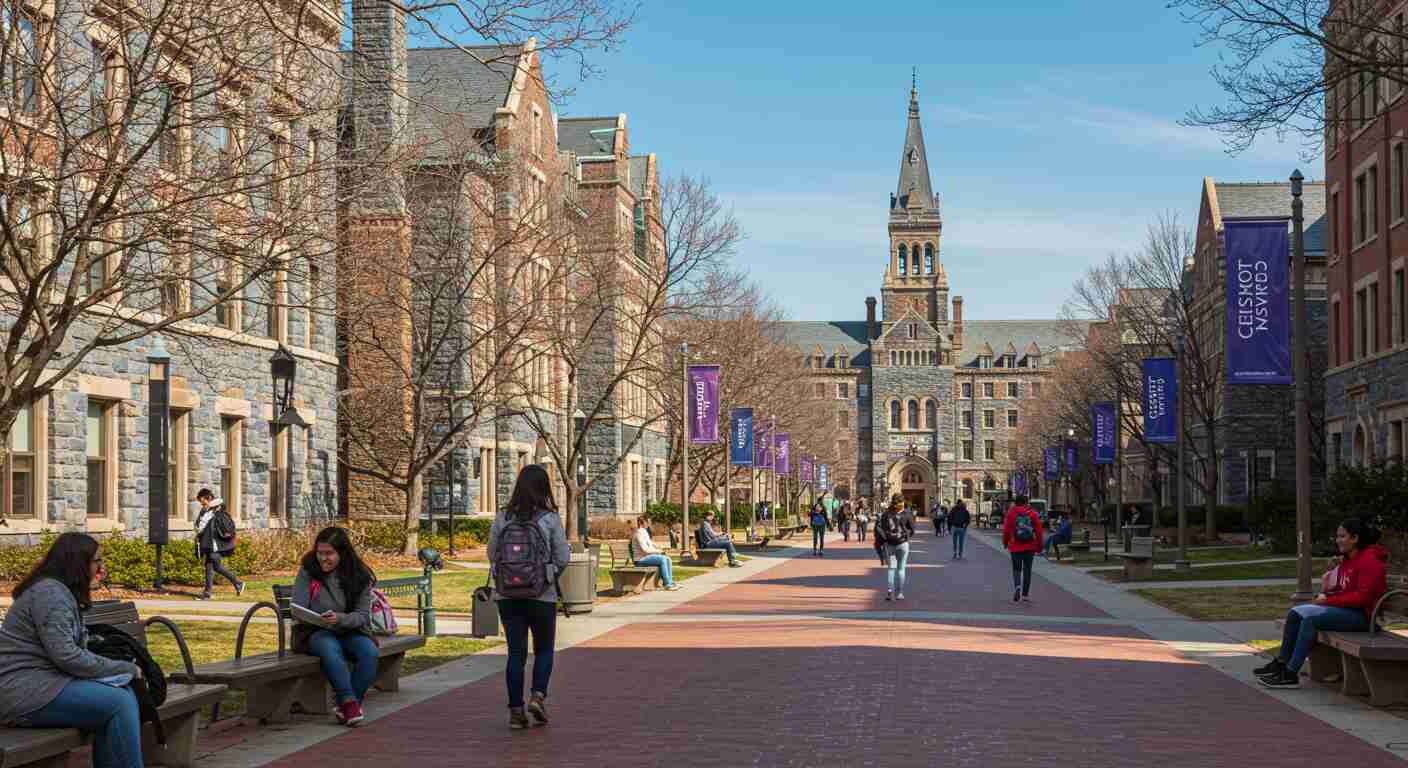
The practicalities of campus living are also laid bare, painting a realistic picture of dorm life and the unique rhythm of Georgetown. Students share their experiences with everything from making their dorm rooms feel like home to navigating the often-challenging housing market. The blend of historic campus architecture with the dynamic energy of Washington D.C. creates an unparalleled environment, and students’ anecdotes about dorm living and the quest for senior housing truly bring this to life. You’ll hear about the camaraderie forged in shared living spaces and the strategic planning that goes into securing off-campus digs.
Underpinning all of this is Georgetown’s Jesuit heritage, which permeates community service and sustainability efforts. These values aren’t just abstract principles; they translate into tangible actions, with students actively involved in initiatives that benefit the wider community and the environment. The guide also touches upon the role of faith communities on campus, showcasing how students can find spiritual grounding and support, regardless of their background. It’s this holistic approach – blending rigorous academics with a rich tapestry of extracurriculars, community engagement, and personal growth – that truly defines the Georgetown student experience.
Navigating Student Life: From Major Choices to Real-World Preparation
Georgetown University understands that embarking on higher education is a significant undertaking, and to help its students navigate this exciting journey, it has compiled “The Ultimate Guide for Students at Georgetown University.” This comprehensive resource isn’t just a collection of dry facts; it’s a dynamic, living document crafted by the students themselves. Think of it as your insider pass, delivered straight from fellow Hoyas who have walked the very paths you’re about to tread. Released on August 18, 2025, this guide aims to be your go-to manual for everything from surviving your first week on the Hilltop to making the most of your four years in Washington D.C.
The guide is thoughtfully structured, offering a panoramic view of the Georgetown experience. It kicks off with “Setting Yourself Up for Success,” a crucial section brimming with advice on everything academic. Here, students share their candid experiences with Georgetown’s core curriculum – often a point of anxiety for many – and offer practical tips for acing those challenging study sessions. Beyond the classroom, the guide delves into professional development, providing insights gleaned from high-stakes consulting recruiting and invaluable internship experiences, including the coveted “Hillternships” right in the heart of D.C.
Transitioning into campus life, “Making the Most of Student Life” is your roadmap to truly making Georgetown feel like home. It covers the essential social integration aspects, from finding student jobs and navigating campus traditions to simply figuring out how to unwind. For those still pondering their academic future, the “Choosing Your Major” section is a treasure trove of peer-to-peer advice. It highlights Georgetown’s commitment to allowing students ample time to explore diverse fields before declaring a major, often by the end of their sophomore year. You’ll find personal reflections from students who’ve successfully landed in majors like Public Policy, International Business, and Health Care Management and Policy, showcasing the breadth of academic passions at Georgetown.
Further enriching the student experience is “Connecting With Campus Clubs,” a testament to the over 450 student organizations that thrive on campus. This section offers guidance on how to find your niche, whether you’re drawn to academic societies, cultural groups, or even the more unique Georgetown University Eating Society. The guide also touches upon personal growth and community through “Fostering Faith,” illustrating how students find spiritual and religious connections, and “Dining On and Off Campus,” a crucial segment for exploring the local culinary scene. Finally, “Making Your Dorm Home” provides essential, practical advice for settling into residential life, making those first-year dorm rooms feel like a true sanctuary. This guide is built on authentic student voices, offering an unparalleled, peer-to-peer perspective on navigating the entirety of university life, from academic readiness and professional development to social integration and personal growth. It’s your essential companion for thriving on the Hilltop and in D.C.
As your tech editor, I’m always on the lookout for innovative approaches, and Georgetown’s student guide? It’s next-level. Forget dry manuals; this is a curated collection of student blogs, offering an authentic, peer-to-peer download of what it’s really like to be a Hoya. It’s designed to be your ultimate OS upgrade for navigating campus life and the surrounding D.C. tech ecosystem. From mastering the core curriculum, which, let’s be honest, can feel like debugging a complex system, to landing those coveted internships that are your gateway to the professional network, this guide covers it all.
The “Setting Yourself Up for Success” module is particularly impressive. It delves into strategies for maximizing your academic uptime and optimizing your professional development trajectory. You’ll get the inside scoop on study abroad programs – think of them as global network expansion opportunities – and gain crucial insights from the often-intense consulting recruiting cycles and the broader internship landscape. This isn’t just about getting good grades; it’s about building your personal brand and cultivating the skills that will drive your future career.
For those of you still configuring your academic pathways, the “Choosing Your Major” section is a goldmine. It emphasizes the inherent flexibility within Georgetown’s academic architecture, allowing students to explore different disciplines before committing to a specialization, typically by the end of their sophomore year. You’ll find student reflections that highlight the interdisciplinary nature of studies here – a feature I always geek out over. It’s like being able to run multiple virtual machines on one powerful server, allowing you to experience diverse fields. This adaptability is crucial in today’s rapidly evolving tech landscape, where cross-functional knowledge is king.
This emphasis on adaptable skill acquisition is mirrored in the robust career services available, especially for graduate students in the School of Foreign Service (SFS). The SFS Graduate Career Services offer a comprehensive suite of support, including personalized coaching from International Coach Federation-certified professionals, skills workshops, and access to exclusive networking events. Their online course, “SFS Careers,” is essentially a masterclass in career trajectory optimization. They equip you with the tools to build stellar resumes, craft compelling cover letters, and ace those high-stakes interviews, whether you’re targeting the public, private, or nonprofit sectors. It’s all about ensuring you have the right deployment strategy for your job search.
The university also understands that personal growth is as critical as academic achievement. Kyla Denwood, a graduating Master in Global Human Development student, exemplifies this perfectly. Initially focused on space policy and emerging technologies, her path dynamically shifted towards international business and global development after discovering Georgetown’s International Business Diplomacy certificate. She found herself captivated by the nexus of business and global development, building a solid foundation in how public, private, and nonprofit entities can collaborate to tackle development challenges. Her experience with Professor Ekin Birol, who encouraged bold thinking, and Professor Steven Radelet’s “Development Finance” course, which demystified complex financial tools, highlights the invaluable mentorship available.
Denwood’s practical immersion included an internship with USAID/West Africa in Ghana, where she worked on a significant initiative to boost regional private-sector growth. This hands-on experience in engaging with local stakeholders provided her with invaluable, real-world data on regional trade dynamics. Further expanding her global operating system, she pursued Swahili language studies, supported by a scholarship, and even earned a Critical Language Scholarship from the U.S. State Department, allowing her to continue her studies in Tanzania. Time to empty my wallet again – language learning is a serious investment, but the returns are astronomical.
Her professional development wasn’t limited to one sector; she interned at the White House Office of Science and Technology Policy, contributing to clean energy initiatives and the Inflation Reduction Act. She also gained valuable experience with McLarty Associates’ Africa Practice, advising Fortune 500 companies, and worked with the Office of Barack and Michelle Obama. Currently, she’s interning with the U.S. Senate Committee on Foreign Relations, focusing on legislative efforts concerning Africa and the Middle East. Her journey underscores how Georgetown’s interdisciplinary training and extensive professional network prepare students to pivot and adapt in response to evolving global landscapes, much like updating your firmware to the latest version.
Georgetown University truly shines when it comes to fostering a vibrant campus life and a strong sense of community, and this is where the student guide really sings. Beyond the rigorous academic environment, there’s an absolute explosion of opportunities for students to get involved. With over 450 student organizations, you’re practically guaranteed to find a group that aligns with your passions, or perhaps one that introduces you to something entirely new. Whether you’re drawn to the precision of Model UN, the creativity of a cappella, the global perspective of cultural clubs, or even the quirkiness of the Georgetown University Eating Society, there’s a place for you. These extracurriculars aren’t just for filling time; they’re crucial for building connections, developing leadership chops, and acquiring a diverse skill set that goes way beyond textbooks.
Georgetown actively cultivates a sense of belonging through various initiatives. Living-learning communities, for instance, are a fantastic way to connect with peers who share similar academic or personal interests, creating built-in study groups and lifelong friends. Student testimonials pepper the guide, offering heartwarming accounts of how these shared experiences have forged lasting friendships and provided invaluable support systems. This communal spirit is further amplified by programs dedicated to diversity and inclusion, ensuring that every student feels seen, heard, and valued within the Hoya family.
The practicalities of campus living are also laid bare, painting a realistic picture of dorm life and the unique rhythm of Georgetown. Students share their experiences with everything from making their dorm rooms feel like home to navigating the often-challenging housing market. The blend of historic campus architecture with the dynamic energy of Washington D.C. creates an unparalleled environment, and students’ anecdotes about dorm living and the quest for senior housing truly bring this to life. You’ll hear about the camaraderie forged in shared living spaces and the strategic planning that goes into securing off-campus digs.
Underpinning all of this is Georgetown’s Jesuit heritage, which permeates community service and sustainability efforts. These values aren’t just abstract principles; they translate into tangible actions, with students actively involved in initiatives that benefit the wider community and the environment. The guide also touches upon the role of faith communities on campus, showcasing how students can find spiritual grounding and support, regardless of their background. It’s this holistic approach – blending rigorous academics with a rich tapestry of extracurriculars, community engagement, and personal growth – that truly defines the Georgetown student experience.
When we look at the entire Georgetown experience, a few core themes emerge, particularly regarding academic exploration and post-graduation readiness. The guide’s “Choosing Your Major” section really highlights how the university encourages a dynamic, investigative approach to academics. Students like Ashley Jeong, who found her calling in Health Care Management and Policy, demonstrate that it’s perfectly acceptable, even encouraged, to explore different fields before settling on a major. Her journey from undecided to a focused passion within the School of Health showcases Georgetown’s flexible academic architecture, allowing for shifts and discoveries.
This spirit of exploration and skill-building extends beyond traditional academic departments. Consider the intensely competitive world of college finance clubs. These organizations, often described as a direct pipeline to Wall Street, provide invaluable networking and training. While groups like the Georgetown Collegiate Investors (GCI) are stepping up to offer more inclusive pathways, the overall culture underscores a drive for practical experience and industry-specific knowledge. It’s a high-stakes environment, geek-approved for those aiming for the finance sector, and often requires students to develop a sophisticated understanding of market dynamics and professional etiquette. Time to empty my wallet again for those investment portfolios, right?
Crucially, Georgetown equips its students with the tools to adapt and thrive in ever-evolving professional landscapes. Through a variety of internships, like those undertaken by Kyla Denwood in international development and policy, and diverse coursework, students gain practical experience and transferable skills. Whether it’s navigating the complexities of global economic policy or contributing to legislative analysis, Georgetown’s curriculum and extracurricular opportunities foster resilience and adaptability. The university’s commitment to holistic student development ensures that Hoyas are not just academically prepared but are also empowered to pursue their passions and make a meaningful impact as engaged citizens, leveraging their interdisciplinary knowledge and real-world insights. It’s about building a robust personal operating system, ready for any update the world throws their way.
Reference:
- The Ultimate Guide for Students at Georgetown University
- Georgetown SFS Graduate Career Services: A Comprehensive Support System
- Georgetown University in Qatar’s Office of Academic Services Promotes Innovation and Collaboration
- Kyla Denwood Navigates Evolving Global Development Landscape During Georgetown Studies
- Life on the Hilltop Campus at Georgetown University
- Juliette Robinson Shares Her Georgetown Experience: More Than Just a College
- The Cutthroat World of College Finance Clubs: A Gateway to Wall Street
- Georgetown Student Ashley Jeong Shares Her Journey to Choosing Health Care Management and Policy
- First Week as a History Major at Georgetown University in Qatar Fuels Newfound Academic Passion
- Georgetown University Offers Comprehensive Student Guide with Hoya-Written Blogs
- American University Implements Two-Year Housing Requirement, Sparking Student Dissatisfaction
- Georgetown University Offers Comprehensive Student Guide
- Georgetown University Students Face Housing Challenges
- Georgetown University Emphasizes Campus Diversity and Inclusion Through Comprehensive Resources and Programs