
The Impact of Summer Camps on Girls’ Interest in STEM Fields
The summer camp experience at the Institute for Computational and Experimental Mathematics (ICERM) at Brown University, titled “Girls Get Math,” serves as a compelling case study in the ongoing efforts to engage young women in the fields of science, technology, engineering, and mathematics (STEM). This initiative, which brought together 23 high school students from Rhode Island for a five-day immersive experience, highlights the importance of targeted programs designed to inspire and empower girls in traditionally male-dominated fields.
The significance of summer camps like “Girls Get Math” cannot be overstated. Research indicates that such programs can have a profound impact on girls’ interest in STEM. For instance, the FOCUS summer camp at George Mason University (2024 USNews Ranking: 105) has seen a remarkable increase in participation over the years, growing from 18 participants in its inaugural year to over 460 in 2024. This growth reflects a broader trend of increasing interest among young women in STEM fields, driven in part by the supportive and engaging environments created by these camps. According to Professor Kelly Knight, a key figure in the FOCUS program, interest assessments conducted before and after the camp show an average increase of 30% in participants’ interest in STEM.
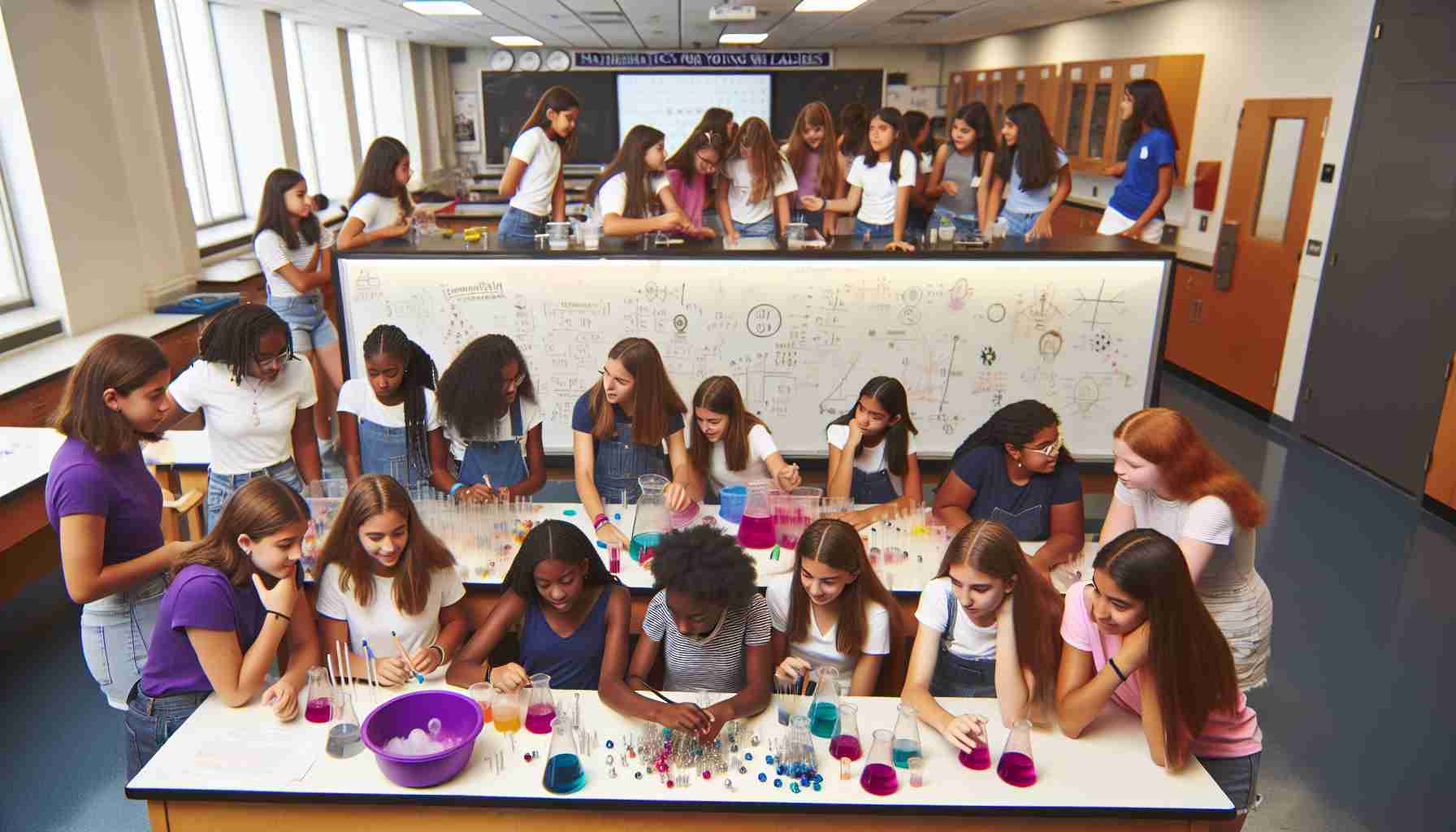
The “Girls Get Math” camp at Brown University similarly aims to foster a sense of belonging and confidence among young female students. By introducing unconventional math questions, such as “What color is math?” and “What is your favorite trigonometric function?” the camp encourages participants to engage in meaningful discussions about mathematics. This approach not only breaks the ice but also makes math more relatable and enjoyable, as noted by participant Gabriella Weimer from Barrington High School, who expressed her excitement about meeting other girls who share her passion for math.
The Role of Hands-On Activities in Enhancing Mathematical Understanding
One of the standout features of the “Girls Get Math” camp is its emphasis on hands-on activities that enhance mathematical understanding. Participants had the opportunity to visit the Harris Lab at Brown University’s School of Engineering, where they engaged in experiments related to fluid dynamics, impact dynamics, materials science, and structural optimization. By injecting bubbles into different materials, students were able to experience firsthand the principles of fluid viscosity, connecting theoretical concepts to real-world applications.
This hands-on approach aligns with educational research that underscores the effectiveness of experiential learning in mathematics. A study published in “District Administration” highlights the importance of hands-on activities, particularly for students facing language barriers. The article emphasizes that while mathematics is often referred to as a “universal language,” non-native English speakers must also grasp the language associated with mathematical concepts to succeed. By incorporating visual aids and manipulatives, educators can help students, including English Language Learners (ELLs), develop a deeper understanding of mathematical principles.
The “Girls Get Math” camp exemplifies this strategy by providing students with opportunities to engage in practical experiments and discussions. Such experiences not only enhance understanding but also build confidence, as students see the relevance of math in their everyday lives. The camp’s focus on hands-on learning is a crucial element in fostering a positive attitude toward mathematics and encouraging continued exploration in STEM fields.
The Importance of Mentorship in STEM Education for Young Women
Mentorship plays a pivotal role in shaping the educational experiences of young women in STEM. The “Girls Get Math” camp at Brown University is not just about learning math; it also provides a platform for mentorship through interactions with graduate students and faculty. This aspect of the program is vital, as research shows that mentorship can significantly influence the academic and career trajectories of women in STEM.
According to a study conducted by the Society of Women Engineers (SWE), effective mentorship programs can empower women in STEM by providing support, guidance, and networking opportunities. The study highlights the importance of creating a supportive environment where young women can connect with mentors who understand their challenges and aspirations. The findings suggest that mentorship programs that focus on building relationships and providing personalized guidance are particularly effective in promoting the success of women in engineering and technology fields.
At the “Girls Get Math” camp, students benefit from the mentorship of graduate students who guide them through complex mathematical concepts and experiments. This interaction not only enhances the learning experience but also helps to demystify the path to advanced studies in STEM. As students see role models who have successfully navigated similar challenges, they are more likely to envision themselves pursuing careers in these fields.
Exploring the Effectiveness of Unconventional Math Questions in Engaging Students
The use of unconventional math questions at the “Girls Get Math” camp serves as an innovative strategy to engage students and stimulate critical thinking. By posing questions that challenge traditional notions of mathematics, the camp encourages participants to think creatively and explore the subject in new ways. This approach aligns with educational research that emphasizes the importance of fostering curiosity and engagement in mathematics.
A study published in “Frontiers in Computer Science” examined the effectiveness of different teaching methods in conveying complex concepts to students. The research found that both online and face-to-face learning environments can effectively communicate scientific principles, regardless of students’ backgrounds. This suggests that the method of delivery may be less important than the content and the way it is presented.
In the context of the “Girls Get Math” camp, the unconventional questions serve as a catalyst for deeper discussions about mathematics. By encouraging students to think outside the box, the camp fosters a sense of exploration and discovery that is essential for developing a lifelong interest in STEM. This approach not only makes math more accessible but also empowers students to take ownership of their learning.
The Influence of University Partnerships on High School STEM Programs
The collaboration between universities and high schools is crucial for enhancing STEM education and providing students with meaningful learning experiences. The “Girls Get Math” camp at Brown University exemplifies the positive impact of such partnerships. By leveraging university resources and expertise, the camp creates an enriching environment for high school students to explore mathematics and science.
In Ohio, for example, the Department of Education has emphasized the importance of STEM education in preparing students for future careers. The state’s STEM and STEAM schools aim to provide students with hands-on learning experiences that foster critical thinking and problem-solving skills. These initiatives highlight the need for collaboration between educational institutions to create pathways for students to succeed in higher education and beyond.
The partnership between Brown University and local high schools through the “Girls Get Math” camp not only benefits the students but also strengthens the university’s commitment to community engagement and outreach. By providing high school students with access to university-level resources and mentorship, the camp helps to bridge the gap between secondary and post-secondary education, paving the way for future success in STEM fields.
Conclusion
The “Girls Get Math” summer camp at Brown University serves as a powerful example of how targeted initiatives can inspire young women to pursue careers in STEM. Through hands-on activities, mentorship, and unconventional approaches to mathematics, the camp fosters a sense of belonging and confidence among participants. The impact of such programs extends beyond individual students, contributing to a broader movement aimed at closing the gender gap in STEM fields.
As evidenced by the success of the FOCUS summer camp at George Mason University and the emphasis on mentorship in STEM education, it is clear that supportive environments play a crucial role in shaping the interests and aspirations of young women. The innovative strategies employed at the “Girls Get Math” camp, including the use of unconventional math questions and hands-on learning experiences, demonstrate the effectiveness of engaging students in meaningful ways.
Furthermore, the collaboration between universities and high schools is essential for creating pathways to success in STEM. By leveraging university resources and expertise, programs like “Girls Get Math” not only enhance the educational experience for high school students but also contribute to the development of a diverse and skilled workforce in the future.
In summary, the “Girls Get Math” camp exemplifies the potential of summer programs to ignite interest in STEM among young women. By fostering a supportive and engaging environment, these initiatives lay the groundwork for the next generation of scientists, engineers, and mathematicians. As we continue to advocate for greater representation of women in STEM, it is imperative that we invest in programs that empower and inspire young girls to pursue their passions in these fields.
News References:
- Rhode Island High Schoolers Embrace STEM Lessons at ICERM’s Girls Get Math Program
- FOCUS Summer Program Celebrates 10 Years of Inspiring Girls in STEM
- How to Ensure Effective Math Instruction for English-Language Learners
- Women in STEM: Closing the Gender Gap Through Effective Mentorship Programs
- A Comparative Analysis of Student Performance in Online vs. Face-to-Face Courses
- STEM Education in Ohio: A Pathway to Future Success