
Lehigh University’s Strategic Advancements: A Deep Dive into Research, Community Engagement, and Campus Revitalization
In a letter released on April 16, 2025, Lehigh University President Joseph J. Helble outlined several significant accomplishments that propel the university forward in alignment with its strategic plan, “Inspiring the Future Makers.” These achievements span various domains, including research, community engagement, and campus revitalization, marking a period of considerable progress for the institution. Let’s consider this carefully; these advancements collectively underscore Lehigh’s dedication to its core mission of education and research, its commitment to innovation, and its cultivation of a welcoming and inclusive community.
First among these milestones is Lehigh’s designation as an R1 research university by the Carnegie Classification of Institutions of Higher Education in February 2025. This prestigious recognition places Lehigh among the nation’s leading research universities, a distinction that enhances its ability to attract top-tier faculty, staff, and students. Simply put, the R1 designation acknowledges Lehigh’s commitment to pushing the boundaries of knowledge and driving impactful innovation.
Second, Lehigh has expanded its research capacity with the launch of two new University Research Centers (URCs): the Center for Community-Driven Assistive Technologies (CDAT) and the Center for Advancing Community Electrification Solutions (ACES). CDAT is dedicated to exploring and developing assistive technologies that improve the lives of individuals with disabilities. ACES, on the other hand, focuses on creating efficient, reliable, and self-sustaining energy systems for communities. These centers join the Center for Catastrophe Modeling and Resilience, established the previous year, in addressing critical societal challenges through focused research initiatives.
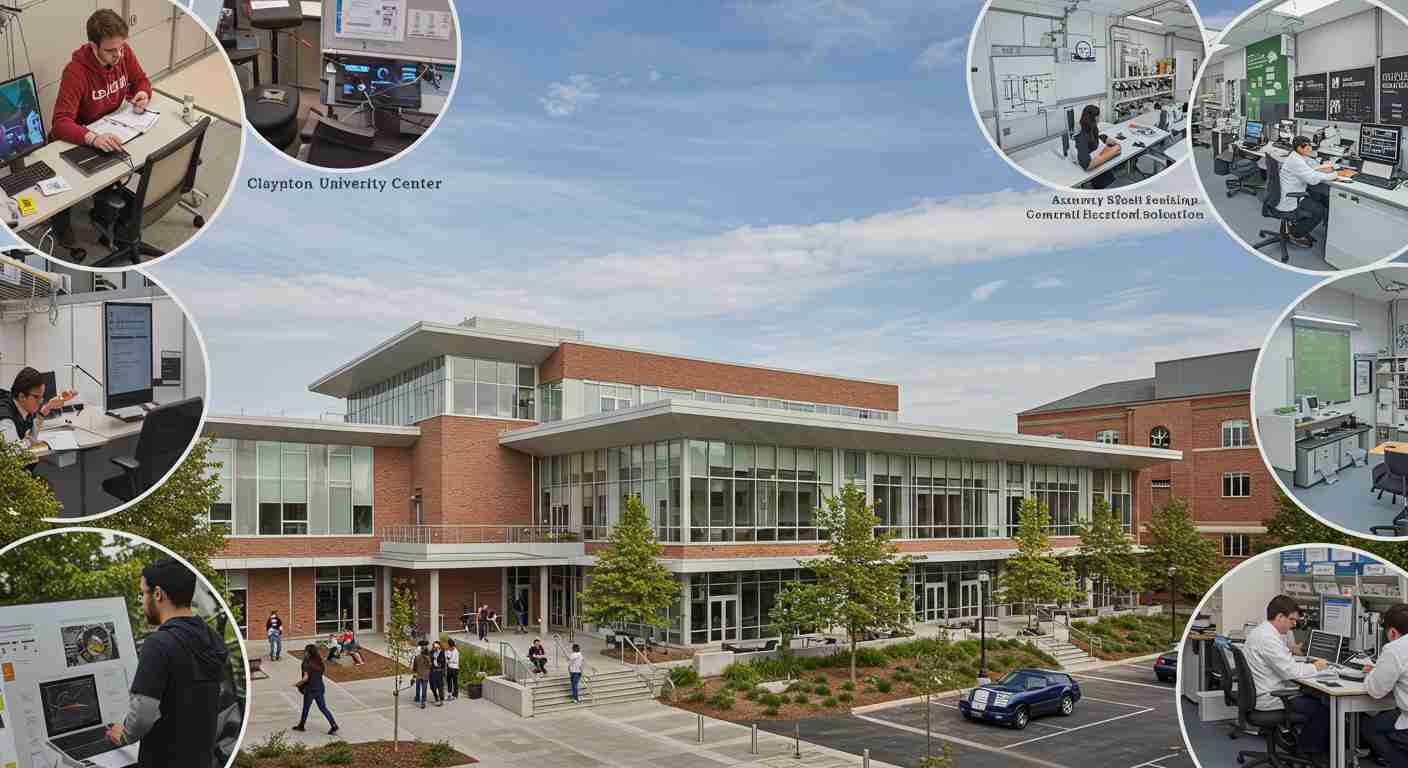
In January 2025, the revitalized Clayton University Center at Packer Hall reopened its doors a semester ahead of schedule. This reopening signals Lehigh’s dedication to strengthening the sense of community and fostering connections within the heart of the campus. The writer notes that an official Building Dedication is planned for fall 2025, marking a formal celebration of this renewed communal space.
Finally, looking ahead to the fall of 2025, Lehigh is set to launch Explore Lehigh, an exploratory first-semester program designed to broaden opportunities for interdisciplinary learning. This pilot program will allow incoming students to experience Lehigh without immediately committing to a specific academic college, giving them the opportunity to explore the university’s diverse curriculum before making a decision. This editor believes this innovative approach reflects Lehigh’s commitment to student-centered education and academic exploration.
These accomplishments occur against a backdrop of increasing importance for research universities in addressing complex societal challenges and fostering innovation. Lehigh’s commitment to community engagement, research excellence, and educational innovation positions it as a vital contributor to both regional and global progress.
Elevating Research Excellence: The Significance and Impact of Lehigh’s R1 Designation
The R1 designation is a significant marker of research prowess, awarded by the Carnegie Classification of Institutions of Higher Education. This classification, a leading framework for recognizing and describing institutional diversity in U.S. higher education, categorizes universities based on factors such as research funding, the number of doctoral degrees awarded, and the size and scope of their research activities. For a university to achieve R1 status, it must demonstrate a commitment to high-level research and scholarship across a broad range of fields. Let’s consider this carefully; it’s not simply about the volume of research, but also the impact and quality of that research.
The benefits associated with R1 status are far-reaching. First and foremost, it enhances a university’s ability to attract top faculty, staff, and students. Leading researchers are drawn to institutions where they can pursue groundbreaking work, collaborate with talented colleagues, and access state-of-the-art facilities. Similarly, high-achieving students are eager to learn from and work alongside these renowned faculty members, contributing to a vibrant and intellectually stimulating academic environment. The writer observes that this influx of talent creates a positive feedback loop, further enhancing the university’s research capabilities.
Second, R1 status significantly enhances research funding opportunities. Many federal and private funding agencies prioritize investments in institutions with a proven track record of research excellence. The R1 designation serves as a signal to these agencies that Lehigh is a capable and reliable steward of research dollars, increasing its competitiveness for grants and contracts. This editor notes that increased funding, in turn, allows the university to expand its research infrastructure, support more graduate students, and pursue ambitious research projects.
Third, R1 status fosters collaboration with other leading research institutions. Universities with strong research profiles are more likely to partner with other top-tier institutions on collaborative projects, sharing expertise and resources to tackle complex challenges. These collaborations can lead to breakthroughs that would not be possible working in isolation.
To illustrate these benefits, one can look at other universities that have achieved R1 status. The University of Missouri-Kansas City (UMKC), for example, has seen increased student applications and enhanced economic development in its community since attaining the R1 designation. As noted in UMKC’s announcement, the designation elevates Kansas City’s brand, attracting world-class corporations, culture, and talent. Nova Southeastern University (NSU) in Florida also anticipates advancements in healthcare, biotechnology, oceanography, and economic development, particularly within Florida’s blue economy, as a result of its R1 status. Worcester Polytechnic Institute (WPI) has witnessed significant growth in research breakthroughs, resulting in the creation of 25 startup companies in Worcester and Massachusetts, which have raised $1.7 billion in capital and employ over 500 people. Simply put, the R1 designation acts as a catalyst for innovation and economic growth.
Lehigh plans to leverage its R1 designation to further its research initiatives and contribute to knowledge and innovation in several key areas. The university will continue to invest in its research infrastructure, recruit talented faculty and staff, and foster interdisciplinary collaborations. This editor believes that Lehigh’s strategic investments in its University Research Centers (URCs), such as CDAT and ACES, are a prime example of its commitment to addressing critical societal challenges through targeted research initiatives.
Ultimately, research plays a vital role in driving societal change and addressing critical challenges. From developing new treatments for diseases to creating sustainable energy solutions, research provides the foundation for progress and innovation. Lehigh’s attainment of R1 status positions it to be a leading force in this endeavor, contributing to a brighter and more sustainable future. The writer emphasizes that Lehigh’s commitment to research excellence is not only a source of pride for the university but also a valuable asset for the broader community and the world.
Fostering Innovation and Impact: Lehigh’s New University Research Centers and Community Engagement Initiatives
Lehigh’s commitment to fostering innovation and addressing critical societal needs is further exemplified by the launch of its two new University Research Centers (URCs): the Center for Community-Driven Assistive Technologies (CDAT) and the Center for Advancing Community Electrification Solutions (ACES). These centers represent a strategic investment in interdisciplinary research aimed at tackling complex problems with significant societal impact.
First, let’s consider CDAT, which focuses on improving the lives of individuals with disabilities. Assistive technologies play a crucial role in empowering people with disabilities to live more independent and fulfilling lives. As Vinod Namboodiri, Forlenza Chair of Health Innovation and Technology and professor of computer science and engineering at Lehigh, has noted, assistive technologies are crucial for helping individuals with disabilities live more independent lives. This editor observes that CDAT will explore innovative approaches to address challenges related to life transitions, mobility enhancement, and access to various spaces. The center’s mission is to design, evaluate, and disseminate novel assistive technologies in partnership with community stakeholders.
Examples of assistive technologies that CDAT might explore include smart assistive devices, which are becoming increasingly sophisticated and user-friendly. Smart-home technology excels at enabling independent living through automation, scheduling, and voice control. Smart plugs, lighting solutions, and thermostats can be controlled remotely, simplifying everyday tasks. Smart window shades and garage-door openers offer automated control, benefiting those with mobility limitations. Smart sensors can detect activity and environmental conditions, triggering alerts and automated responses. Moreover, AI-powered technologies are showing great promise in supporting adaptive functioning in individuals with neurodevelopmental conditions. AI can provide personalized support in real-time, addressing needs in socialization, communication, and daily living activities. AI-assisted handwashing prompts, household activity support, and virtual reality training are just a few examples of how AI can enhance daily living skills. This editor believes that CDAT’s focus on community-driven assistive technologies is particularly important, as it ensures that the technologies developed are tailored to the specific needs and preferences of the individuals they are intended to serve.
Second, ACES concentrates on creating efficient, reliable, and self-sustaining energy systems for communities. Community electrification presents both challenges and opportunities. Shalinee Kishore, Iacocca Chair and professor of electrical and computer engineering at Lehigh, explained that ACES aims to deliver energy independence and efficiency through electrification, which is a growing force in the economy. This editor notes that ACES will focus on electrification across transportation, water, and building sectors, as well as adaptations to the local power grid. The center will develop “electricity-sheds” within communities to optimize power use, storage, and delivery, combining technology solutions with community needs to reduce energy costs and promote energy security.
AI solutions are playing an increasingly important role in addressing the challenges of community electrification. Sustainable Energy for All (SEforALL) and IBM have launched new AI-powered solutions designed to inform sustainable urban development for cities and communities globally. The Open Building Insights (OBI) Tool, developed in collaboration with IBM, helps overcome data gaps and inform energy access and transition interventions. Modeling Urban Growth (MUG) is an open-source AI model designed to predict urban expansion and associated infrastructure needs. These AI tools assist decision-makers and policymakers in mapping urbanization and identifying energy and infrastructure requirements. Furthermore, the U.S. Environmental Protection Agency (EPA) is funding research on energy transitions in underserved communities. These grants are dedicated to researching the drivers and environmental impacts of energy transitions within underserved communities and Tribes, recognizing the rapid shift away from fossil-based energy systems. Projects funded by the EPA aim to understand how low- and moderate-income households experience the energy transition, develop research platforms for energy-efficient electrification, and implement community co-designed interventions.
Finally, it’s important to recognize the role of Lehigh’s Small Cities Lab, which has been awarded a planning grant. The Small Cities Lab focuses on the challenges faced by smaller cities in areas such as affordable housing, economic development, public health, and public history. This editor believes that the lab serves as a collaborative hub that engages directly with communities to co-create practical solutions tailored to the unique needs of small cities. Simply put, this initiative underscores Lehigh’s commitment to addressing the specific challenges faced by smaller urban centers, ensuring that they are not left behind in the pursuit of progress.
The writer emphasizes that community engagement and interdisciplinary research are essential for addressing complex societal problems. By bringing together experts from different fields and working closely with community stakeholders, Lehigh is well-positioned to develop innovative solutions that address real-world needs. The launch of CDAT and ACES, along with the work of the Small Cities Lab, demonstrates Lehigh’s commitment to fostering innovation and making a positive impact on society.
Revitalizing the Campus Core: The Reopening of the Clayton University Center and its Impact on Community
The reopening of the revitalized Clayton University Center at Packer Hall represents a significant step in strengthening the sense of community and connection at Lehigh. Campus revitalization projects play a vital role in enhancing the student experience and fostering a sense of belonging, creating spaces where students can connect, collaborate, and engage in campus life. The Clayton University Center, now modernized and updated, serves as a central hub for student activities, events, and informal gatherings, contributing to a more vibrant and inclusive campus environment.
To illustrate the impact of campus revitalization, let’s consider examples from other universities. Livingstone College, a historically Black college and university (HBCU), received a $6 million anonymous donation to support its campus revitalization project. This project, overseen by President Anthony J. Davis, involves a $30 million investment in renovations and repairs of the college’s infrastructure. The revitalization includes the construction of new residence halls and a new dining facility, designed to enhance the student experience and attract prospective students. The University of Alabama at Birmingham (2025 USNews Ranking: 136) (UAB) is leading a community-based research study, backed by a $3.7 million grant from the National Institutes of Health (NIH), to investigate how modifications to housing and neighborhood conditions impact health outcomes. This project, titled Housing, Environment, And Living Conditions for Transformed Health (HEALTHe Birmingham), will assess the health effects of public housing and neighborhood revitalization on lung health and chronic disease risk. San Jose State University (SJSU) has published a Draft Environmental Impact Report (EIR) for its campus master plan, which aims to significantly expand the school’s facilities, including housing for students and staff, and upgrade facilities at the South Campus. The plan seeks to increase the campus capacity and create residential space for 2,100 beds, accommodating an increase in enrollment from 35,475 students to approximately 44,000 by 2045. These examples demonstrate how campus revitalization projects can lead to infrastructure improvements, enhanced student experiences, and increased enrollment.
The writer observes that for HBCUs, campus revitalization projects are particularly important due to the historical pattern of underfunding from both federal and private sources. A study by the Government Accountability Office (GAO) and UNCF’s recent report on the economic impact of HBCUs indicates that nearly half of all HBCUs are in urgent need of critical repairs. Approximately two-thirds of UNCF’s 37 member institutions face deferred maintenance costs exceeding $5 million. Public HBCUs, on average, have deferred maintenance costs of over $60 million, according to the GAO. This editor notes that the anonymous donation to Livingstone College highlights the crucial role of philanthropy in addressing the infrastructural needs and supporting the continued growth of HBCUs. Public support and donations are essential for addressing deferred maintenance costs and creating a welcoming and inclusive campus environment for all students.
The revitalization of the Clayton University Center at Packer Hall underscores Lehigh’s commitment to creating a welcoming and inclusive campus environment. By providing students with a modern and comfortable space to gather, study, and socialize, Lehigh is fostering a stronger sense of community and belonging. The writer believes this investment in the campus core will have a lasting impact on the student experience and contribute to a more vibrant and engaging campus life for all.
Expanding Horizons: The Explore Lehigh Program and the Future of Interdisciplinary Learning
Finally, let’s consider the launch of the Explore Lehigh program, which holds significant potential for expanding opportunities for interdisciplinary learning. The program’s structure is designed to allow students to experience the breadth of Lehigh’s academic offerings before committing to a specific college. The writer believes that this exploratory approach can empower students to make more informed decisions about their academic paths, aligning their interests and passions with the diverse range of disciplines available at Lehigh.
Interdisciplinary learning offers numerous benefits, fostering creativity, critical thinking, and problem-solving skills. For instance, at Zhejiang University, a consultation case-based learning course improved interdisciplinary clinical reasoning among residents from various medical specialties. Similarly, STEM teacher professional development programs in China emphasize interdisciplinary integration and innovative curriculum reform. This editor notes that these programs equip teachers with the skills and knowledge to create more dynamic and engaging learning environments for their students. Furthermore, service-learning and higher-order cognitive processing can enhance preclinical education, as demonstrated by the Anatomy Academy program at Boston University. This program involves students developing a supplementary high school medical science curriculum based on their preclinical courses, promoting healthy habits, increasing community public health self-efficacy, and sparking interest in STEMM fields.
The writer observes that innovation in education is crucial for preparing students for a rapidly changing world. Universities must embrace new approaches to learning and teaching, fostering interdisciplinary collaboration, experiential learning, and a commitment to lifelong learning. Simply put, the Explore Lehigh program represents a bold step in this direction, empowering students to explore their interests, develop their talents, and make meaningful contributions to society. This editor believes that by providing students with a flexible and supportive learning environment, Lehigh is preparing them to be innovative thinkers, problem-solvers, and leaders in their chosen fields.
Reference:
- Successes Advancing Lehigh’s Mission
- UMKC Achieves Carnegie R1 Designation, Elevating Kansas City’s Research Profile
- NSU Designated as R1 Research University by Carnegie Foundation
- WPI Attains Designation as an R1 Research University
- The Best Smart Assistive Devices for People With Disabilities
- AI Technology Supports Adaptive Functioning in Neurodevelopmental Conditions: A Systematic Review
- Lehigh University Announces Two New Research Centers to Address Community Health, Energy Systems
- Sustainable Energy for All and IBM Launch New AI Solutions for Energy and Urban Development
- EPA Awards $11 Million in Grants for Energy Transition Research in Underserved Communities (2024)
- $6M Anonymous Donation Supports Livingstone College’s Revitalization Project
- UAB to conduct NIH-funded research on the health impacts of public housing and neighborhood revitalization
- Draft EIR Published for San Jose State University Masterplan
- Consultation Case-Based Learning Course Improves Interdisciplinary Clinical Reasoning: A Pilot Study from Nephrology
- Emerging Trends and Effective Strategies in STEM Teacher Professional Development: A Systematic Review
- Reaching the Top of Bloom’s Taxonomy: An Innovative Program for STEMM Outreach