
Introduction: The Intersection of Music, Technology, and Education
The Massachusetts Institute of Technology (2025 USNews Ranking: 2) (MIT) has recently announced the launch of a groundbreaking graduate program in Music Technology and Computation, a significant initiative that reflects the evolving landscape of music, technology, and education. Set to commence in fall 2025, this program is designed to explore the intersection of music, computing, and technology, positioning MIT at the forefront of this dynamic field. The collaborative nature of the program is particularly noteworthy, as it brings together multiple departments, including the Music and Theater Arts Section of the School of Humanities, Arts, and Social Sciences (SHASS), the Department of Electrical Engineering and Computer Science (EECS), and the MIT Schwarzman College of Computing. This interdisciplinary approach is essential in fostering innovation, as it allows for the integration of diverse perspectives and expertise.
In an era characterized by rapid advancements in artificial intelligence (AI), machine learning, and human-computer interaction, the significance of this program cannot be overstated. Jay Scheib, head of the MIT Music and Theater Arts Section, emphasized that the program represents a necessary and provocative step forward, particularly as music increasingly converges with technology. The curriculum will cover a wide range of topics, including music information retrieval, generative algorithms, and digital instrument design, all of which are crucial in understanding and shaping the future of music creation and performance.
The collaborative spirit of the program is further exemplified by the involvement of faculty members like Eran Egozy and Anna Huang, who bring their expertise in music technology and human-computer interaction, respectively. Their work aims to enhance the understanding and creation of music through innovative AI systems, highlighting the potential for human-AI collaboration in music-making. This focus on interdisciplinary education is vital, as it prepares students to navigate the complexities of a field that is rapidly evolving due to technological advancements.
Moreover, the establishment of the Edward and Joyce Linde Music Building, equipped with advanced music technology spaces, underscores MIT’s commitment to providing an environment conducive to interdisciplinary collaboration. This infrastructure will not only support the program’s educational goals but also facilitate innovative projects that emerge from the intersection of engineering and the arts. As Anantha Chandrakasan, dean of the School of Engineering, noted, the partnership between engineering and music is expected to yield exciting and transformative outcomes.
The implications of this initiative extend beyond the confines of MIT. As the music industry continues to grapple with the impact of AI and digital technologies, the need for professionals who can bridge the gap between music and technology is more pressing than ever. The program’s emphasis on interdisciplinary education will equip graduates with the skills necessary to lead advancements in music technology, ultimately shaping the future of the industry.
In summary, the launch of the Music Technology and Computation Graduate Program at MIT represents a significant step forward in the integration of music and technology. By fostering collaboration across various disciplines, MIT is not only preparing students for future career opportunities in this evolving field but also contributing to the broader discourse on the role of technology in the arts. As we delve deeper into the implications of this initiative, it becomes clear that interdisciplinary education is key to fostering innovation and creativity in music technology.
The Role of Artificial Intelligence in Music Creation and Performance
The integration of artificial intelligence (AI) into the music industry is reshaping the landscape of music composition and performance, presenting both exciting opportunities and significant challenges. As highlighted in various articles, AI is not merely a tool for music generation; it is a transformative force that is democratizing music production, enhancing live performances, and raising ethical concerns about the future of artistic expression.
One of the most notable applications of AI in music is its ability to generate new compositions. For instance, the recent completion of a Beatles song using AI technology illustrates how these tools can bridge the gap between past and present. By isolating John Lennon’s voice from an old demo tape, AI facilitated a collaboration that involved surviving members Paul McCartney and Ringo Starr, showcasing the potential for AI to revive and reinterpret classic works. This example underscores the capacity of AI to enhance creativity, allowing artists to explore new avenues of expression while honoring their musical heritage.
AI-powered platforms like Amper Music and AIVA are revolutionizing the way music is created. These tools enable musicians to generate melodies, chord progressions, and even lyrics, making the music creation process more accessible to those without formal training. The democratization of music production is further exemplified by IBM’s Watson Beat, which allows users to create music that replicates traditional sounds or invents entirely new ones. This shift is empowering a new generation of artists who can now produce high-quality music without the need for expensive studio time or extensive technical knowledge.
Moreover, AI is enhancing live performances, creating immersive experiences for audiences. Artists like Travis Scott have utilized AI to develop hyper-realistic avatars and interactive environments, allowing them to reach global audiences in innovative ways. In physical venues, AI technologies analyze crowd reactions in real-time, adjusting lighting and visuals to create a unique concert experience tailored to the audience’s energy. This integration of AI into live performances not only enriches the audience’s experience but also opens new avenues for artistic expression.
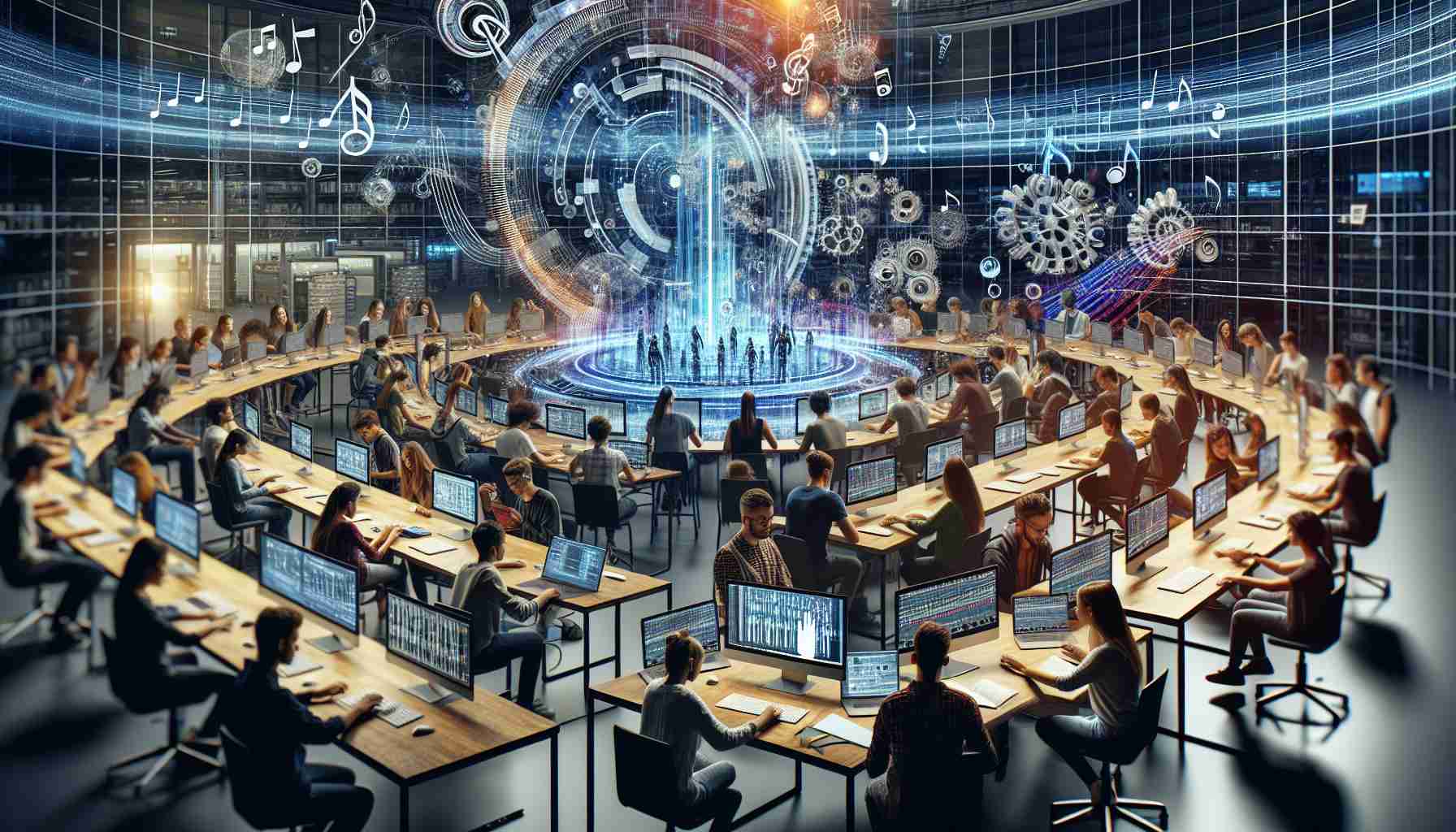
However, the rise of AI in music is not without its challenges. The indistinguishability of AI-generated music from human-created music raises pressing concerns about copyright and ownership. Major record labels, such as Warner Music Group, have taken proactive measures to protect artists’ rights, requesting streaming platforms to prevent AI from training on their music without permission. This reflects a growing anxiety among artists about the potential dilution of their brand and the integrity of their work in an era where AI can produce music at an unprecedented scale.
Critics argue that while AI can generate music, it often lacks the emotional depth and creativity that characterize compelling human artistry. As noted by Matteo Wong in The Atlantic, successful music often involves breaking rules and subverting expectations—qualities that AI struggles to achieve. This raises important questions about the balance between leveraging technology and maintaining the authenticity of artistic expression. The fear is that as AI becomes more prevalent, the unique voice and life experiences that human artists bring to their work may be overshadowed by generic outputs produced by algorithms.
The ethical implications of AI in music extend beyond copyright issues. As the industry adapts to these technological changes, there is a pressing need to ensure fair compensation for artists. The rapid pace of AI development could lead to job losses for those in the music industry who create commercial music, as companies may prioritize cost over artistic vision. This concern is echoed by experts who emphasize the importance of maintaining a critical perspective when integrating AI into creative processes.
In conclusion, the impact of AI on music composition and performance is profound and multifaceted. While it offers vast opportunities for innovation and accessibility, it also presents significant ethical challenges that must be addressed. As the music industry continues to evolve, the fusion of human creativity and AI promises to reshape the landscape of music production and consumption, necessitating a thoughtful approach that prioritizes the values of artistic integrity and fair compensation for creators.
Interdisciplinary Education: Preparing for Future Careers in Music Technology
The launch of MIT’s new graduate program in Music Technology and Computation marks a pivotal moment in the evolution of interdisciplinary education, particularly at the intersection of music and technology. As the music industry increasingly embraces technological advancements, the demand for professionals who can navigate this complex landscape is growing. Programs like MIT’s are designed to equip students with the necessary skills to thrive in this dynamic environment, blending the artistic nuances of music with the analytical rigor of computing.
At the heart of this program is a commitment to interdisciplinary learning, which is essential for preparing students for future careers in music technology. By integrating perspectives from computer science, mathematics, and music, the curriculum fosters a holistic understanding of how these fields interact. This approach not only enhances students’ technical skills but also encourages creative thinking, enabling them to innovate at the crossroads of art and technology. As Eran Egozy, a professor of practice in music technology at MIT, points out, the program will cover a range of topics, including artificial intelligence, machine learning, and digital instrument design, all of which are crucial for the next generation of music creators and technologists.
Industry leaders echo the importance of such interdisciplinary education. Ge Wang, a professor at Stanford University, emphasizes that the future of music lies in the collaborative potential between humans and computers. He argues that technology should be viewed as a tool that enhances creativity rather than a replacement for human artistry. This sentiment is echoed by Anna Huang, a new assistant professor at MIT, who is focused on developing AI systems that facilitate human-AI collaboration in music creation. Huang’s work exemplifies the program’s goal of fostering innovative partnerships between artists and technology, preparing students to lead in an evolving field.
The significance of collaborative spaces in fostering innovation cannot be overstated. MIT’s new Edward and Joyce Linde Music Building, which features advanced music technology spaces, is designed to enhance music education through versatile performance venues and optimized rehearsal facilities. Such environments are crucial for encouraging collaboration among students from diverse disciplines, allowing them to experiment and innovate together. As Anantha Chandrakasan, dean of the School of Engineering at MIT, notes, the partnership between engineering and the arts is expected to yield groundbreaking projects that push the boundaries of what is possible in music technology.
Moreover, the rise of AI in the music industry presents both opportunities and challenges. As highlighted in various discussions, AI is democratizing music production, enabling individuals without formal training to create and share their work. This shift is reshaping the landscape of music creation, making it more accessible and inclusive. However, it also raises ethical questions about copyright and the authenticity of AI-generated music. As the industry grapples with these issues, the need for professionals who can navigate the complexities of technology and artistry becomes increasingly apparent.
In this context, interdisciplinary education serves as a vital foundation for future career opportunities in music technology and computation. By equipping students with a diverse skill set and fostering a collaborative mindset, programs like MIT’s are preparing the next generation of innovators who will shape the future of music. As the boundaries between music and technology continue to blur, the ability to think critically and creatively across disciplines will be essential for success in this rapidly evolving field.
The Evolution of Music Technology in the Digital Age
The evolution of music technology has been profoundly influenced by digital advancements, reshaping the landscape of how music is created, consumed, and experienced. One of the pivotal tools in this transformation has been music notation software, particularly Finale, which has served as a cornerstone for composers and educators for over three decades. Launched in 1988, Finale revolutionized the process of writing and formatting sheet music, allowing musicians to create complex arrangements with ease and hear live audio playback. Its discontinuation in 2024, however, has sparked significant backlash from the music community, highlighting the software’s historical significance and the challenges faced by users in transitioning to new platforms. This moment serves as a reminder of how integral such tools have been in the digital age, facilitating collaboration and education in music.
As technology continues to advance, new tools and platforms are emerging that further democratize music creation. Artificial intelligence (AI) is at the forefront of this evolution, offering innovative solutions that enhance the creative process. AI-powered platforms like Amper Music and AIVA enable musicians to generate melodies, chord progressions, and even lyrics, making music production accessible to those without formal training. This shift not only empowers a new generation of artists but also raises questions about the authenticity and emotional depth of AI-generated music. Critics argue that while AI can mimic styles and structures, it often lacks the unique voice and life experiences that human artists bring to their work.
The rise of digital art and Non-Fungible Tokens (NFTs) has also transformed the creative landscape, providing artists with new avenues for monetization and audience engagement. NFTs allow musicians to sell their work in a digital format, reaching global audiences and creating new economic opportunities. This intersection of technology and creativity is reshaping the music industry, as artists explore innovative ways to connect with fans and monetize their art. However, the rapid pace of technological change presents challenges, particularly concerning copyright and ownership. As AI-generated music becomes indistinguishable from human-created compositions, the industry must navigate the complexities of intellectual property rights to protect artists’ interests.
Moreover, the collaborative nature of music creation is being enhanced by digital platforms that foster community and innovation. Startups like BandLab are creating environments where musicians can collaborate, share feedback, and refine their work collectively. This shift towards collaboration reflects a broader trend in the music industry, where the barriers to entry are diminishing, allowing for a more inclusive and diverse creative ecosystem. As technology continues to evolve, the role of interdisciplinary education becomes increasingly important. Programs like MIT’s new graduate initiative in Music Technology and Computation exemplify this trend, integrating perspectives from computer science, engineering, and the arts to prepare students for the future of music technology.
In this rapidly changing landscape, the significance of collaborative spaces cannot be overstated. Institutions and organizations that foster innovation in music and technology are essential for nurturing the next generation of creators. Events like LA Tech Week, hosted by USC’s Information Sciences Institute, highlight the importance of bringing together tech enthusiasts, researchers, and artists to explore the potential of AI and other technologies in music. These collaborative efforts not only drive advancements in the field but also ensure that the human element of creativity remains at the forefront of technological innovation.
As we look to the future, the integration of AI and digital tools in music creation presents both opportunities and challenges. While these advancements can enhance creativity and accessibility, they also raise critical questions about the nature of artistry and the economic implications for musicians. The ongoing dialogue surrounding these issues will shape the future of music technology, ensuring that as we embrace innovation, we also prioritize the values and experiences that define the art form.
Conclusion: Embracing the Future of Music and Technology
The launch of MIT’s new graduate program in Music Technology and Computation marks a pivotal moment in the intersection of music and technology, reflecting a broader trend in higher education that embraces interdisciplinary approaches. This program, which combines expertise from the fields of music, computer science, and engineering, is designed to equip students with the skills necessary to navigate and innovate within the rapidly evolving landscape of music technology. As highlighted by program leaders, the curriculum will delve into critical areas such as artificial intelligence, machine learning, and digital instrument design, fostering a comprehensive understanding of how these technologies can enhance musical creativity and expression.
The significance of such interdisciplinary programs cannot be overstated. They not only prepare students for future careers in a field that is increasingly reliant on technological advancements but also encourage collaboration between diverse disciplines. This collaborative spirit is essential in an era where the boundaries between art and technology are becoming increasingly blurred. As students learn to harness the power of AI and other digital tools, they are also challenged to consider the ethical implications of their work, particularly in terms of copyright, ownership, and the authenticity of artistic expression.
Moreover, the program’s emphasis on human-AI collaboration, as articulated by faculty members like Anna Huang, underscores the potential for technology to augment rather than replace human creativity. This perspective is echoed in discussions surrounding the role of AI in music composition and performance, where the focus is shifting from viewing AI as a competitor to recognizing it as a valuable tool that can enhance the creative process. As the music industry grapples with the challenges posed by AI, including concerns about job displacement and the dilution of artistic integrity, initiatives like MIT’s program are crucial in fostering a dialogue about the future of music in an AI-driven world.
In conclusion, the integration of technology into music education, as exemplified by MIT’s Music Technology and Computation program, highlights the importance of embracing technological advancements while preserving the essence of human creativity. As we look to the future, it is essential to continue exploring the ethical implications of AI in the arts and to foster an environment where innovation and collaboration can thrive. The evolving nature of music, intertwined with technology, presents a unique opportunity for artists and technologists alike to redefine the boundaries of creativity and expression.
Reference:
MIT Launches New Graduate Program in Music Technology and Computation
Orchestrating The Future—AI In The Music Industry
AI’s Impact on Music: A Threat to Human Creativity or a New Tool?
New York Tech Launches Innovative Programs and Welcomes New Faculty for 2024
Wright State University Introduces New and Restructured Undergraduate Degrees
The Future of Computer Music: A Conversation with Ge Wang
Finale Music Notation Software to Shut Down: A Look Back at Its Impact
The Evolution of Digital Art: How Technology is Shaping the Future of Creativity
USC ISI to Host Events During LA Tech Week 2024
How AI Entrepreneurs Are Transforming the Music Industry