
Most STEM graduate students in the U.S. will not become professors, and the job market for scientists has been uneven: biotech and pharma layoffs in recent years, AI changing many technical jobs, and, for international students, new rules on H-1B work visas. This guide collects practical advice from university career events and career coaches on building a network, choosing between industry and academia, and handling impostor syndrome, then summarizes the work-authorization rules international students need to plan around (current as of November 2026).
1. Start career planning early
“During graduate studies, you can develop tunnel vision on your research question,” said Audrey Ruple, director of the Biomedical and Veterinary Sciences (BMVS) graduate program at Virginia Tech’s Virginia-Maryland College of Veterinary Medicine. In 2025 the program held its first Professional Development Day, the day after its research symposium, to get students to look beyond their lab work; Ruple described the goal as building career resilience (Virginia Tech News, June 4, 2025). Five alumni who started in the same Ph.D. program described very different careers: Virginia Tech faculty, teaching medical students, a move from academia to Google and then biotech leadership, corporate virology, and an NIH-funded research position.
Most universities offer similar resources: graduate career services, alumni panels, NIH- or NSF-funded professional development programs and campus career fairs. Use them in your first or second year, not just in your final semester.
2. Network with a purpose
Know what you are offering
At the Virginia Tech event, Michael D.L. Johnson, associate professor of immunobiology at the University of Arizona, asked students to define their professional “brand” in five words or fewer and to introduce themselves through their values rather than a description of their research. “If you don’t know who you are, you won’t know what you’re selling,” he said, and “closed mouths don’t get fed”: other people cannot help with goals you never mention.
Build real relationships
At the 27th NIEHS Biomedical Career Symposium in April 2025, Tammy Collins, a program officer at the Burroughs Wellcome Fund and former director of the NIEHS Office of Fellows’ Career Development, taught networking with a gardening metaphor. “Networking is about reciprocity and authentic relationships,” she said. “Don’t use social media only to self-promote” (NIEHS Environmental Factor, May 2025).
Practical steps:
- Ask for informational interviews with people in jobs you are curious about. Explain why you chose them (a shared university, research area or company) and ask about the work, not for a job.
- Keep in touch after conferences and interviews, and offer something back, such as a paper, a contact or an update on your work.
- Use alumni. Alumni from your own program are often the most willing to talk. At Virginia Tech, veterinary cardiologist Bill Tyrrell said learning ultrasound on his own led to the connection that secured his residency: “It’s not what you know, it’s who you know.”
- Follow the money. One Virginia Tech alumna advised using NIH RePORTER to find researchers who have just received grants and contacting them early, since new grants often mean new positions. Another recommended following biotech and pharma news sites that track layoffs and funding.
3. Industry or academia?
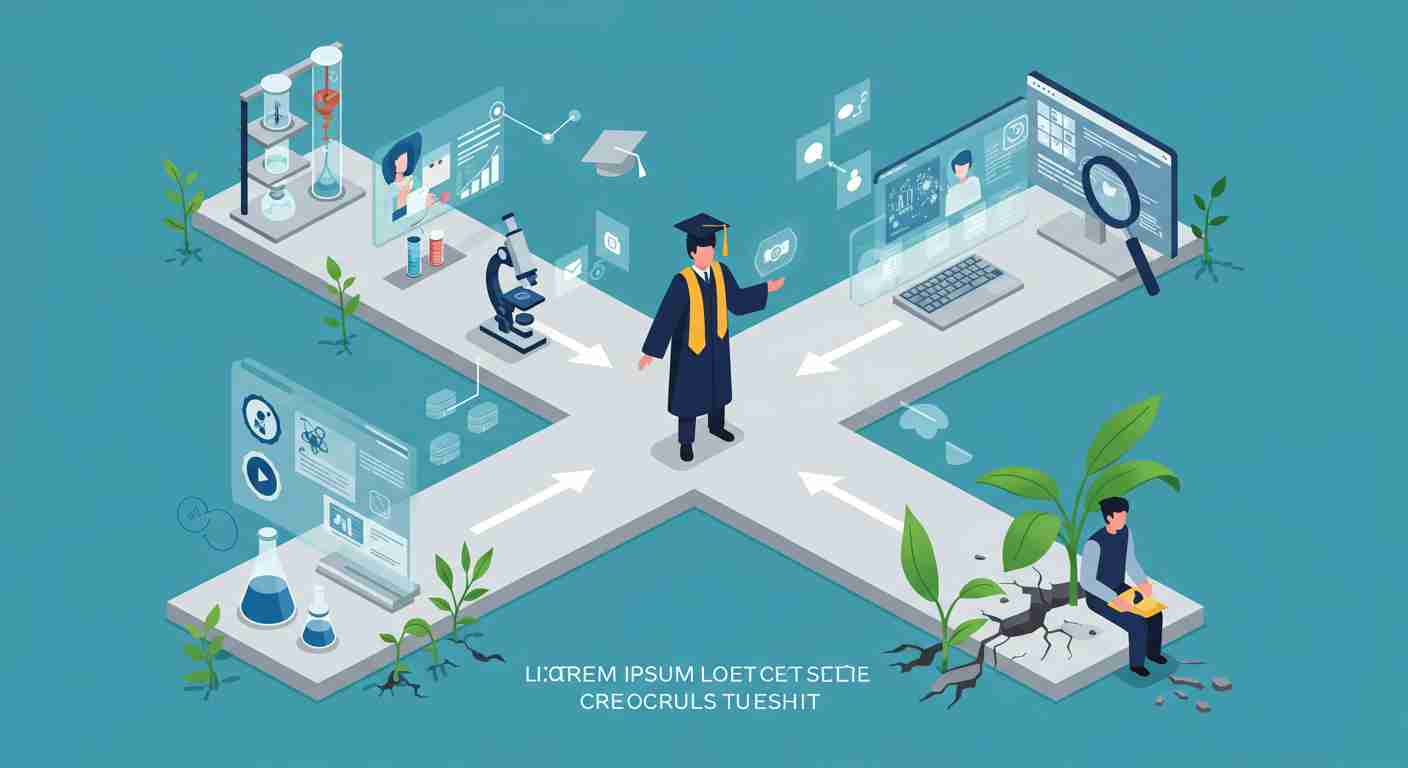
The choice is no longer one-way. In a BioSpace LinkedIn poll reported in October 2024, 60% of respondents said they had considered leaving industry for a job in academia, and 12% had already done so, many of them for postdoc positions. Career coach Carina Clingman, founder of The Collaboratory Career Hub, said the main reason was difficulty finding industry jobs, and that academic openings exist partly because so many scientists had left academia for industry. She called the fear that a move back to academia closes the door to industry a “perceived fear,” not what actually happens, as long as you can explain how the move built your skills (BioSpace, Back to School? From Industry to Academia).
| Academia (postdoc, research scientist, faculty) | Industry (biotech, pharma, tech) | |
|---|---|---|
| Research goals | Open-ended questions, publication | Product- and goal-driven; projects can be stopped if not commercially promising |
| Culture | Open debate and sharing | Team-based; publications and intellectual property reviewed by the company |
| H-1B visa (international students) | Universities and affiliated nonprofit research institutions are exempt from the annual H-1B cap | Most employers are subject to the cap and the annual selection |
The visa difference matters: because H-1B petitions from universities and nonprofit or government research organizations are not subject to the cap, they can be filed at any time of year without going through the annual selection (USCIS, H-1B Specialty Occupations).
4. Handle impostor syndrome
Many graduate students feel they are “faking it” despite their achievements. A systematic review of 62 studies found that reported prevalence of impostor syndrome ranged from 9% to 82%, depending largely on the screening tool and cutoff used, and that it is often linked with depression, anxiety, lower job performance and burnout (Bravata et al., Journal of General Internal Medicine, 2020). The review also found little research on treatments, so the advice below is practical rather than clinical:
- Talk about it with mentors, peers or a counselor. University counseling centers serve graduate students as well as undergraduates.
- Keep a record of accomplishments: papers, presentations, skills, awards. It is useful against self-doubt and when you write a résumé.
- Accept failure as normal. Kristin Eden, one of the Virginia Tech alumni, told students that setbacks do not define their worth.
- Get help if it affects daily life. If anxiety or low mood persists, contact your campus counseling center; in a crisis in the U.S., call or text 988 (988 Suicide & Crisis Lifeline).
5. Work authorization for international students
International STEM graduates need to plan their job search around these rules. Always confirm details with your school’s designated school official (DSO) and an immigration attorney.
- OPT and the STEM OPT extension: F-1 students can work on Optional Practical Training (OPT) for 12 months after completing a degree. Graduates with a degree on the DHS STEM Designated Degree Program List can apply for a 24-month STEM OPT extension. The employer must use E-Verify, and student and employer complete a training plan (Form I-983) (Study in the States, STEM OPT Hub).
- The H-1B cap and weighted selection: the H-1B cap is 65,000 new visas a year, plus 20,000 for holders of a U.S. master’s degree or higher. Starting with the fiscal year 2027 registration in March 2026, USCIS no longer selects registrations purely at random: under a DHS final rule published on December 29, 2025, selection is weighted by the OEWS wage level of the job offer, so higher-paid offers have better odds (Federal Register, December 29, 2025; USCIS, H-1B Electronic Registration Process). The registration fee for the FY 2027 cap was $215.
- The $100,000 H-1B payment: a presidential proclamation of September 19, 2025, required a $100,000 payment for new H-1B petitions filed on or after September 21, 2025, for workers outside the U.S. without a valid H-1B visa. It did not apply to a change of status inside the U.S., such as from F-1 (including OPT) to H-1B, when the change is approved. On June 8, 2026, a federal district court in Massachusetts vacated the agency guidance implementing the payment, and on July 24, 2026, the First Circuit denied the government’s request for a stay; DHS has said it will comply while it considers next steps and still plans to collect the payment if the order is lifted (USCIS, H-1B Specialty Occupations). These rules are changing quickly, so check USCIS before planning travel or a job change.
Practical takeaways: if you are an international student, ask early in interviews whether an employer sponsors H-1B visas, keep your degree’s STEM eligibility in mind, consider cap-exempt university and nonprofit research jobs, and avoid leaving the U.S. while a change of status is pending without legal advice.
References
- From Lab Coats to Life Paths, a Day of Career Discovery (Virginia Tech News, June 4, 2025)
- 27th NIEHS Biomedical Career Symposium coverage (NIEHS Environmental Factor, May 2025)
- Back to School? From Industry to Academia (BioSpace)
- Prevalence, Predictors, and Treatment of Impostor Syndrome: a Systematic Review (Bravata et al., Journal of General Internal Medicine, 2020)
- NIH RePORTER (National Institutes of Health)
- 988 Suicide & Crisis Lifeline
- STEM OPT Hub (U.S. Department of Homeland Security, Study in the States)
- H-1B Specialty Occupations (USCIS, updated September 2026)
- H-1B Electronic Registration Process (USCIS)
- Weighted Selection Process for Registrants and Petitioners Seeking To File Cap-Subject H-1B Petitions (Federal Register, December 29, 2025)