
Navigating the Post-Graduation Landscape: UCLA’s Comprehensive Support System
The economic climate for recent graduates entering the workforce in 2025 presents a complex landscape, marked by significant challenges. Insights from Business Insider and Bowdoin College highlight a concerning trend of underemployment for Generation Z, where many college graduates are finding themselves in positions that do not require a bachelor’s degree. Factors contributing to this include a potential economic slowdown, a reluctance among existing employees to leave their current roles, and policy uncertainties that can impact business hiring. For instance, data from the Federal Reserve Bank of New York indicated a notable rise in underemployment among young adults in their early to mid-twenties. Similarly, even graduates from highly regarded institutions are facing a tougher job market, with some MBA programs reporting lower placement rates than in recent memory. This environment can understandably lead to feelings of disappointment and uncertainty for those embarking on their careers, as the expected returns on their educational investment seem harder to attain.
Amidst these broader economic headwinds, UCLA is demonstrating a strong commitment to supporting its Class of 2025 through a robust and multi-faceted approach to career services. The UCLA Career Center is a cornerstone of this support, offering graduates extensive resources for up to three months post-commencement. This includes both in-person and virtual consultations, ensuring accessibility regardless of location. Complementing this immediate support are continuously available online resources, providing graduates with tools and guidance for the long term.
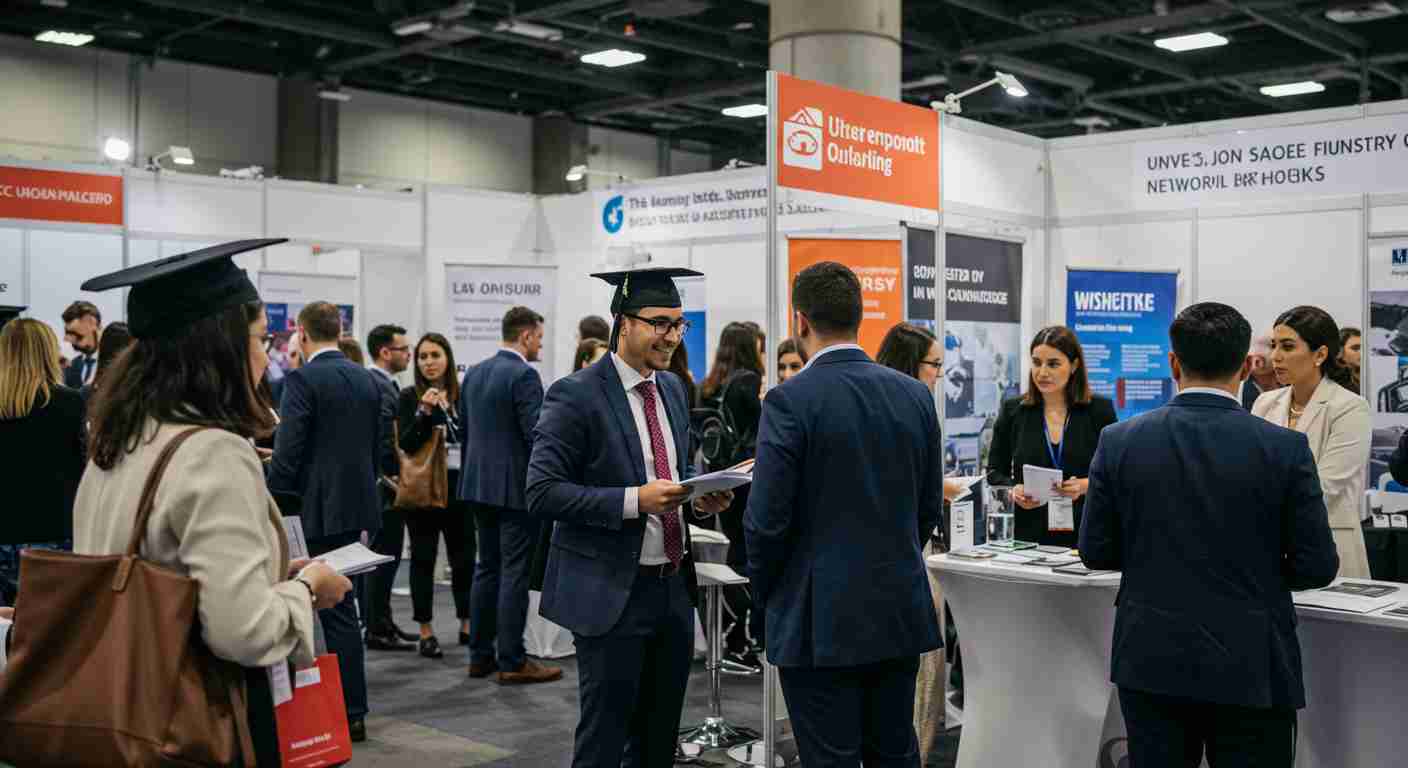
The Career Center’s advisors are readily available to assist with critical aspects of the job search. Graduates can benefit from personalized resume and cover letter reviews, ensuring their applications are polished and effectively showcase their qualifications. Advice on salary negotiation is also a key offering, empowering students to advocate for fair compensation. For those considering advanced studies, comprehensive graduate school preparation is available, and mock interviews provide invaluable practice to hone their interviewing skills and build confidence. To facilitate virtual interviews, the center even provides dedicated interview rooms.
Crucial to the job search process are the online platforms that connect students with opportunities. UCLA Handshake serves as a primary portal, listing over 40,000 job and internship opportunities, and remains accessible to graduates for a full year after commencement. Beyond Handshake, other platforms like Focus 2, which aids in career assessment, are also recommended. For gaining practical experience, students are encouraged to explore micro-internships through Parker Dewey and Forage, while Vault offers resources for company research. For graduate students and postdoctoral scholars, specialized support is available through dedicated graduate career services. These services include tailored workshops focusing on the academic job market and guidance on individual development plans, such as MyIDP and ImaginePhD, to help them chart their unique academic career paths.
Recognizing the emotional toll that a challenging job market can take, UCLA is also implementing peer-support initiatives. The upcoming “Real Talk” virtual program is designed to create a space where recent graduates can openly share their job-seeking experiences and gain advice from each other and Career Center staff. This focus on shared experience and mutual support is vital. Furthermore, the Career Center emphasizes adaptability. Associate Director Kim Terrill notes the importance of helping students pivot their strategies when their initial job searches don’t yield the desired results. Halee Harrell, Associate Director for Industry Relations and Experiential Learning, underscores the center’s commitment to flexibility, assisting students in translating their academic skills into various employment categories. This involves identifying transferable skills such as leadership, critical thinking, and teamwork, which are highly valued across diverse industries and can open up unexpected but rewarding career avenues. You’re not alone in navigating these transitions, and sending virtual hugs your way as you explore these possibilities. It’s completely okay to feel the weight of these decisions, and remember that flexibility and a willingness to adapt are powerful tools.
The Power of the Bruin Network: Alumni Engagement and Career Advancement
The UCLA Alumni Association plays an absolutely pivotal role in supporting graduates long after they’ve tossed their caps in the air. It’s a testament to the enduring strength of the Bruin community, offering lifelong access to a treasure trove of career tools, invaluable networks, and engaging programs. For those navigating the professional world, this extensive network is not just a nice-to-have; it’s a key driver of career success. Building connections and fostering relationships within this vast community of 670,000 Bruins can open doors that might otherwise remain closed.
One of the most impactful ways to leverage this network is through informational interviews. These conversations with alumni working in fields that interest you can provide incredible insights into different industries, company cultures, and career trajectories. They offer a chance to learn firsthand from those who have walked a similar path. To facilitate these connections, the Alumni Association orchestrates a variety of networking opportunities. Think regional gatherings, which bring Bruins together in cities across the country and even globally, creating localized hubs for support and connection. There are also mixers designed to foster serendipitous encounters and professional development, making it easier to expand your circle. For those looking to understand where Bruins are making an impact, the Bruins in Top Organizations Data Dashboard offers a fascinating glimpse into the diverse industries and companies where alumni are thriving.
The association also recognizes that relocating to new career hubs can be a significant undertaking. To ease this transition, they offer workshops specifically designed to help graduates navigate the process of moving to major career centers like New York City or the Bay Area, providing practical advice and resources. Your journey doesn’t have to feel isolated; the UCLA Alumni Association provides a wealth of resources to guide you. You can find tailored job search guidance on the dedicated Class of 2025 website, a hub of practical advice. The broader career engagement website is a goldmine of information, featuring webinars, workshops, and the insightful “Bruin Success” podcast, offering continuous learning and inspiration. For real-time connections and professional development, platforms like UCLA ONE and the official UCLA Alumni LinkedIn group are invaluable spaces to engage with fellow Bruins, share experiences, and discover new opportunities. You’re not alone in figuring out these next steps.
Even current students can begin to tap into this powerful network. Alumni-facilitated programs within academic departments and through student organizations provide early exposure to professional environments and mentorship. The UCLA Alumni Mentor Program, for instance, is a wonderful initiative that pairs current students with experienced alumni, fostering personal and professional growth. Olivia Gonzalez’s experience exemplifies this beautifully; her mentor, Yuval Zukerman, provided crucial motivation and guidance during her own job search, encouraging self-growth and the exploration of various post-graduation options.
A prime example of direct alumni-industry engagement is the “Bruins in Business Networking Night,” which brought together industry leaders and Sharpe Fellows from consulting, technology, and finance. This event was a vibrant showcase of the expertise within the Bruin community. For instance, Emily Tseng ’13, Senior Director at FTI Consulting, shared her deep expertise in strategy-led transformations and financial advisory within the technology sector. Jim Adams MS ’99, MBA ’05, a Partner at McKinsey & Company, brought his extensive experience in corporate strategy and transformation within the Aerospace and Defense industry. Kyle Kearney ’16, Vice President of Consumer & Retail Investment Banking at Intrepid Investment Bankers, offered insights into M&A and capital markets transactions. Michael Terry ’96, MBA ’04, Executive Vice President of Account Management at PIMCO, shared his knowledge of financial institution client servicing, and Sharad Aggarwal, MBA ’24, Global Head of Vendor Strategy & Solutions at Google Cloud, provided a perspective on the big tech industry and strategic partnerships. These individuals, alongside others, offered a wealth of knowledge and connection.
The UCLA Luskin School of Public Affairs also exemplifies a comprehensive approach to alumni engagement, fostering lifelong relationships and leveraging expertise through various initiatives. Their strategy includes regional receptions in key cities, providing informal settings for Bruins to connect. Alumni panels are frequently organized, featuring accomplished graduates who share their career journeys and offer invaluable advice across diverse fields within public policy, urban planning, and social welfare. Events like “Cafecito con Luskin” and “Luskin Aperitivo” are designed to create more relaxed networking environments. This commitment to nurturing these connections from the student years through alumni life underscores the profound impact of the UCLA network. Sending virtual hugs as you explore all these incredible resources – it’s okay to feel a little overwhelmed by the possibilities, but know that you are so well-supported.
Essential Skills for the Modern Workforce: Developing Transferable Competencies
In today’s dynamic job market, characterized by economic uncertainties and the rapid evolution of work, the development of crucial transferable skills has become paramount for recent graduates. As highlighted by insights from Chapman University and Bethel University, a foundation in the social sciences and humanities is instrumental in cultivating these essential “soft skills.” These disciplines are not merely academic pursuits; they are fertile ground for nurturing communication, teamwork, problem-solving, time management, and adaptability – qualities that employers actively seek. The ability to think critically, understand diverse cultural perspectives, exercise empathy, and communicate effectively are key differentiators that set candidates apart in a competitive landscape.
Indeed, the top three transferable skills consistently cited by employers are communication, teamwork, and emotional intelligence. Effective communication, whether written, verbal, or non-verbal, is fundamental to workplace success, fostering collaboration and preventing misunderstandings. In our increasingly hybrid and virtual work environments, mastering these communication nuances is more vital than ever. Teamwork and collaboration are also critical; engaged employees who can contribute innovative ideas, work effectively with others, and demonstrate resilience in problem-solving are highly valued. Emotional intelligence (EI) – the capacity to understand and manage one’s own emotions and those of others – is essential for building healthy workplace relationships, navigating stress, and resolving conflicts constructively. These skills are not just about personal growth; they are directly linked to professional effectiveness and a positive organizational culture. You’re not alone if you feel you’re still honing these areas; it’s a continuous journey for everyone.
Furthermore, the increasing emphasis on Equity, Diversity, and Inclusion (EDI) principles is reshaping professional development and making inclusivity a workplace necessity. Dalhousie University’s research underscores the business imperative of EDI, showing that diverse companies often achieve superior financial returns. This societal shift is driving a demand for EDI training and certifications, as professionals and organizations recognize that fostering equitable and harmonious work environments is not only ethically sound but also crucial for innovation and productivity. Understanding and integrating EDI principles prepares graduates to contribute meaningfully to a more inclusive future of work.
The University of Denver (2025 USNews Ranking: 121) ‘s insights into the evolving job market also point to the growing importance of technological literacy and data understanding. As artificial intelligence (AI) increasingly integrates into various professions, the ability to work alongside AI tools, understand data management, and analyze information effectively are becoming essential skills. AI can be a powerful ally in job searching, helping to identify opportunities and refine applications, but a solid understanding of data underpins its effective utilization. The Quick IQ Test article, while focused on cognitive abilities, highlights the underlying aptitude for reasoning, memory, and problem-solving that these modern skills build upon. These cognitive capacities, which IQ tests aim to measure, are the bedrock upon which technical proficiency and adaptability are built. You might be surprised at how many of your existing skills can be framed to demonstrate these abilities.
UCLA, through its various programs and resources, actively facilitates the development of these vital competencies. From the career services offered by the Career Center and Alumni Association to specialized departmental programs, there are numerous avenues for students and graduates to enhance their transferable skills. The emphasis on continuous learning and adapting to new technologies is a recurring theme, ensuring that Bruins are well-equipped to navigate the ever-changing professional landscape. It’s completely okay to feel like you’re constantly learning; that’s the nature of growth. Sending virtual hugs as you embrace this continuous learning process.
Reference:
- UCLA Offers Comprehensive Career Support for Graduating Class of 2025
- UCLA Luskin Career Services Team Expands Opportunities for Students
- Top 10 Business Schools to Watch in 2025: Innovation, AI, and Global Impact Lead the Way
- UCLA Anderson Welcomes MBA Class of 2026
- UCLA Offers Comprehensive Career Support for Graduating Class of 2025
- UCLA Alumni Association Hosts Networking Night Featuring Sharpe Fellows
- UCLA Luskin School Fosters Robust Alumni Engagement with Diverse Events and Career Resources
- Gen Z Faces a Bleak Job Market Despite College Degrees, Struggling with Underemployment and Limited Opportunities
- Bowdoin College Career Office Relaunches Job-Prep Program Amidst Economic Uncertainty
- Navigating Economic Uncertainty: Financial Planning & Career Strategies for DU Students
- Quick IQ Test Launches Advanced Online IQ Testing Experience for 2025
- Navigating the Modern Job Search: Essential Strategies for the Digital Age
- TechRadar Names Best Job Sites of 2025
- Dalhousie University’s Faculty of Open Learning & Career Development Highlights EDI’s Role in Professional Growth
- Social Sciences and Humanities Essential for Developing Soft Skills in Today’s Workforce
- Major to Career: Mapping Your Future Success at Bethel University