
This article was originally reported in November 2025.
Penn State launched two new undergraduate majors in neuroscience in fall 2025: a Bachelor of Science in Neurobiology and a Bachelor of Science in Systems Neuroscience. Students could enroll in both right away (Penn State News, November 5, 2025).
The two new majors
- Neurobiology (B.S.) is offered by the Department of Biology in the Eberly College of Science. It studies the nervous system from molecular, cellular, functional, evolutionary, computational and medical perspectives, includes hands-on laboratory work, and covers topics such as development, learning and memory, sleep, aging, addiction, autism and stress. It is designed to prepare students for research and health careers.
- Systems Neuroscience (B.S.) is offered by the Department of Biobehavioral Health in the College of Health and Human Development. Its core courses cover cellular and molecular neurobiology, neuroanatomy and neurophysiology and how they relate to sensation, movement, behavior and cognition, with special emphasis on neurological dysfunction and disorders. Students can take part in faculty research.
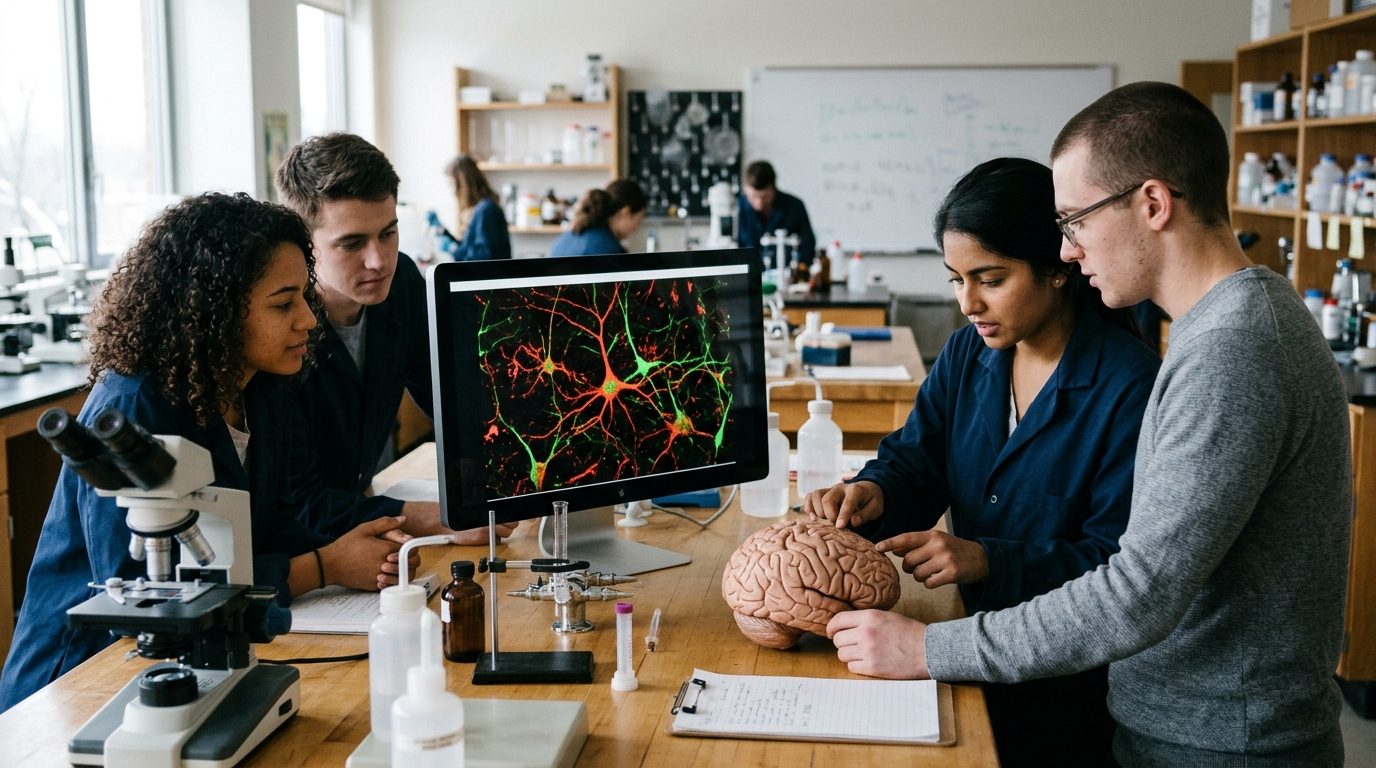
Before the new majors existed, more than 350 Penn State undergraduates, mostly juniors and seniors, were already working in neuroscience labs across campus while majoring in fields such as biology, biobehavioral health, premedicine, biomedical engineering, psychology and forensic science.
Why Penn State created them
The deans of the two colleges, Tracy Langkilde of the Eberly College of Science and Craig J. Newschaffer of the College of Health and Human Development, said the majors respond to growing student interest and to demand for people with broad neuroscience training. Nikki Crowley, director of the Penn State Neuroscience Institute–University Park, pointed to an aging population, rising rates of brain-related disease and advances in research and technology, and said the majors keep Penn State competitive with Big Ten and Pennsylvania peers (Penn State News).
The announcement cited two numbers. Pan American Health Organization data put the U.S. death rate from neurological disorders at 47.4 per 100,000 people, the highest of any country in the data. And the U.S. Bureau of Labor Statistics projected employment of medical scientists to grow 9% from 2024 to 2034, faster than the average for all occupations. The latest BLS projections are even stronger: 13% growth from 2025 to 2035, with a 2025 median salary of $103,410 (BLS Occupational Outlook Handbook: Medical Scientists). BLS lists a doctoral or professional degree as the typical entry-level education for medical scientists, so a bachelor’s in neuroscience is usually a starting point for graduate or professional school, research technician jobs, or work in health care and industry.
How to get in
At Penn State, students are admitted to the university and then enter a major. According to the Penn State Undergraduate Bulletin, the Neurobiology major can be started at any Penn State campus and is completed at University Park, and both majors set entrance-to-major requirements, including a minimum cumulative GPA of 2.00 and specific courses completed with a grade of C or better (Bulletin: Neurobiology, B.S.; Bulletin: Systems Neuroscience, B.S.). Current students interested in either major should talk to their academic adviser; more information on neuroscience at Penn State is at the Penn State Neuroscience Institute.
What international students should know
- Which one fits you: Neurobiology sits in a biology department and suits students aiming for laboratory research or graduate study in the life sciences. Systems Neuroscience sits in biobehavioral health and focuses more on health, behavior and disorders, a natural fit for pre-health students.
- STEM OPT: whether a degree qualifies for the 24-month STEM OPT extension depends on its CIP code on your I-20. Ask Penn State’s international office for the CIP code of each major and check it against DHS’s STEM Designated Degree Program List (Study in the States: STEM OPT Hub).
- Medical school plans: many U.S. medical schools accept few international applicants, so international pre-med students should research each school’s policy before choosing a neuroscience major as a path to medicine.
- Research early: undergraduate lab experience matters most for neuroscience graduate admissions. With hundreds of undergraduates already in neuroscience labs, start asking faculty about research positions in your first or second year.
Penn State ranks No. 55 among national universities in the 2027 U.S. News ranking. See our Penn State page for admissions, cost and enrollment data.
References
- Penn State News: Penn State launching two neuroscience undergraduate degrees (November 5, 2025)
- Penn State Undergraduate Bulletin: Neurobiology, B.S.
- Penn State Undergraduate Bulletin: Systems Neuroscience, B.S.
- U.S. Bureau of Labor Statistics: Medical Scientists
- Study in the States: STEM OPT Hub
- Forward Pathway: U.S. College Rankings