
NASA Pennsylvania Space Grant Consortium: A Catalyst for STEM Education
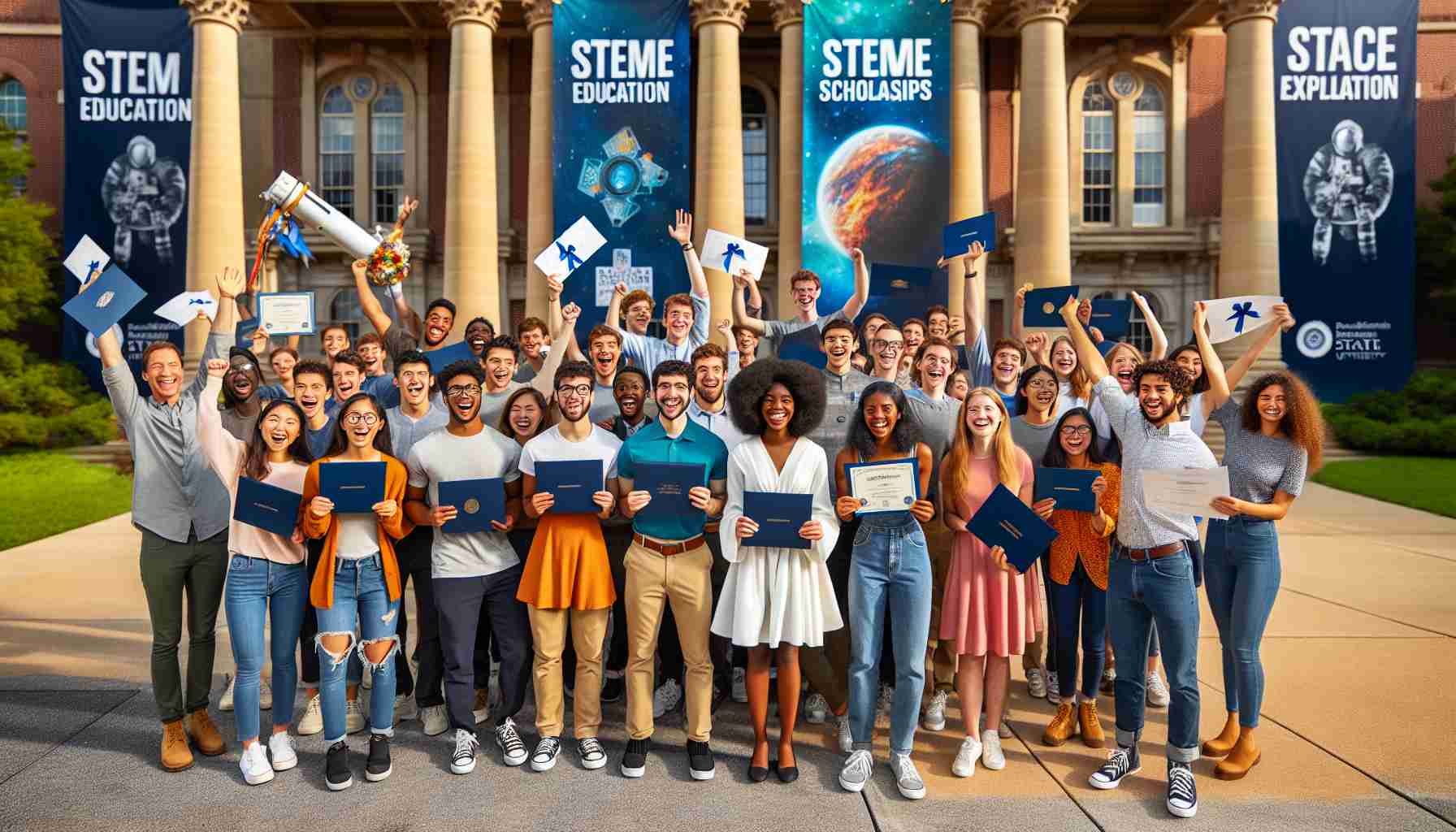
On September 3, 2024, Pennsylvania State University announced that 17 graduate students and 6 undergraduate students were awarded scholarships from the Pennsylvania Space Grant Consortium (PSGC). These scholarships are part of NASA’s broader initiative to support education in the fields of Science, Technology, Engineering, and Mathematics (STEM). Each year, PSGC receives funding from NASA to develop and implement scholarship programs aimed at enhancing student engagement in STEM disciplines.
The graduate scholarships, valued at $5,000 each, are designed to support outstanding graduate students pursuing master’s or doctoral degrees in STEM fields. The recipients are expected to contribute to NASA’s mission by engaging in research that enhances our understanding and utilization of space. Notable winners include students from various disciplines, such as Emily Olson from the College of Education and Nancy Huang from the College of Earth and Mineral Sciences.
Undergraduate scholarships, worth $4,000 each, are awarded to full-time students enrolled in accredited universities in Pennsylvania. The 2024 undergraduate scholarship recipients include students majoring in biology, physics, and electrical engineering, among others. The PSGC has been operational for 35 years, aiming to broaden public understanding and participation in NASA projects while promoting diversity among participants.
The Importance of STEM Education
The significance of STEM education cannot be overstated, especially in an era where technological advancements are rapidly transforming our world. The demand for a skilled workforce in STEM fields is growing, and initiatives like the PSGC scholarships play a crucial role in preparing students for future challenges. By providing financial support, these scholarships enable students to focus on their studies and research without the burden of financial stress.
Moreover, the PSGC’s commitment to diversity is particularly noteworthy. By encouraging students from various backgrounds to pursue careers in STEM, the program helps to create a more inclusive environment in fields that have historically been dominated by certain demographics. This diversity not only enriches the educational experience but also fosters innovation and creativity, which are essential for scientific advancement.
NASA’s Role in Shaping Future STEM Leaders
NASA’s involvement in education extends beyond funding scholarships. The agency is dedicated to cultivating the next generation of STEM talent to meet the nation’s need for a diverse and skilled workforce. Through various programs, internships, and activities, NASA aims to inspire and engage a new generation of explorers.
In the fiscal year 2023, NASA’s STEM opportunities allowed students and educators to participate in some of the agency’s most ambitious missions and projects. By providing unique experiences, NASA connects diverse student populations with its personnel, content, and facilities, fostering a culture of exploration and discovery.
The agency’s strategic plan for STEM engagement outlines goals for building the next generation of explorers, with initiatives set to be implemented from 2024 to 2026. Programs like “Next Generation STEM” focus on developing evidence-based learning opportunities, allowing students to learn through NASA’s exploration efforts. Additionally, NASA’s Minority University Research and Education Project (MUREP) supports minority-serving institutions, providing competitive opportunities and awards to address specific needs and enhance the capabilities of these institutions.
Challenges and Opportunities in Diversity Initiatives
Despite the positive strides made in promoting diversity in STEM, recent legislative changes in states like Texas have posed significant challenges. New laws aimed at curbing diversity, equity, and inclusion (DEI) initiatives have led to the freezing or modification of numerous scholarships designed to support underrepresented students in STEM fields. This has raised ethical concerns, particularly regarding the intentions of donors who contributed to these scholarships with the aim of promoting diversity.
The freezing of scholarships not only undermines the original purpose of these funds but also jeopardizes the educational opportunities of many students who rely on them. The impact of such legislation extends beyond financial support; it threatens the very fabric of inclusivity that many institutions strive to uphold. As universities navigate these challenges, it is crucial for stakeholders—including policymakers, educators, and students—to engage in meaningful dialogue about the value of diversity in higher education.
The Role of Universities in Space Exploration
As we stand on the brink of a new era in space exploration, universities play an indispensable role in shaping the future of astronauts and space scientists. Institutions like the Massachusetts Institute of Technology (2024 USNews Ranking: 2) (MIT), California Institute of Technology (Caltech), and Stanford University have long been at the forefront of advancements in space technology. These universities not only design spacecraft but also develop algorithms for space exploration missions.
The complexity of space exploration necessitates a multidisciplinary approach, and universities are uniquely positioned to provide this educational model. By integrating fields such as physics, engineering, biology, and computer science, universities equip students with the comprehensive knowledge needed to tackle the multifaceted challenges of space missions. Furthermore, universities encourage interdisciplinary collaboration, allowing students to engage in projects that require diverse expertise—reflecting the collaborative nature of real-world space missions.
In addition to technical skills, universities also focus on developing leadership and critical thinking abilities among future astronauts and space scientists. Through astronaut training programs, leadership workshops, and team projects, students learn to navigate the complexities of decision-making, risk management, and teamwork—qualities essential for success in the field.
Success Stories: Impact of PSGC Scholarships
The impact of the Pennsylvania Space Grant Consortium scholarships is evident in the success stories of its recipients. Many students who have benefited from these scholarships have gone on to make significant contributions to their fields. For instance, Emily Olson, a recipient from the College of Education, is actively involved in educational outreach programs that aim to inspire younger generations to pursue STEM careers. Similarly, Nancy Huang’s research in materials science has the potential to advance technologies used in space exploration.
These success stories highlight the importance of financial support in enabling students to achieve their academic and professional goals. By investing in the education of future leaders in STEM, the PSGC is not only fostering individual success but also contributing to the broader mission of advancing knowledge and innovation in space exploration.
Conclusion
The Pennsylvania Space Grant Consortium’s scholarship program exemplifies the vital role that financial support plays in promoting STEM education and diversity. As we look to the future, it is essential to continue advocating for initiatives that empower students from all backgrounds to pursue careers in science and technology.
NASA’s commitment to education, coupled with the efforts of universities, creates a robust framework for nurturing the next generation of explorers. However, as challenges to diversity initiatives arise, it is crucial for stakeholders to remain vigilant and proactive in supporting inclusive practices within higher education. By doing so, we can ensure that the future of STEM—and space exploration—is bright, diverse, and full of potential.