
Introduction: The Strategic Unification of Rutgers-New Brunswick’s Honors Communities
Take a deep breath, it’s a big change, but it sounds like a thoughtful one. Rutgers University-New Brunswick (2025 USNews Ranking: 41) is making a significant move to unify its various honors communities into a single, comprehensive Honors College. This strategic decision, announced on August 25, 2025, is designed to create a more cohesive and enriching academic experience for its high-achieving undergraduate students. For years, Rutgers has fostered separate honors programs, including the established Honors College, the specialized Engineering Honors Academy, and specific honors tracks within the School of Arts and Sciences and the School of Environmental and Biological Sciences. The rationale behind bringing these together under one umbrella is to streamline offerings and maximize the potential for student growth.
The vision for this integrated Honors College, spearheaded by Dean J.D. Bowers and embraced by Chancellor Francine Conway, is ambitious. They aim to impact approximately 10% of Rutgers’ undergraduate population, approximately 950 entering first-year students, with what they describe as an “unparalleled program” of honors learning and engagement. This consolidation is more than just an administrative adjustment; it’s a strategic effort to reinforce Rutgers’ standing as a premier destination institution for talented students across the nation. This commentary aims to explore the deeper implications and benefits of this integration, perhaps looking at how other universities approach similar consolidations as a point of reference. It’s all about creating the best possible environment for students to thrive.
The Integrated Honors College Model: Enhancements and Inclusivity
Relax, let’s dive into the details of this new Rutgers Honors College model. So, what’s actually changing? Well, it’s a consolidation of several distinct honors programs. We’re talking about the existing Honors College, the specialized Engineering Honors Academy, and the dedicated honors programs that were previously housed within the School of Arts and Sciences (SAS) and the School of Environmental and Biological Sciences (SEBS). By bringing these together, Rutgers anticipates serving over 950 entering first-year honors students, creating a substantial cohort within this unified structure.
The heart of this initiative lies in fostering an ‘enriched student experience.’ A key element of this is the development of a shared learning-living environment. Imagine students from diverse disciplines, all driven by a similar academic passion, living and learning together. This proximity is intended to naturally foster curiosity and collaboration, encouraging students to cross paths and engage with ideas outside their immediate major. The program is also committed to offering high-impact experiences, which are designed to go beyond traditional classroom learning. These could include research opportunities, specialized workshops, or unique mentorship programs, all aimed at deepening students’ intellectual exploration and personal growth.
Importantly, this integration isn’t just for incoming freshmen. Rutgers is actively expanding access to this enhanced program for transfer students and current sophomores who have demonstrated strong academic achievement. This move towards greater inclusivity means that talented students who might not have initially qualified as first-year students now have a clearer pathway to participate in these exclusive opportunities. It’s a thoughtful way to ensure more students can benefit from what the Honors College has to offer.
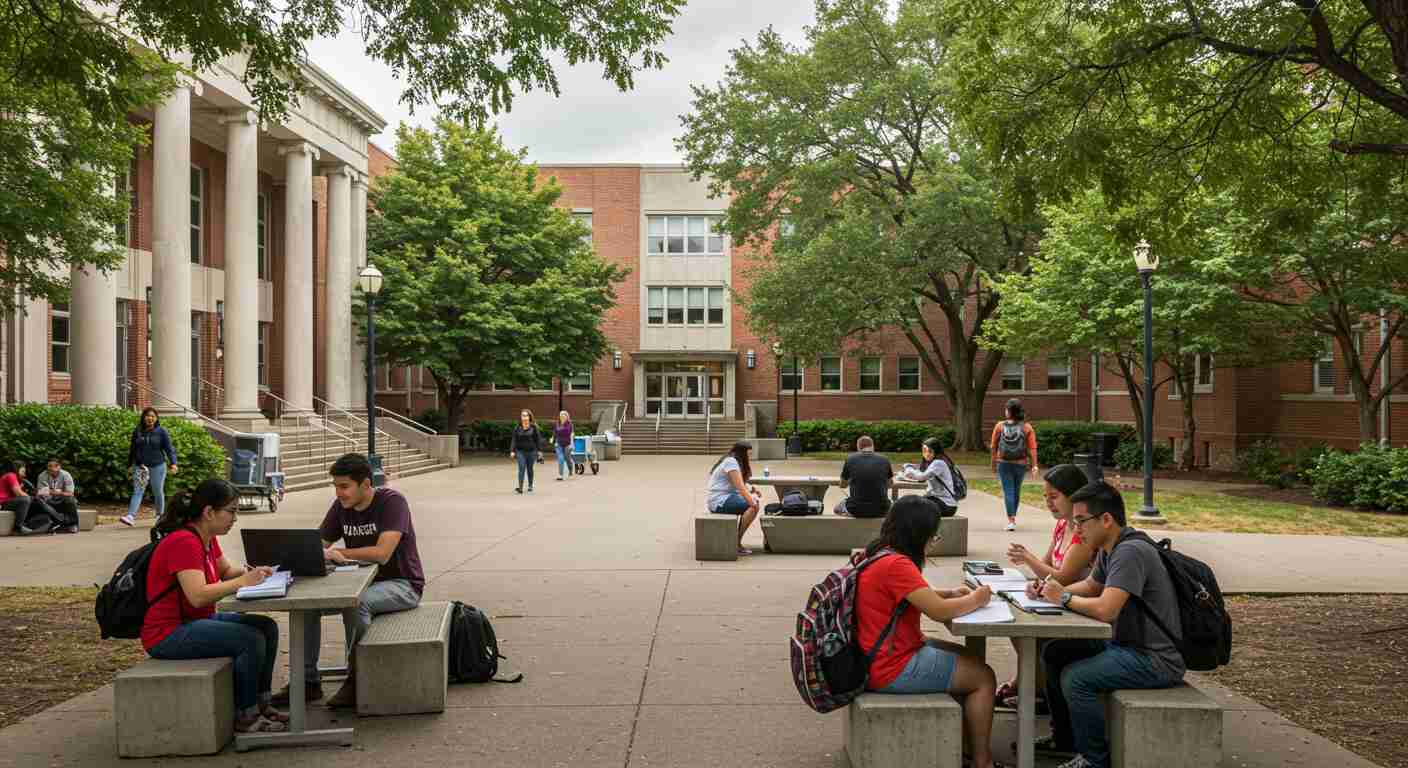
When it comes to living arrangements, a significant portion of the incoming honors class will be situated at 5 Seminary Place, a primary location on the College Avenue campus. However, the university is also utilizing other dedicated honors housing options across various campuses, including Livingston, Busch, Cook, and Douglass. These accommodations are often strategically placed to be convenient for students’ major-related classes, aiming to seamlessly integrate their living and academic lives.
A crucial support mechanism within this new structure will be the Honors Community Mentors. These student leaders are vital in helping new students navigate their transition into the university and the honors community, providing guidance and fostering a sense of belonging. Furthermore, programs like the Common Reading, which encourages campus-wide intellectual discussions, and the LGBTQ+ Learning Collaborative, which supports academic and co-curricular activities related to LGBTQ+ issues, are now poised to reach a much broader audience. This means more students will have the chance to engage with these enriching initiatives.
This unified approach is a stark contrast to what Dean J.D. Bowers described as a previously fragmented landscape, where the distinctions between the different honors programs could be unclear to prospective students. This new model aims to provide a clearer, more standardized offering, simplifying the decision-making process for students and ensuring a consistent level of excellence across all honors offerings. It’s all about making things easier and more accessible for those looking to join the Rutgers community.
In drawing parallels with other universities, we see similar emphasis on dedicated living-learning environments and robust faculty interaction. For instance, Susquehanna University‘s Honors Program also highlights these elements, creating a scholarly community where students can connect with peers and professors. This approach, where living and learning are intertwined, seems to be a recognized strategy for cultivating academic excellence and fostering a strong sense of community among high-achieving students. It’s good to see Rutgers adopting these proven methods to enhance its own offerings. Drink more water, stress less, and let’s move on to the next part.
The Impact of Learning Environments and Interdisciplinary Approaches on Student Success
Take a deep breath, it’s all good. Now, let’s broaden our perspective and look at the wider academic and environmental factors that play a role in student success, using this integrated Rutgers model as a fascinating case study. It’s well-documented that the learning-living environment itself can have a profound impact on how engaged students are and how well they perform academically. Studies, like one published in BMC Medical Education, highlight how a positive educational environment fosters student engagement across behavioral, emotional, and cognitive dimensions, which in turn, influences academic achievement. Think about it – when you feel comfortable and supported, you’re just naturally more likely to dive into your studies.
When we talk about the learning environment, we’re not just referring to the classroom itself. As an article from TASB points out, things like acoustics, air quality, lighting, temperature control, and even the layout of the space can make a real difference. Imagine trying to concentrate with a noisy HVAC system (poor acoustics) or in a room that feels stuffy and poorly ventilated (bad air quality). It’s distracting, right? Conversely, good natural lighting has been shown to improve mood and reduce off-task behavior, and maintaining a comfortable temperature between 68 and 74 degrees Fahrenheit is crucial for focus. Even classroom space matters; more flexible spaces that allow for different teaching methods and encourage collaboration can lead to higher student engagement. These are the subtle, yet significant, elements that contribute to a positive educational atmosphere, directly impacting how students learn and perform, as measured by their GPA.
This focus on a positive and supportive environment naturally leads us to the importance of interdisciplinary collaboration, a key goal that Rutgers has articulated for its integrated Honors College. The world’s challenges today rarely fit neatly into one academic box. Think about climate change or global health – these require insights from science, policy, economics, and sociology, to name a few. Universities are increasingly recognizing this and actively fostering interdisciplinary work. Initiatives funded by the National Science Foundation (NSF), for example, are championing projects that bring together experts from diverse fields to tackle complex problems. This can happen through innovative curriculum design, where courses are intentionally structured to encourage cross-pollination of ideas, or through project-based learning, where students from different departments collaborate on real-world challenges. Dedicated collaborative spaces on campus also play a role, providing physical hubs for these interdisciplinary teams to meet and work.
As highlighted in a Nature article discussing university library environments, even informal learning spaces like libraries have discipline-specific needs when it comes to fostering engagement. For liberal arts students, who often engage in deep reading and reflective thought, the library environment might best support quiet, focused study. Science students, on the other hand, often benefit more from spaces that facilitate group work and discussion, as their research and problem-solving can be more collaborative. This suggests that a truly effective approach to enhancing student engagement and learning, whether within a library or an entire honors college, requires an understanding of these discipline-specific nuances and a willingness to tailor environments and programs accordingly. It’s about creating a space where everyone feels supported in their unique academic journey. Drink more water, stress less.
Admissions, Future Outlook, and Broader University Strategies
This strategic vision for the integrated Honors College also involves a close look at admissions. For those aspiring to join this distinguished program, a comprehensive review process is in place. Rutgers will be considering academic strength, demonstrated through grades and coursework, alongside extracurricular involvement and the overall competitiveness of each application. The important deadline to keep in mind for first-year students is December 1st.
When we talk about selective university programs, Rutgers is certainly not alone in setting high standards. Many top-tier institutions, like the College of Engineering at UC Davis, have very specific major preparation course requirements and GPA benchmarks for admission, particularly for competitive fields like engineering. For instance, UC Davis specifies detailed prerequisite courses for each engineering major, and the overall GPA requirements are notably high, especially for those seeking entry through the Transfer Admission Guarantee program.
On a broader scale, the selectivity at some of the most prestigious universities can be quite extreme. As reported by BestColleges.com, institutions like Harvard and Caltech often have acceptance rates as low as 3%, with other highly selective universities like Stanford and Columbia following closely with rates around 4%. These figures highlight the immense competition for limited spots, where not only academic achievements but also leadership qualities and community engagement play a crucial role. This context underscores that Rutgers’ focus on a comprehensive review for its Honors College is in line with national trends for attracting top talent.
Looking beyond the immediate implementation of the Honors College, it’s interesting to see other ongoing enhancements across Rutgers University, suggesting a broader institutional commitment to development and distinction. For example, while perhaps not directly related, the athletic department’s strategic move towards Division I status, as seen with SUNY Geneseo’s recent reclassification, shows a university aiming for higher recognition and broader impact. Similarly, initiatives like the Presidential Employee Excellence Recognition Program at Rutgers-Camden highlight a dedication to acknowledging and fostering excellence among university staff, contributing to a positive institutional culture. These broader university strategies, from athletics to employee recognition, seem to weave a narrative of continuous improvement and a drive for enhanced reputation and student success. The integrated Honors College fits perfectly within this larger framework, poised to energize the university and attract even more talented students, fulfilling the strategic vision articulated by Chancellor Conway for a more impactful and distinguished honors education.
Reference:
- Rutgers-New Brunswick Integrates Honors Communities for Enriched Student Experience
- Rutgers-New Brunswick Unifies Honors Communities for Enhanced Student Experience
- Susquehanna University Honors Program Cultivates Intellectual Excellence and Global Impact
- College of Charleston Honors College Ranked Among the Nation’s Best
- Educational Environment Significantly Impacts Student Engagement and Academic Performance in Health Professions Education
- 5 Ways Your School Facilities Impact Student Achievement
- University Library Environment Impacts Student Interaction and Learning Engagement, with Discipline-Specific Differences
- NSF Champions Interdisciplinary Research for Innovation and Participation
- Fostering Interdisciplinary Engagement: Strategies for Universities to Inspire Students
- Harvard and Caltech Lead the Pack as the Hardest U.S. Colleges to Get Into
- UC Davis College of Engineering Outlines Specific Transfer Admission Requirements
- Rutgers University-Camden Celebrates Presidential Employee Excellence Recognition Program Honorees
- Geneseo Ascends to NCAA Division I Status, Bypassing Division II