
Introduction: Celebrating Entrepreneurship at Michigan State University
The Burgess Institute for Entrepreneurship and Innovation at Michigan State University (MSU) has recently garnered significant recognition from The Princeton Review, ranking as the No. 4 entrepreneurship program in the Midwest and No. 11 nationally. This accolade is not just a testament to the institute’s commitment to fostering an entrepreneurial mindset; it reflects a broader trend in higher education that emphasizes the critical importance of entrepreneurship in today’s economy. As the landscape of work continues to evolve, driven by technological innovations and shifting consumer demands, the need for a well-rounded entrepreneurial education has never been more pressing.
Since its inception in 2012, the Burgess Institute has been at the forefront of this educational revolution, integrating experiential learning into its curriculum to equip students with the skills necessary to thrive in a competitive marketplace. The institute emphasizes essential entrepreneurial competencies such as problem-solving, resilience, risk tolerance, and storytelling. These skills are not merely theoretical; they are cultivated through hands-on experiences that prepare students to navigate the complexities of starting and running a business. In 2016, MSU launched a university-wide minor in Entrepreneurship and Innovation, which has seen substantial growth, now boasting over 650 undergraduate students from diverse majors and colleges. This initiative underscores MSU’s commitment to making entrepreneurship accessible and relevant to a broad spectrum of students.
Experiential learning plays a pivotal role in the Burgess Institute’s approach, allowing students to engage directly with the entrepreneurial process. Through programs like the Venture Creation initiative, students receive mentorship, industry-specific consulting, and seed funding to help propel their business ideas forward. The hands-on nature of these programs helps students not only to develop their entrepreneurial skills but also to build confidence and resilience—qualities that are essential for success in any entrepreneurial endeavor.
Moreover, the institute’s recent initiative, “Student-Made Michigan State,” exemplifies the practical application of entrepreneurship education. This platform allows student creators to market their products, providing them with invaluable opportunities to engage with the MSU community and gain real-world experience. The program has already achieved remarkable success, processing over 450 orders in its first year and generating significant revenue. Such initiatives highlight the institute’s dedication to not only teaching entrepreneurship but also fostering an environment where students can actively participate in the entrepreneurial ecosystem.
As the Burgess Institute continues to adapt to the evolving needs of its students, it remains committed to enhancing its programs and initiatives to ensure that graduates are well-prepared for the dynamic challenges of the entrepreneurial landscape. The recognition from The Princeton Review serves as a powerful endorsement of the institute’s efforts, reaffirming its role as a leader in entrepreneurship education. This commitment to fostering an entrepreneurial mindset is crucial as students prepare to enter a workforce that increasingly values innovation and adaptability.
In the following sections, we will explore the significance of experiential learning in entrepreneurship education, delve into the success stories of student entrepreneurs emerging from MSU, and discuss the vital role of community support in nurturing entrepreneurial endeavors. Together, these elements illustrate the holistic approach of the Burgess Institute in shaping the next generation of entrepreneurs equipped to make meaningful contributions to society.
Experiential Learning: The Heart of the Entrepreneurship Program
Experiential learning is at the heart of the Burgess Institute for Entrepreneurship and Innovation at Michigan State University (MSU), serving as a cornerstone for developing the skills and mindsets necessary for successful entrepreneurs. This educational approach emphasizes the importance of real-world experiences, allowing students to immerse themselves in practical applications of their learning. Research has consistently shown that experiential learning significantly enhances students’ entrepreneurial capabilities, fostering critical skills such as resilience, problem-solving, and adaptability.
A notable study conducted at Babson College highlights the transformative impact of experiential learning on students’ entrepreneurial mindsets. The research focused on the Foundations of Management and Entrepreneurship (FME) course, which immerses first-year students in the complexities of starting a business. Through various challenges, from product development setbacks to team dynamics, students navigate real-world obstacles, ultimately cultivating a mindset that encourages them to view themselves as entrepreneurs. This study, along with many others, illustrates that the emotional rigor and practical challenges faced in experiential learning environments are instrumental in shaping students’ approaches to entrepreneurship, extending far beyond the classroom.
At MSU, the Burgess Institute integrates experiential learning deeply into its curriculum through hands-on projects and mentorship opportunities. The Venture Creation program exemplifies this commitment, offering students guidance from seasoned entrepreneurs and industry experts. This program not only provides mentorship but also facilitates industry-specific consulting and access to seed funding, enabling students to advance their business ideas effectively. Ken Szymusiak, the managing director of academic programs at the Burgess Institute, emphasizes that blending practical experiences with foundational principles equips students to innovate and lead in their entrepreneurial pursuits.
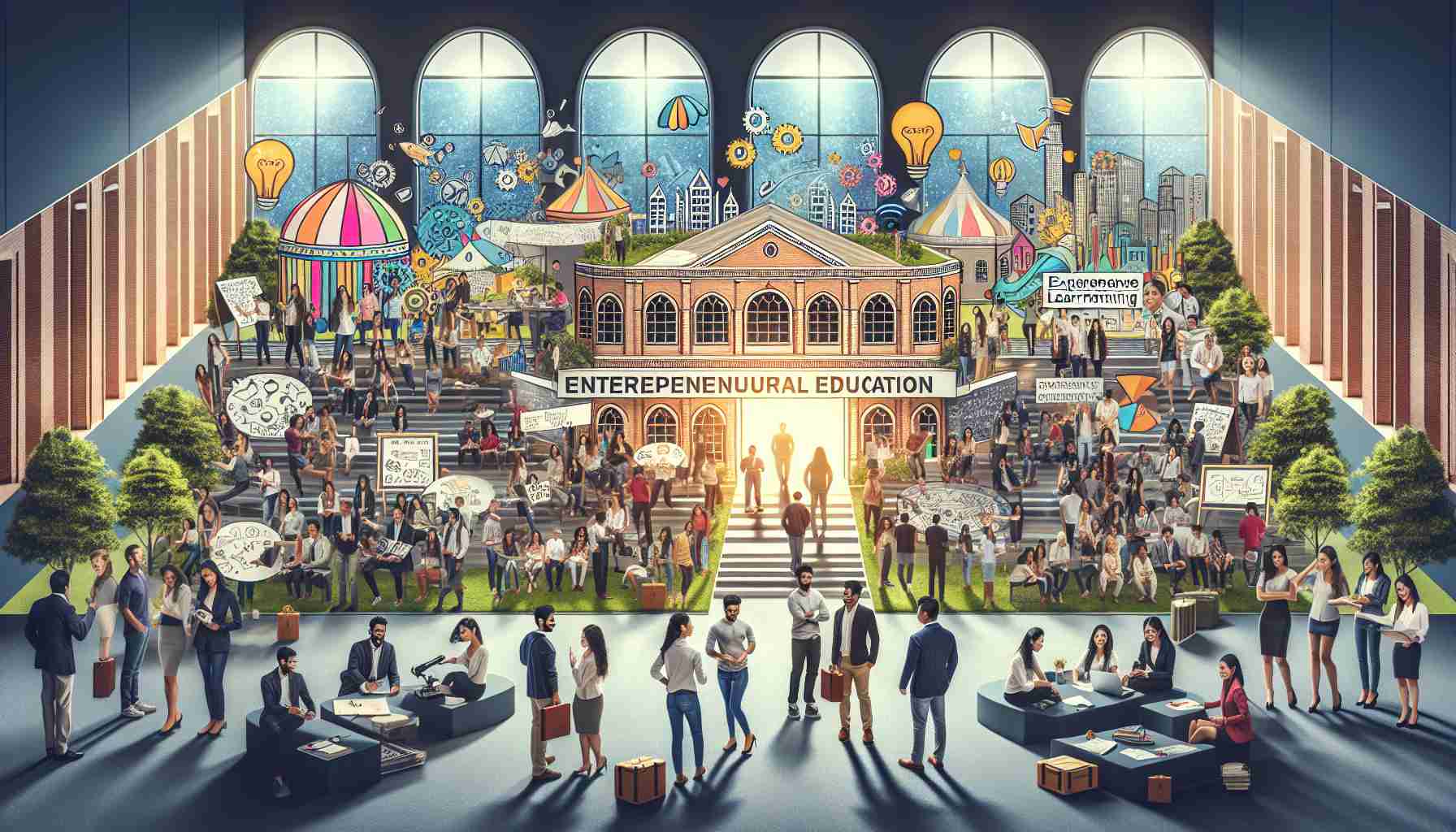
Additionally, the recently launched “Student-Made Michigan State” initiative serves as a prime example of how experiential learning can manifest in tangible outcomes. This platform allows student creators to market their products, engaging them directly with the MSU community while providing invaluable opportunities for feedback and growth. In its inaugural year, “Student-Made” processed over 450 orders from 36 creators, generating significant revenue and showcasing the entrepreneurial spirit within the student body. Such initiatives not only empower students to apply their learning in real-world contexts but also help them develop resilience and adaptability—qualities essential for navigating the unpredictable landscape of entrepreneurship.
The significance of experiential learning in entrepreneurship education is further underscored by findings from various studies that highlight its role in shaping students’ entrepreneurial abilities and resilience. For instance, a study published in Scientific Reports emphasizes the need for educational programs to bridge the gap between academic knowledge and societal needs, suggesting that experiential learning can cultivate socially conscious entrepreneurs who are well-equipped to tackle real-world challenges. By engaging in hands-on projects, students develop a deeper understanding of the complexities of entrepreneurship, enhancing their ability to create innovative solutions that address community needs.
Moreover, the integration of experiential learning into entrepreneurship education aligns with the broader trends in higher education, where institutions are increasingly recognizing the importance of preparing students for the dynamic job market. As Ahmed Abdel-Meguid from The American University in Cairo points out, integrating experiential learning into academic curricula not only enhances student engagement with the job market but also equips graduates with the relevant skills that employers seek. This alignment between educational outcomes and market demands is crucial in fostering a new generation of entrepreneurs who can navigate the complexities of today’s economy.
In conclusion, the Burgess Institute’s commitment to experiential learning as a critical component of its entrepreneurship education exemplifies the transformative power of real-world experiences in developing entrepreneurial skills and mindsets. By providing students with opportunities to engage directly with the entrepreneurial process, the institute not only enhances their academic experience but also prepares them for the challenges they will face in their careers. As we continue to explore the success stories of student entrepreneurs from MSU and the vital role of community support in fostering entrepreneurship, it is clear that experiential learning remains a fundamental pillar in shaping the future of entrepreneurship education.
Success Stories: Student Entrepreneurs at MSU
The Burgess Institute for Entrepreneurship and Innovation at Michigan State University (MSU) has become a crucible for aspiring entrepreneurs, fostering a vibrant ecosystem where student-led ventures can thrive. At the heart of this initiative is the “Student-Made Michigan State” program, which has served as a launchpad for numerous student entrepreneurs, enabling them to transform their ideas into tangible businesses while engaging meaningfully with the community. This initiative exemplifies how MSU’s entrepreneurship education not only cultivates business acumen but also nurtures personal and professional growth among its participants.
One of the standout success stories from the “Student-Made Michigan State” initiative is that of Megan Timmerman, the founder of Bluthreads and Co., a handmade apparel brand. Megan’s journey through the program has been transformative, illustrating the profound impact of the Burgess Institute’s resources on student entrepreneurs. “Student-Made has provided me with invaluable opportunities to collaborate with other creators and expand my market reach,” Megan shared. Her experience highlights how the program has not only facilitated the launch of her business but has also fostered a sense of community among student entrepreneurs, creating an environment where innovation and creativity can flourish.
The program’s success is evident in its impressive metrics; in its inaugural year, “Student-Made Michigan State” processed over 450 orders from 36 student creators, generating substantial revenue and drawing the attention of local markets. Collaborations with venues like Sparty’s Market and Kellogg Market have significantly enhanced the visibility of student products, allowing budding entrepreneurs to showcase their work to a broader audience. This direct engagement with the community not only boosts sales but also allows students to receive valuable feedback, which is crucial for refining their products and business strategies.
Moreover, the “Student-Made” initiative has facilitated pop-up events, such as the Union Arts and Crafts Show, which attracts thousands of visitors and provides a platform for student entrepreneurs to connect with potential customers and collaborators. These events are more than just sales opportunities; they serve as experiential learning environments where students can practice marketing, customer engagement, and product presentation. The insights gained from these interactions are instrumental in shaping their entrepreneurial journeys, equipping them with the skills necessary to navigate the complexities of running a business.
The testimonials from participants like Megan underscore the significance of community support in fostering entrepreneurship. The Burgess Institute recognizes that entrepreneurship thrives in environments where students are encouraged to take risks and innovate. By providing mentorship, access to funding, and opportunities for collaboration, the institute empowers students to not only launch their businesses but also to build resilience and adaptability—qualities essential for long-term success in the entrepreneurial landscape.
The impact of the Burgess Institute extends beyond individual success stories; it contributes to a broader culture of entrepreneurship at MSU. With over 1,000 businesses launched and $160 million raised in follow-on funding by its students and alumni, the institute’s influence is palpable. The recognition from The Princeton Review as one of the top entrepreneurship programs in the Midwest further solidifies MSU’s role as a leader in cultivating entrepreneurial talent.
As the Burgess Institute continues to evolve, its commitment to empowering student entrepreneurs remains unwavering. The integration of initiatives like “Student-Made Michigan State” into the curriculum not only enhances the educational experience but also prepares students to make meaningful contributions to their communities and the economy. The stories of students like Megan Timmerman serve as powerful reminders of the potential that lies within each aspiring entrepreneur and the vital role that supportive programs play in unlocking that potential.
In the upcoming sections, we will discuss the critical role of community support in nurturing entrepreneurship and how MSU’s entrepreneurship programs connect students with essential resources, mentors, and industry professionals. Together, these elements illustrate the holistic approach of the Burgess Institute in shaping the next generation of entrepreneurs equipped to thrive in a dynamic marketplace.
Community Support and Its Role in Fostering Entrepreneurship
Community support plays a pivotal role in nurturing entrepreneurship, creating an ecosystem where aspiring entrepreneurs can thrive. Initiatives such as the FEED Summit, which recently convened in Milwaukee, Wisconsin, exemplify the power of local networks in fostering entrepreneurial success. The summit brought together food entrepreneurs, providing them with opportunities to share challenges, strategies, and resources, ultimately reinforcing the idea that collaboration within a community can significantly enhance individual business prospects. James Pyecroft, an outreach associate with the University of Wisconsin-Madison (2025 USNews Ranking: 39) , emphasized that entrepreneurs do not have to navigate their journeys alone, highlighting the importance of community engagement in building successful businesses.
At Michigan State University (MSU), the Burgess Institute for Entrepreneurship and Innovation mirrors this community-centric approach, actively connecting students with local resources, mentors, and industry professionals. This integration of community support into the entrepreneurship curriculum is essential for developing a robust entrepreneurial mindset among students. The institute recognizes that entrepreneurship thrives in environments where individuals can share knowledge, seek guidance, and collaborate with others who share similar goals.
Programs like “Student-Made Michigan State” serve as a testament to the institute’s commitment to fostering community engagement. By allowing student creators to market their products and interact with the MSU community, the initiative not only provides practical experience but also creates a network of support among peers, faculty, and local businesses. This collaborative spirit is crucial; it enables students to receive feedback, refine their business strategies, and gain exposure to real-world market dynamics. The initiative has already achieved impressive results, processing over 450 orders in its first year, showcasing the potential that arises when students are supported by their community.
The importance of local networks in fostering entrepreneurship is further supported by studies that underscore the value of community engagement. A recent research study published in Scientific Reports highlights how entrepreneurial education, when coupled with community support, can lead to sustainable development. The findings emphasize that partnerships, incubators, and student entrepreneurship clubs are critical drivers of success, illustrating that well-structured entrepreneurial education can significantly enhance community resilience and job creation.
Moreover, the Burgess Institute’s approach aligns with broader trends observed in entrepreneurship education across various universities. For instance, the National Governors Association has highlighted the emergence of new state models aimed at fostering entrepreneurship, emphasizing the importance of community engagement and supportive policies. These initiatives reflect a growing recognition that local ecosystems play a vital role in nurturing entrepreneurial talent and driving economic growth.
The FEED Summit’s focus on food entrepreneurship also resonates with MSU’s commitment to addressing community needs through its programs. The summit brought together diverse stakeholders, including local entrepreneurs, educators, and community leaders, to discuss challenges and opportunities within the food industry. This collaborative approach underscores the necessity of breaking down silos and fostering connections, as emphasized by keynote speaker Alesia Miller, who urged entrepreneurs to leverage local support systems for business success.
The Burgess Institute’s initiatives not only empower students to launch their businesses but also cultivate a sense of belonging and community among aspiring entrepreneurs. By connecting students with mentors who have navigated similar paths, the institute reinforces the idea that mentorship is crucial for success. This aligns with findings from studies that emphasize the importance of mentorship programs in enhancing student integration into university life and improving academic performance.
As MSU continues to foster entrepreneurship through community engagement, the institute remains dedicated to adapting its programs to meet the evolving needs of its students. By creating an environment where collaboration and support are prioritized, the Burgess Institute is equipping the next generation of entrepreneurs with the skills and resources necessary to succeed in a dynamic marketplace. The success stories emerging from MSU not only highlight individual achievements but also reflect the collective strength of a community committed to nurturing entrepreneurial talent.
In summary, the interplay between community support and entrepreneurship education is vital for cultivating an entrepreneurial mindset. Initiatives like the FEED Summit and programs at the Burgess Institute exemplify how local networks can empower aspiring entrepreneurs, providing them with the resources, mentorship, and collaborative opportunities needed to thrive. As we look ahead, it is clear that fostering community engagement will continue to be a cornerstone of effective entrepreneurship education, shaping the future of aspiring entrepreneurs at MSU and beyond.
Future Directions: Evolving Entrepreneurship Education
As we look ahead to the future of entrepreneurship education, it is essential to consider how institutions like Michigan State University’s Burgess Institute for Entrepreneurship and Innovation are adapting to the changing landscape shaped by market demands and technological advancements. The need for a responsive and forward-thinking approach to entrepreneurship education has never been more critical, as students must navigate an increasingly complex and dynamic entrepreneurial environment.
The Burgess Institute is committed to evolving its programs to meet the needs of its students and the entrepreneurial landscape. As Laurel Ofstein, the faculty director, emphasizes, the institute’s mission to foster an entrepreneurial mindset remains steadfast, but it continually seeks to enhance its offerings. This adaptability is crucial in a world where technological innovations, such as artificial intelligence and digital platforms, are reshaping the way businesses operate. The curriculum must not only impart foundational entrepreneurial skills but also equip students with the tools to leverage new technologies effectively.
In this context, integrating sustainability and ethical practices into entrepreneurship education is becoming increasingly important. As societal expectations shift toward greater corporate responsibility, aspiring entrepreneurs must understand how to build businesses that are not only profitable but also socially and environmentally conscious. The Burgess Institute recognizes this trend and is exploring ways to incorporate sustainability into its curriculum. This approach aligns with findings from recent studies, which highlight the importance of fostering a socially conscious entrepreneurial spirit among students. By emphasizing sustainability, the institute is preparing students to tackle pressing global challenges, such as climate change and social inequality, while also enhancing their marketability in a job landscape that increasingly values ethical business practices.
Moreover, trends in entrepreneurship curriculum development across universities indicate a growing emphasis on experiential learning, community engagement, and interdisciplinary approaches. Institutions are increasingly recognizing that entrepreneurship is not confined to business schools; it intersects with various fields, including engineering, design, and social sciences. This interdisciplinary perspective fosters innovation and creativity, allowing students to draw from diverse knowledge bases to develop unique solutions to complex problems. The Burgess Institute is well-positioned to lead in this area, having already established a strong foundation in experiential learning through initiatives like the Venture Creation program and “Student-Made Michigan State.”
As universities continue to adapt their entrepreneurship programs, the integration of technology into the learning process will play a pivotal role. The rise of online learning and digital resources offers unprecedented opportunities for students to access entrepreneurial education. However, as highlighted in recent reports, there remains a need for institutions to balance online and in-person learning experiences to optimize student engagement and success. The Burgess Institute can leverage these insights to enhance its offerings, ensuring that students benefit from a blend of hands-on experiences and flexible learning options that cater to diverse learning styles.
In conclusion, the future of entrepreneurship education at institutions like Michigan State University’s Burgess Institute is promising, driven by a commitment to adaptability, sustainability, and community engagement. As the entrepreneurial landscape continues to evolve, the institute’s proactive approach to curriculum development will ensure that students are well-prepared to navigate the challenges and opportunities that lie ahead. By fostering an entrepreneurial mindset that prioritizes innovation, ethical practices, and real-world application, the Burgess Institute is shaping the next generation of entrepreneurs who will contribute meaningfully to society and the economy. The ongoing evolution of entrepreneurship education will undoubtedly play a critical role in empowering students to become leaders in their respective fields, equipped with the skills and knowledge necessary to thrive in an ever-changing world.
Reference:
- MSU Entrepreneurship Program Ranked No. 4 in the Midwest by The Princeton Review
- Landmark Study Reveals Impact of Babson’s FME on Students’ Entrepreneurial Mindset
- Enhancing Relevance and Amplifying Impact: The Power of Experiential Learning in Higher Education
- Integrating Challenge-Based Learning with Positive Education: A New Approach to Student Engagement and Well-Being
- FEED Summit Fosters Connections in the Wisconsin Food Entrepreneur Community
- Entrepreneurial Education as a Catalyst for Sustainable Community Development
- New State Models Emerging for Fostering Entrepreneurship
- Entrepreneurial Universities and Sustainability Challenges in the Gulf Region
- 2024 Online Learning Statistics: Trends and Insights
- Insights from the AI in Education Report: Transforming Learning and Teaching
- Comparative Study on Online vs In-Person Learning: Insights from King Saud University