
Introduction: The Flourishing Landscape of Undergraduate Research
It appears that the academic world is increasingly recognizing that students shouldn’t be relegated to passive observation of scholarly pursuits. Instead, universities across the U.S. are stepping up, offering undergraduates more opportunities to dive headfirst into “cutting-edge research,” as they say at the University of Florida. This isn’t just about undergraduates helping out a professor with a pet project anymore. It’s about institutions actively cultivating environments where these students can contribute meaningfully to their fields, moving beyond the traditional confines of faculty-led endeavors. From sophisticated scientific investigations to deep dives into the humanities, the landscape of undergraduate research is broadening, becoming a more dynamic and multifaceted component of higher education. These programs, like those at UF, are designed to provide students with more than just a taste of academia; they aim to offer transformative experiences that prepare them for whatever comes next, be it further academic study or a demanding professional career. You do the math.
Empowering Pathways: Diverse Programs and Their Impact
At the University of Florida, for instance, several distinct programs are instrumental in this endeavor. The Grass Scholars Program, housed within the Center for Humanities and the Public Sphere, supports a cohort of 20 students with financial aid and dedicated opportunities to hone research skills, collaborate in teams, and engage with the community. Take Fiorella Recchioni, a history and political science major. She found the program invaluable for gaining experience for her future honors thesis, where she dove into research on Gainesville AIDS advocacy organizations, working with the Matheson Museum. This experience, she noted, inspired her to pursue larger-scale archival research, potentially even abroad. The Grass Scholars Program immerses students in humanistic research methods, covering careful reading, historical analysis, contextualization, and critical evaluation. Students learn to formulate research questions, utilize archives, assess sources, choose methodologies, navigate ethical considerations, and communicate their findings effectively. The program emphasizes teamwork, public presentation of research, and digital skills, all while fostering critical thinking, independence, and ethical development. Students are connected with faculty and graduate student mentors, which can help illuminate potential career paths and build their résumés and research portfolios. For Summer 2024, scholars were paired with projects at the Matheson Museum, Smathers Libraries, A. Quinn Jones Museum, and the Harn Museum of Art, and for Summer 2025, projects are slated with the Cotton Club Museum and Cultural Center, Gulf Scholars Program/Samuel Proctor Oral History Program, Historic Preservation Program, and the Hippodrome Theater. One does have to wonder what fascinating stories lie hidden within these archives, waiting to be unearthed by eager undergraduates.
Then there’s the Cutler Family Undergraduate Scholars Program in the Department of Economics, which identifies and supports high-achieving economics students. This program allows students to undertake supervised, year-long research projects, working one-on-one with faculty advisors. The culmination is a paper and a video abstract that can be quite handy for job applications or graduate school admissions. Funded by the Cutler family, recipients receive scholarships each semester. Michelle Phillips, an instructional associate professor in economics, observed that these students gain valuable hands-on experience that is directly applicable to job interviews and graduate programs. Thomas Knight, department chair and instructional professor, described the program as a stepping stone for future opportunities, highlighting that Cutler scholars showcase their critical thinking and data skills, applying them to real-world situations. It’s nice to know that economics students aren’t just crunching numbers; they’re also developing the skills to, you know, crunch them with purpose.
Furthermore, undergraduate members of Phi Alpha Theta, the national history honors society, receive financial support for travel and research through the Noll Family Fund, established by Steven and Beverly Noll. This fund enables students to conduct off-campus research, broadening their intellectual horizons. Steven Noll, an instructional professor in history and the Phi Alpha Theta advisor since 2005, emphasized the importance of providing financial support for humanities students, who traditionally have had fewer avenues for research grants. Rebekkah Hudson, a Noll Family Fund recipient, is using the grant to research archival collections on Kenya at Northwestern and Syracuse Universities, tracing intellectual trajectories and cultural changes within the Gikuyu community. Hannah Alfieri, another recipient, will investigate the lesser-known work of Grand Canyon explorer John Wesley Powell in comparative ethnology and human evolution, accessing archival resources at the U.S. Geological Survey and the Smithsonian in Washington, D.C. Joseph Spillane, Department Chair, praised these students for their diligent work in identifying historical questions, analyzing evidence, and producing engaging narratives. It’s almost as if history isn’t just a series of dates and names; who knew?
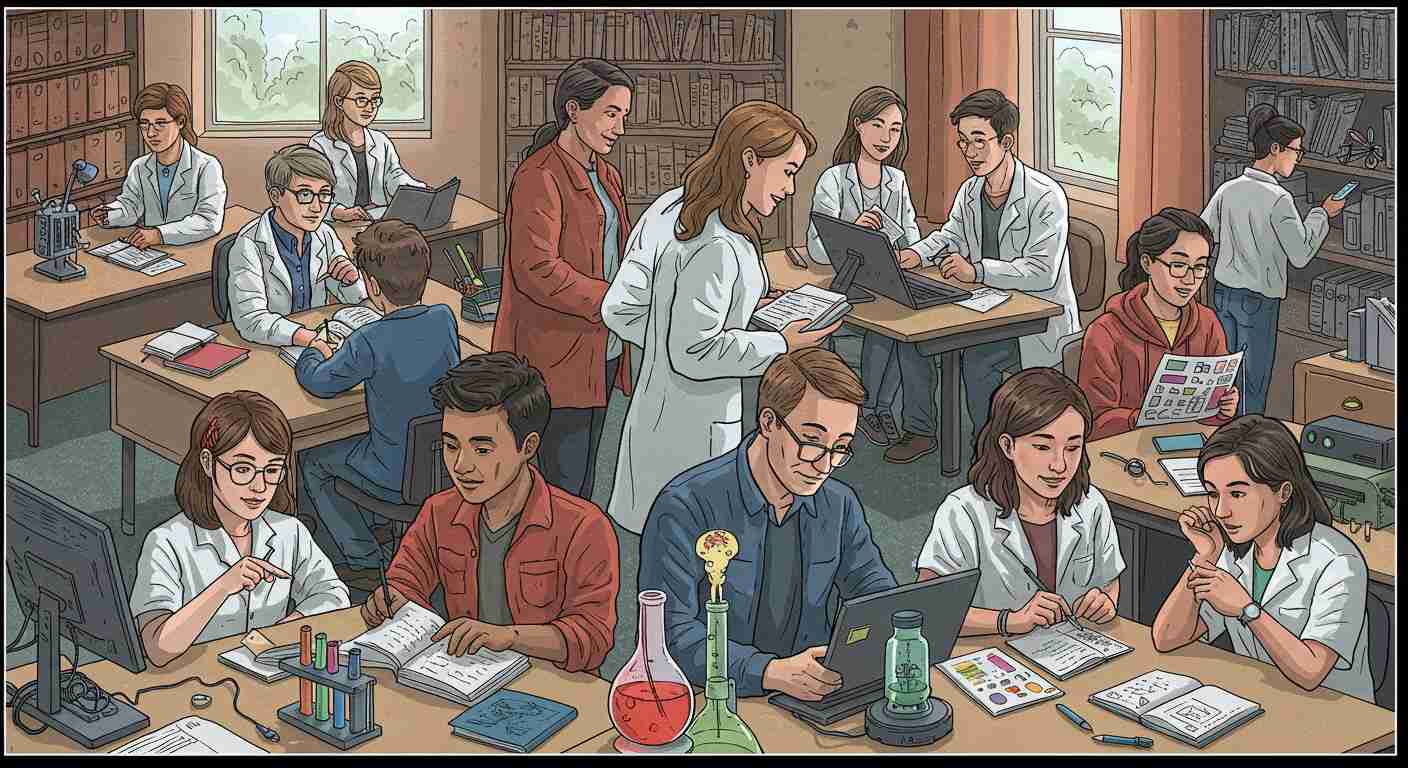
Drawing parallels from institutions like St. John’s University and Illinois State University (ISU) further emphasizes how undergraduate research cultivates essential ‘career-ready skills.’ We’re talking about critical thinking, problem-solving, and communication – the usual suspects. St. John’s highlights that undergraduate research goes beyond traditional coursework, allowing students to investigate specific topics in depth and test concepts in practical research settings, as noted by Dr. Xue Mei, Associate Professor of Biological Sciences. Students across all disciplines, from the social sciences and humanities to business, economics, and creative arts, can engage in research, whether it’s conducting interviews to study social media engagement, analyzing historical documents, examining consumer behavior through data analysis, or exploring the impact of visual design on political messaging. The unifying thread? Curiosity, exploration, and the ability to ask meaningful questions. You do the math on how many skills that covers.
A 2023 study backs up these benefits, indicating that students with more extensive research experience tend to achieve higher GPAs, complete their degrees more quickly, and are more inclined to pursue further education. This is not just about feeling good; it’s about tangible outcomes. At ISU, for example, audiology graduate students emphasized that their undergraduate research was crucial for deepening their understanding of audiology, acquiring practical, hands-on skills, and preparing them for the rigorous demands of graduate school. They particularly valued the mentorship provided within labs like the Hearing Loss Prevention Laboratory (HLPLAB) and the opportunities for professional development that extended beyond classroom learning. The collaborative atmosphere, coupled with meaningful research projects and community engagement, significantly contributed to their growth. It seems that getting your hands dirty with research can really, you know, get you somewhere.
The transformative impact of undergraduate research is quite evident in student success stories. Think of biology major Noah Dickison investigating fertilization using advanced genetic tools, or speech-language pathology and audiology major Hayley Smith exploring brain activity during speech anticipation through EEG research. Even biology major David J. Anderson focusing on protein purification. Each of these students found personalized pathways to engage with faculty, gain practical lab experience, and build confidence in presenting their findings at academic conferences. These experiences demonstrate how undergraduate research empowers students to take ownership of their education, ask significant questions, and proactively build their future. It’s like they’re getting a sneak peek at their professional lives, minus the questionable office coffee.
Indiana University’s “layered-learning model” offers another innovative approach to funding and mentorship. This program is designed to foster collaboration and provide high-impact research experiences, where lead faculty principal investigators guide additional mentors—including faculty, research staff, postdocs, and graduate students—who in turn mentor cohorts of undergraduate students. This structure allows for scalable research opportunities and aims to expand faculty research programs, potentially increasing research outcomes. IU Vice President for Research Russell J. Mumper expressed enthusiasm for the program, noting that the number of awarded projects exceeded the initial target due to strong interest and quality applications. The seven inaugural awardees and their projects span a variety of disciplines, from developing drug treatments for hydrocephalus to creating educational games, enhancing research engagement in global studies, and developing innovative tools for teaching complex science concepts. It sounds like a well-oiled research machine, with everyone pitching in. Or, at least, everyone who applied and was accepted. I’m just saying.
The Foundation of Success: Mentorship, Funding, and Evaluation
The effectiveness of any undergraduate research program, in essence, hinges on a triad of critical elements: faculty mentorship, robust funding models, and reliable methods of evaluation. Let’s consider faculty mentorship first. At Elon University, there’s a notable emphasis on interdisciplinary faculty collaboration and co-mentoring. This means students aren’t just getting guidance from one professor, but potentially from a dynamic duo (or even more) from different departments. It’s like getting a multi-vitamin of academic advice. These collaborations are often supported by what Elon calls ‘communities of practice’—informal faculty gatherings where ideas are shared, challenges are dissected, and mentoring strategies are refined. Think of it as a faculty study group, but for helping students do their own studying, but like, for real research. These aren’t your stuffy, formal workshops; these are more relaxed environments where professors can swap insights, especially when major undergraduate research deadlines loom or common mentoring issues arise. It’s a way to foster unexpected interdisciplinary projects and encourage collaborations that might not otherwise see the light of day. Plus, there’s a nice generational cross-pollination, where seasoned faculty can share their wisdom with newer colleagues, and vice versa. It’s a win-win, really.
The importance of dedicated leadership and advocacy in making research accessible to all students, especially those from underrepresented backgrounds, is further underscored by the recognition of individuals like Winny Dong and Amelia Ahern-Rindell as CUR Fellows. These awards aren’t just shiny badges; they represent a commitment to ensuring that opportunities for high-impact research are available to everyone, not just a select few. Winny Dong, for instance, has been instrumental at Cal Poly Pomona in advancing undergraduate research, motivating students, and providing valuable opportunities. Their advocacy has focused on increasing access, empowering students to present findings, publish work, and pursue advanced studies or careers. Dong’s emphasis on making research accessible, particularly for first-generation and underserved students, is quite commendable. Similarly, Amelia Ahern-Rindell, an Associate Professor Emerita at the University of Portland, has dedicated over 25 years to mentoring students, with many pursuing advanced degrees. Her advocacy for expanding research opportunities across all disciplines and her role in establishing university-wide programs that provide high-impact experiences have left a significant mark. It’s clear that leadership like theirs is vital for creating an inclusive research ecosystem. You do the math on how many students benefit from such dedication.
Then there’s the crucial aspect of funding. The University of Nevada, Reno’s Pack Research Experience Program (PREP) serves as a solid model for providing undergraduate research opportunities. It’s a program that actively supports students in engaging with significant research activities. Beyond specific programs, the broader context of evolving funding models is also worth noting. University leaders are actively discussing and proposing new approaches in response to government scrutiny, aiming for greater transparency and accountability in how research dollars are utilized. The Joint Associations Group (JAG), for example, has developed models that aim to replace terms like “indirect costs rate” or “overhead” with more descriptive phrases like “essential research support” or “general research operations.” One proposed model suggests a simplified, fixed percentage of the total research budget, while another aims for greater precision by integrating support more directly into project costs. These efforts reflect an ongoing, and rather necessary, conversation about ensuring financial sustainability and transparency in how research is supported. It’s not exactly rocket science, but it might as well be with all the terminology.
Furthermore, the effectiveness of these programs isn’t just about providing opportunities; it’s also about understanding their impact. This brings us to the examination of emerging frameworks for evaluating critical thinking skills, particularly in humanities students. Researchers from Nanjing Normal University have developed a novel framework that integrates discipline cognition, CT disposition, and CT skills, offering a more nuanced assessment tailored for humanities majors. This framework addresses a gap, as many existing tools have focused on science disciplines. For humanities students, this might involve assessing their ability to interpret texts deeply, understand diverse perspectives, and engage in reflective practices—skills crucial for lifelong development and relevant to sustainable development goals. It’s about more than just knowing facts; it’s about how you process them.
On a similar note, innovative teaching methods that boost student attitudes towards statistics are also coming to the forefront. The SPIDAS intervention, for instance, integrates technology-enhanced, collaborative, and data-driven project-based learning. This approach aims to positively influence students’ engagement and perception of statistics, a subject often met with trepidation. By allowing students to work in small groups, utilize shared online documents, and employ software for data analysis and visualization, SPIDAS has shown significant positive shifts in students’ attitudes, decreasing anxiety and increasing positive affect towards learning statistics with technology. This is a far cry from the traditional, teacher-centered approach, which, as studies suggest, can negatively impact students’ perceptions. These evaluation methods, therefore, are not just about grading; they are essential for understanding the effectiveness of research programs and their broader impact on student learning and development. It’s about making sure the juice is worth the squeeze, academically speaking.
Conclusion: Cultivating Future Innovators and Critical Thinkers
Ultimately, the collective impact of these diverse undergraduate research programs across institutions like the University of Florida, St. John’s, Illinois State, and Elon is profound. They are not merely equipping students with essential skills for the job market, though that certainly happens. More significantly, they are cultivating intellectual curiosity, sharpening critical thinking, and fostering a deeper, more nuanced understanding of the world. Take archival research in historical studies, for example. Institutions like UC Irvine and the University of North Dakota (2025 USNews Ranking: 244) showcase how undergraduates can engage directly with primary sources, developing sophisticated historical perspectives. It’s akin to being a detective, but with more footnotes and less trench coats. These experiences empower students to not only ask significant questions but also to confidently tackle complex societal challenges. Investing in undergraduate research is, quite plainly, an investment in the future. It’s how we cultivate the next generation of innovators, problem-solvers, and engaged citizens. You do the math.
Reference:
- University of Florida Undergraduates Engage in Cutting-Edge Research
- How Undergraduate Research at St. John’s Builds Career-Ready Skills
- Early Research Experience Propels Illinois State Students Toward Success in Audiology
- Undergraduates Drive Meaningful Research Across Disciplines at the University of Florida
- Elon University Fosters Interdisciplinary Faculty Collaboration to Enhance Undergraduate Research
- Winny Dong Honored as 2025 Council of Undergraduate Research Fellow
- Amelia Ahern-Rindell and Winny Dong Honored as 2025 CUR Fellows for Undergraduate Research Leadership
- Emerging Trends and Effective Strategies in STEM Teacher Professional Development: A Systematic Review in China
- Innovative Teaching Methods Boost Students’ Attitudes Towards Statistics
- New Framework Developed to Evaluate Critical Thinking Skills in Humanities Students
- University Leaders Propose New Models for Research Funding Amidst Government Scrutiny
- Indiana University Names Recipients of Inaugural Layered-Learning Program for Undergraduate Researchers
- University of Nevada, Reno Professor Explores Brand Personality with Large Language Models
- Comic Resistance: Archival Research and Jewish History Talk at UCI
- University of North Dakota Professors Foster Deeper Learning Through Role-Playing and Archival Research
- Ohio University Students Engage with Local History Through Underground Railroad Research