
Introduction: The Rise of AI in Higher Education
The integration of artificial intelligence (AI) into U.S. universities is rapidly transforming the educational landscape, reflecting a broader trend that acknowledges the technology’s profound implications across various academic disciplines. As institutions like Emory University launch initiatives such as AI.Humanity, the focus is not only on enhancing technical skills but also on fostering ethical considerations and interdisciplinary collaboration. This approach is essential as AI continues to permeate fields ranging from healthcare to the humanities, necessitating a comprehensive understanding of its societal impacts.
The growing trend of incorporating AI into university curricula is driven by the recognition that students must be equipped with the skills to navigate a technology-driven world. Emory’s AI.Humanity initiative exemplifies this shift, offering a new interdisciplinary AI minor that allows students from diverse majors to explore the intersection of AI with their primary fields of study. For instance, students in public policy can analyze how AI influences governance, while those in the arts can leverage AI tools to enhance creative processes. This interdisciplinary approach not only enriches students’ educational experiences but also prepares them for a job market increasingly influenced by AI technologies.
However, the integration of AI into education raises critical ethical questions that must be addressed. As highlighted in a recent study published in the journal Humanities and Social Sciences Communications, stakeholders in higher education express optimism about AI’s potential to enhance learning experiences. Yet, they also emphasize the importance of establishing ethical guidelines to govern AI’s use, particularly concerning data privacy, algorithmic bias, and the need for transparency. Universities must ensure that AI does not exacerbate existing inequalities or undermine the essential human interactions that are foundational to effective learning environments.
Moreover, the demand for AI literacy is becoming increasingly urgent as employers seek graduates who are not only technically proficient but also capable of applying AI responsibly. A nationwide survey revealed that a significant majority of professionals believe that higher education institutions should prioritize AI training, reflecting a shift in workforce expectations. As universities adapt their curricula to meet these demands, they must also foster critical thinking and ethical considerations surrounding AI use, ensuring that graduates are well-prepared to navigate the complexities of the modern workforce.
The implications of AI education extend beyond individual career preparation; they also influence the broader job market. As institutions like the University of Illinois Springfield and Yale University invest in AI-focused programs, they are not only enhancing their educational offerings but also contributing to the development of a skilled workforce capable of driving innovation in various sectors. The emphasis on experiential learning, as seen in Emory’s Center for AI Learning, further prepares students for real-world applications of AI, equipping them with the practical skills needed to thrive in an evolving job landscape.
As universities continue to explore the integration of AI into their curricula, the need for interdisciplinary collaboration becomes increasingly apparent. By fostering partnerships across departments and disciplines, institutions can cultivate a holistic understanding of AI’s implications, preparing students to tackle complex challenges in their respective fields. This collaborative approach not only enhances the educational experience but also positions graduates as leaders in a rapidly changing technological landscape.
In summary, the integration of AI into U.S. universities represents a significant shift in educational paradigms, emphasizing the importance of ethical considerations and interdisciplinary approaches. As initiatives like Emory’s AI.Humanity gain traction, the focus on equipping students with the skills and knowledge to navigate an AI-driven world becomes paramount. The ongoing dialogue surrounding AI’s role in education will undoubtedly shape the future of both academia and the job market, highlighting the need for responsible and innovative approaches to harnessing the potential of this transformative technology.
Emory University’s AI.Humanity Initiative: A Case Study
Emory University’s AI.Humanity initiative represents a pioneering effort to integrate artificial intelligence into the academic fabric of the institution, emphasizing not only the technical aspects of AI but also its ethical implications across various disciplines. Launched in 2022, this initiative has rapidly gained traction, attracting a diverse cohort of students eager to explore the intersection of AI with their respective fields of study. The initiative’s primary objective is to enhance AI literacy among students, equipping them with the skills necessary to navigate a technology-driven world while fostering a deep understanding of the ethical considerations that accompany AI technologies.
At the heart of the AI.Humanity initiative is its interdisciplinary approach, which has led to the recruitment of leading faculty from seven different schools within Emory. This diverse faculty pool brings together expertise from humanities, law, business, healthcare, and ethics, creating a rich environment for collaborative learning. For instance, students majoring in history can leverage AI tools to analyze historical texts, while those in the medical field can develop AI applications aimed at drug discovery. This cross-pollination of ideas not only enriches the educational experience but also prepares students to apply AI in innovative ways within their chosen professions.
The initiative has also resulted in the development of new courses and minors, including a recently launched AI minor that is open to all undergraduate students. This minor offers a holistic view of AI, covering its technological, societal, and ethical dimensions. Fourth-year student Sana Ansari, who is pursuing this minor alongside her public policy analysis major, expressed her enthusiasm for the program, stating, “The AI minor will enhance my understanding of the intersection between technology and policy, particularly as AI’s relevance in various fields continues to grow.” Such testimonials highlight the initiative’s impact on students’ academic journeys and career aspirations.
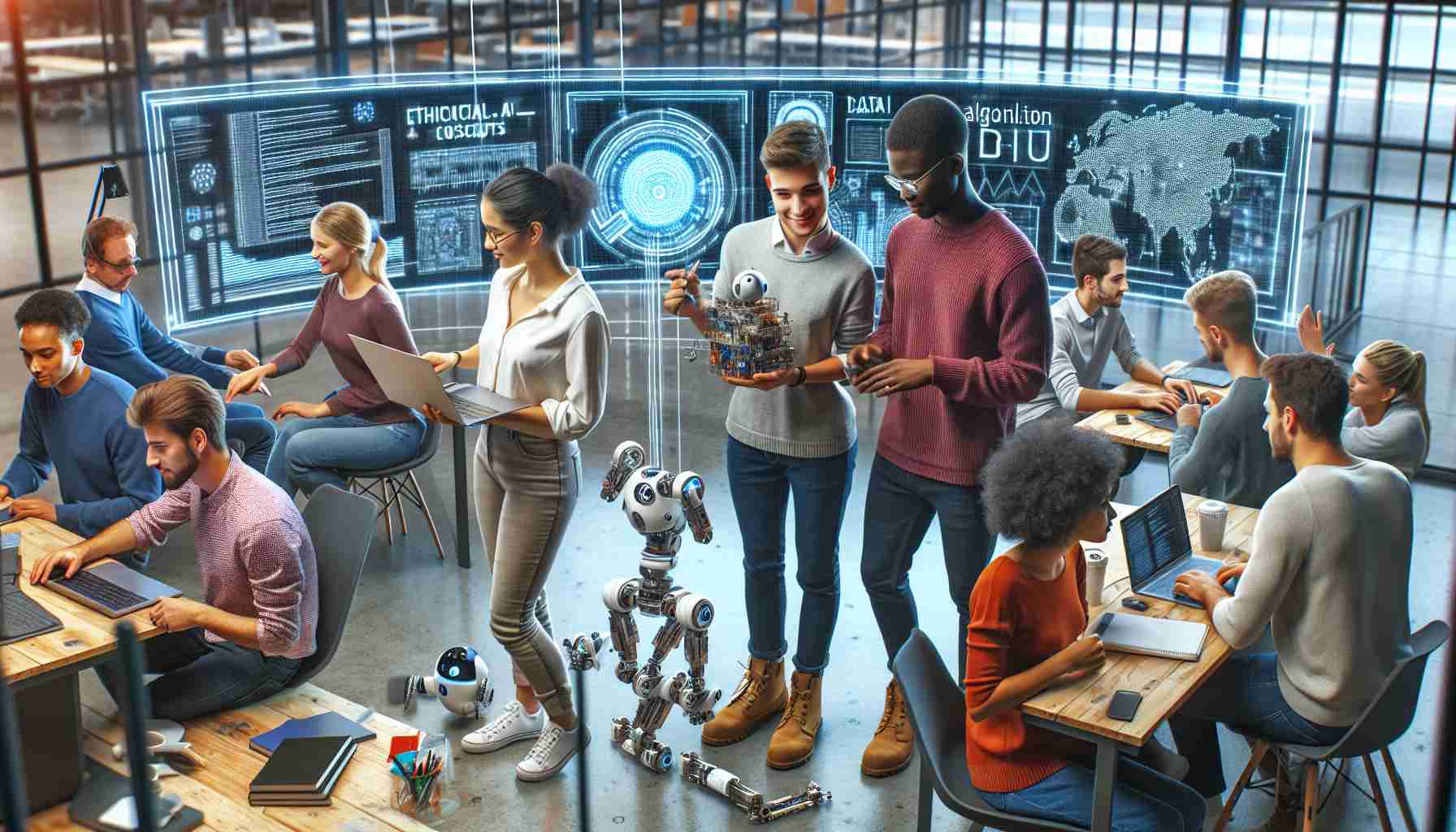
Moreover, the Center for AI Learning, established in fall 2023, serves as a hub for experiential learning, connecting students with real-world projects that apply AI concepts. In its inaugural year, the center successfully matched 179 students with hands-on learning opportunities, fostering essential skills in project management and teamwork. Tom Suo, an applied math and statistics major, shared his positive experience, noting that participation in research projects through the center deepened his understanding of AI technologies. “I encourage my peers to take advantage of the center’s resources to gain practical experience in the field,” Suo remarked, underscoring the importance of experiential learning in preparing students for future careers.
Emory’s commitment to ethical AI education is evident in its curriculum, which includes 13 new AI-focused courses in the Department of Computer Science, alongside over 30 interdisciplinary courses related to AI and machine learning. These courses address a range of topics, from the ethical implications of AI to advanced machine learning techniques, ensuring that students are well-prepared to tackle the challenges and opportunities presented by AI in various domains. The emphasis on ethical considerations is particularly crucial, as the integration of AI into society raises important questions about data privacy, algorithmic bias, and the potential for misuse.
As the initiative continues to evolve, Emory plans to expand its AI educational offerings further, including a transcriptable concentration in AI for computer science students and innovative interdisciplinary master’s programs that combine AI with fields such as business and public health. Vaidy Sunderam, chair of the Department of Computer Science, emphasized the growing demand for focused AI education, stating that these programs will prepare students for careers in a rapidly changing job market.
In summary, Emory University’s AI.Humanity initiative exemplifies a forward-thinking approach to education that not only embraces the technological advancements of AI but also prioritizes the ethical implications of its use. By fostering an interdisciplinary environment, recruiting diverse faculty, and providing students with hands-on learning opportunities, Emory is cultivating a new generation of leaders equipped to navigate the complexities of an AI-driven world. The initiative’s focus on ethical AI education ensures that students are not only skilled in the technical aspects of AI but also prepared to address the societal challenges that accompany its integration into various fields.
Ethical Implications of AI in Education
The integration of artificial intelligence (AI) into higher education raises a multitude of ethical considerations that institutions must navigate carefully. As universities like Emory University and the University of Illinois Springfield embrace AI in their curricula, they are also confronted with the pressing need to address concerns related to data privacy, algorithmic bias, and the transparency of AI systems. A recent study published in Humanities and Social Sciences Communications highlights the perceptions of various stakeholders—students, faculty, and administrators—regarding AI’s role in education. While there is a general optimism about AI’s potential to enhance learning experiences and streamline administrative tasks, significant ethical concerns persist.
Data privacy is a paramount issue, particularly as educational institutions increasingly collect and analyze vast amounts of student data to personalize learning experiences. Stakeholders express apprehension about how this data is used, who has access to it, and the potential for misuse. The need for robust data protection measures is critical to ensure that students’ personal information remains secure and that their privacy is respected. Institutions must establish clear policies that govern data collection and usage, ensuring compliance with regulations such as the Family Educational Rights and Privacy Act (FERPA).
Algorithmic bias is another significant concern that universities must address as they integrate AI technologies. AI systems can inadvertently perpetuate existing biases present in the data they are trained on, leading to unfair outcomes in educational settings. For instance, biased algorithms could affect admissions processes, grading systems, or even the recommendations provided by AI tutoring systems. To mitigate these risks, universities must prioritize the development of AI systems that are transparent and accountable. This includes conducting regular audits of AI algorithms to identify and rectify biases, as well as involving diverse stakeholders in the design and implementation of AI tools.
Transparency in AI systems is essential for fostering trust among students and faculty. Educational institutions should strive to make the workings of AI technologies understandable to all stakeholders. This can be achieved through clear communication about how AI tools function, the data they utilize, and the decision-making processes they employ. By demystifying AI, universities can empower students and faculty to engage critically with these technologies, fostering a culture of informed usage rather than blind reliance.
The establishment of ethical guidelines and training programs is crucial for ensuring responsible AI use in educational settings. Institutions like Emory University are already taking steps in this direction by integrating ethical considerations into their AI curricula. The AI.Humanity initiative emphasizes the importance of understanding the societal implications of AI, equipping students with the knowledge to navigate the ethical landscape of technology. Similarly, the University of Illinois Springfield is developing guidelines for ethical AI use, promoting originality while addressing concerns about academic integrity in an AI-driven world.
Moreover, interdisciplinary collaboration is vital in addressing the ethical challenges posed by AI. By bringing together experts from various fields—such as computer science, law, ethics, and social sciences—universities can develop comprehensive strategies to tackle the multifaceted implications of AI. This collaborative approach not only enhances the understanding of AI’s ethical dimensions but also fosters innovative solutions that can be applied across different academic disciplines.
As universities continue to expand their AI educational offerings, the importance of cultivating a new generation of leaders who are not only technically proficient but also ethically aware cannot be overstated. Institutions must prioritize the development of curricula that emphasize ethical considerations alongside technical skills, preparing students to navigate the complexities of an AI-driven world responsibly. By addressing these ethical considerations head-on, universities can ensure that the integration of AI into higher education serves to enhance learning while safeguarding the values of equity, transparency, and accountability.
Interdisciplinary Approaches to AI Education
Interdisciplinary education is increasingly recognized as a vital approach to preparing students for the complexities of a technology-driven world, particularly in the realm of artificial intelligence (AI). Universities like Yale and Ohio University (2025 USNews Ranking: 179) are leading the charge in integrating AI into diverse curricula, demonstrating how blending technical skills with insights from the humanities, social sciences, and creative fields can enhance students’ understanding and application of AI across various domains.
Yale University’s recent commitment of over $150 million to bolster its AI initiatives exemplifies this interdisciplinary approach. The funding will support faculty recruitment across multiple disciplines, including the arts and sciences, engineering, and medicine, ensuring that students engage with AI technologies from a variety of perspectives. This initiative is not merely about teaching students how to code or develop algorithms; it emphasizes the importance of ethical frameworks and societal implications of AI. By fostering collaboration among different fields, Yale aims to cultivate a generation of leaders who can navigate the ethical challenges posed by AI while leveraging its potential to drive innovation.
Similarly, Ohio University has launched a Bachelor of Science degree in AI that integrates foundational computing knowledge with courses in psychology, ensuring that students understand human behavior and cognition—crucial elements for developing user-friendly AI applications. This program highlights the importance of interdisciplinary learning, as students will engage in capstone projects that explore AI applications across various industries, from healthcare to creative arts. By combining technical training with insights from psychology and other fields, Ohio University prepares its graduates to tackle real-world challenges in a multifaceted job market.
The benefits of such interdisciplinary education are manifold. Students equipped with technical skills in AI, alongside a strong understanding of ethical considerations and human behavior, are better prepared to address the complexities of AI applications in diverse contexts. For instance, a history major utilizing AI to analyze historical texts can uncover patterns and insights that would be difficult to discern through traditional methods. Similarly, a film and media student can leverage AI tools to enhance storytelling and production techniques, demonstrating how creative fields can benefit from technological advancements.
Moreover, the integration of AI into the liberal arts and social sciences fosters critical thinking and ethical reasoning, skills that are increasingly essential in today’s job market. As employers express a growing demand for graduates who not only possess technical expertise but also understand the broader implications of AI, universities are responding by creating programs that emphasize this interdisciplinary approach. The University of Illinois Springfield, for example, has incorporated AI across various academic disciplines, including the liberal arts, to ensure that students are well-rounded and capable of applying AI in diverse contexts.
Experiential learning also plays a crucial role in this interdisciplinary education model. Initiatives like Emory University’s Center for AI Learning provide students with hands-on opportunities to apply AI concepts in real-world scenarios, fostering skills in project management and teamwork. Such experiences are invaluable in preparing students for careers in AI and technology, as they learn to collaborate across disciplines and tackle complex problems.
As the landscape of work continues to evolve with the integration of AI technologies, the role of higher education in preparing graduates for this new reality becomes increasingly critical. By embracing interdisciplinary education, universities are not only equipping students with the technical skills needed for AI but also fostering a deeper understanding of its ethical and societal implications. This holistic approach ensures that graduates are well-prepared to navigate the complexities of an AI-driven world, making them valuable assets in a rapidly changing job market.
The Future of AI Education and Job Market Trends
The landscape of artificial intelligence (AI) education is rapidly evolving, driven by the increasing demand for AI skills in the job market. As industries across the board integrate AI technologies, employers are actively seeking graduates who possess not only technical expertise but also a nuanced understanding of AI’s implications in various fields. This trend is underscored by a recent survey indicating that 83% of U.S. professionals believe students should be prepared to use AI upon entering the workforce, with 88% advocating for educational institutions to provide AI-related opportunities. This growing expectation reflects a significant shift in workforce requirements, emphasizing the need for educational institutions to adapt their curricula accordingly.
Experiential learning is emerging as a critical component in preparing students for careers in AI and technology. Programs like Emory University’s Center for AI Learning exemplify this approach, connecting students with real-world projects that apply AI concepts. Such hands-on experiences not only enhance students’ technical skills but also foster essential soft skills like project management and teamwork. As students engage in practical applications of AI, they gain insights into the ethical and societal implications of the technology, preparing them to navigate the complexities of an AI-driven world.
However, the rise of AI also brings concerns about job displacement. While generative AI is expected to create new roles—particularly in sectors like healthcare and engineering—it may also automate tasks traditionally performed by humans, particularly in clerical and customer service positions. A McKinsey report highlights that while generative AI could lead to the creation of up to 700,000 new jobs in New York City alone, it may displace around 600,000 positions. This duality presents a challenge for educational institutions, which must equip students not only with technical skills but also with the adaptability to thrive in a changing job landscape.
To address these challenges, educational institutions should consider several recommendations. First, they must integrate AI literacy into their curricula, ensuring that students understand both the technical aspects of AI and its ethical implications. This includes teaching students about the risks associated with AI, such as algorithmic bias and data privacy concerns. Second, institutions should foster interdisciplinary education, allowing students from various fields to collaborate on AI projects. This approach not only enhances the understanding of AI’s applications across different domains but also prepares students to work in diverse teams, a skill increasingly valued by employers.
Moreover, institutions should prioritize partnerships with industry leaders to create internship and co-op opportunities that provide students with real-world experience. By aligning educational programs with the evolving needs of the job market, universities can better prepare graduates for the demands of an AI-driven economy. Finally, ongoing professional development for faculty is essential to ensure that educators remain current with the latest AI advancements and pedagogical strategies.
As AI continues to transform the job market, the role of higher education in preparing the workforce becomes increasingly critical. By adapting curricula, emphasizing experiential learning, and fostering interdisciplinary collaboration, educational institutions can equip students with the skills necessary to thrive in a technology-driven future. The proactive integration of AI education will not only benefit students but also contribute to a more skilled and adaptable workforce, ready to meet the challenges and opportunities presented by AI advancements.
Reference:
Emory University Launches Innovative AI Education Initiative
Exploring the Impact of Artificial Intelligence on Higher Education: Ethical, Social, and Educational Implications
University of Illinois Springfield Prepares Students for an AI-Driven Future
Yale University Announces $150 Million Investment in Artificial Intelligence Leadership
Ohio University Launches Bachelor of Science Degree in Artificial Intelligence
AI Revolutionizing Education 4.0: Enhancing Learning Through Technology
Employers Seek New Graduates with AI Skills
AI’s Transformative Impact on the Creative Industries Discussed at Davos
Concerns Rise Over Creative Europe Media Programme’s Shift from Cultural to Business Objectives
The Future of Generative AI: Key Predictions for 2024
The Impact of Generative AI on Jobs in New York City