
Summer research programs at U.S. universities let high school students work in a real lab for several weeks, usually alongside graduate students and postdocs, and finish with a poster or talk. They are a good way to find out whether you actually enjoy research before choosing a college major. But the programs differ a lot in who can apply: many of the best-known university programs are free outreach programs for local students only, while a smaller group of national programs accepts students from other countries. This guide explains the main types, with examples checked against each program’s official page in November 2026.
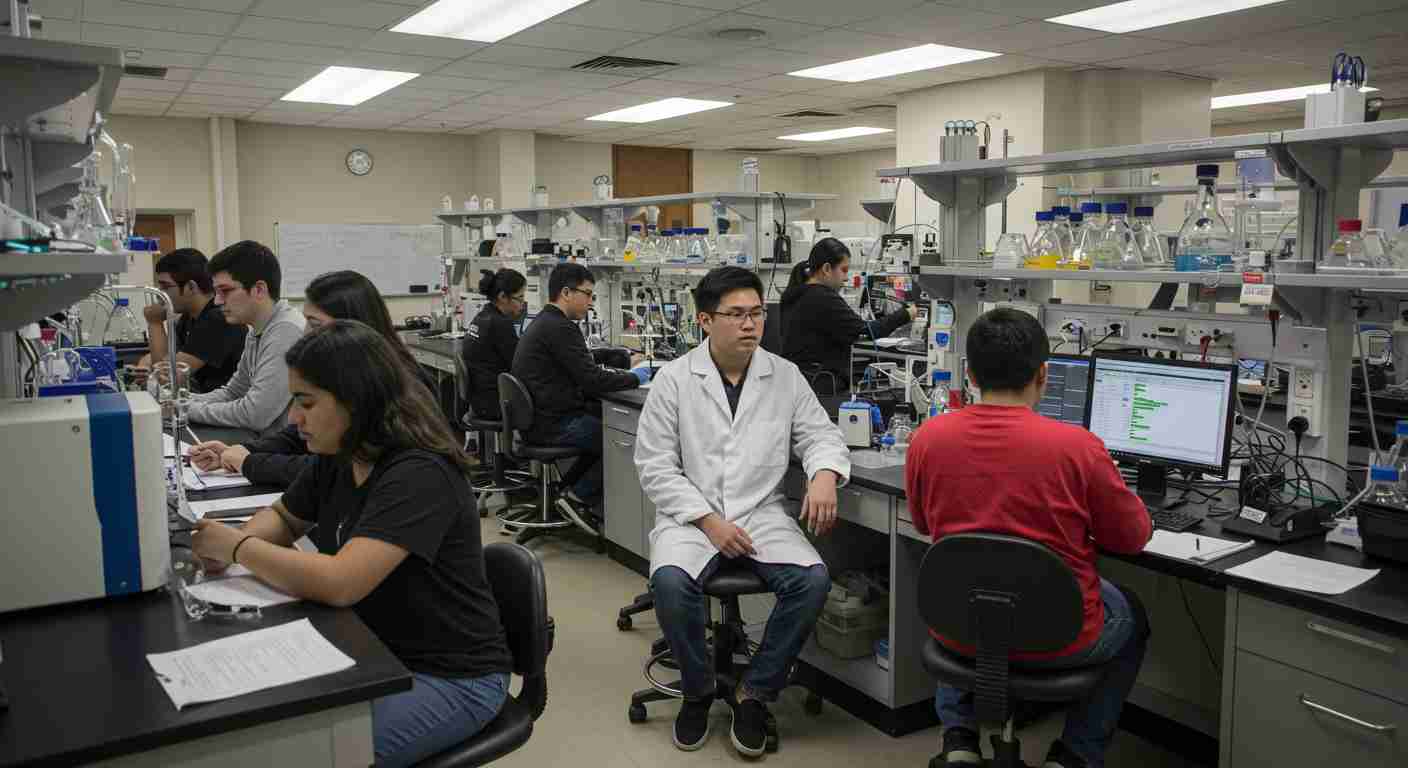
What a university research program looks like
The University of Pennsylvania‘s Penn Research Experience for High School Students (PREHSS, formerly Penn LENS) is a typical example. It is a highly selective program of about five weeks for rising 11th and 12th graders in Philadelphia with a demonstrated interest in STEM. Students work in labs led by senior faculty, are paired with graduate students, postdocs and other research staff, complete a project and present it at a closing symposium. In summer 2025 the labs ranged across chemistry, psychology, biology, and earth and environmental science in Penn Arts & Sciences, plus the transplant surgery division of Penn Medicine. Penn says 18 of the program’s 114 alumni have enrolled at Penn (Penn Today, August 13, 2025).
One alumnus, Kithya Borey, who worked on a bioinformatics project in 2022 and later studied biochemistry and biophysics at Penn, said working with faculty from different fields “helped me understand how scientific questions are tackled from multiple angles.” Faculty mentor Joseph Kable said the students “often have lots of questions about science more generally,” including about his own career path.
Most programs of this kind share the same elements:
- A faculty lab and a day-to-day mentor (often a graduate student or postdoc) who gives you a defined project.
- Full-time hours for five to seven weeks in June–August.
- A final presentation (poster session, symposium or written paper).
- Selective admission: transcripts, teacher recommendations and essays about your interests; some also look at test scores.
Local outreach programs: usually not open to international students
Many university programs are funded to serve the local community, so they limit eligibility by residence:
- Penn PREHSS: Philadelphia high school students only (Penn Today, above).
- Northeastern University Young Scholars Program (YSP): a free summer research program in Boston for students entering 12th grade. Applicants must be permanent Massachusetts residents who live and attend school in the state, live within commuting distance of Northeastern, and be U.S. citizens or permanent residents. The 2027 program runs June 22 – July 31, 2027, 8:30 am – 4:30 pm Monday through Thursday, and applications close March 1, 2027 (Northeastern Center for STEM Education).
- Boston University RISE: a six-week Internship or Practicum track for students in their junior year. For the 2027 session BU describes eligibility as “a domestic student currently in your junior year of high school”; applications open December 17 (BU Summer: RISE).
If you are studying at a high school in the United States (including on an F-1 visa), read the residency rules closely: some local programs only require that you attend school in the area, while others, like YSP, also require U.S. citizenship or permanent residency.
Programs that accept students from outside the U.S.
| Program | Who can apply | International applicants | Cost |
|---|---|---|---|
| Research Science Institute (RSI), run by the Center for Excellence in Education at MIT | Students with one year left before high school graduation (seniors are not eligible) | Each participating country has its own selection procedure and schedule; contact RSI to see if your country participates | Free to students |
| Summer Science Program (SSP) | Current high school juniors, at least 15 and not yet 19 during the program | Yes: “international applicant” = attends school outside the U.S.; separate deadline and decision date (mid-March); English proficiency test scores required | Free for family income of $75,000 or less, discounts below about $140,000; aid is not a loan and does not affect admission |
| Garcia Summer Research Program, Stony Brook University | High school students at least 16 by July 4 (2026 cycle), unweighted GPA of 95/100 (3.8/4.0), test scores at or above the 60th percentile | Accepted, but the program “cannot support visa applications”: you need documents that already let you be in the U.S. for the program period | Check the program site |
Sources: CEE: Research Science Institute and Apply to RSI; SSP Admissions FAQs; Garcia Program Eligibility.
More on these three:
- RSI starts with a week of STEM classes, followed by a five-week research internship, and ends with research presentations. About 100 students attend at MIT each summer, and CEE is adding a 50-student RSI at Stanford for 2027. For U.S. citizens and permanent residents, the RSI 2027 application closes at 11:59 pm on December 11, 2026, with no late applications; CEE recommends PSAT scores of at least 740 in math and 700 in reading and writing.
- SSP runs research in astrophysics, bacterial genomics, biochemistry and cell biology at host campuses; Caltech, MIT and Harvey Mudd are affiliates. Because the financial aid application opens only after admission decisions, asking for aid does not affect your chances.
- Garcia asks for a school-sent transcript and three letters of recommendation, one of them from a science teacher; earlier research experience helps but is not required.
How to prepare a strong application
- Start in the fall of 10th or 11th grade. Deadlines fall between December and March for programs the following summer (RSI’s U.S. deadline is in December), and teacher recommendations take time.
- Check eligibility first. Grade level, age on a specific date, residency, citizenship and visa support rule out more applicants than grades do.
- Show a specific interest. Essays that describe a question you have actually explored, a project, a competition or independent reading are stronger than general statements about loving science.
- Ask the right teachers. Programs like Garcia require a science teacher’s recommendation; give recommenders your draft essays and a short list of what you did in their class.
- Plan the cost and travel. Free programs may still leave you paying for travel, and residential programs differ in what they cover. International students should confirm which visa the program supports before committing.
How these programs help with college applications
A research program is not a requirement for admission to U.S. universities. What helps is what you can show afterward: a project you can explain in an essay or interview, a mentor who can write about your work, and a clearer sense of which major you want. If you cannot attend a summer program, a school science fair project, a research competition or reaching out to a local university lab can give you similar experience.
References
- Penn Today: Penn PREHSS fosters curiosity in STEM (August 13, 2025)
- Northeastern Center for STEM Education: Young Scholars Program
- Boston University: RISE Internship/Practicum
- Center for Excellence in Education: Research Science Institute
- Center for Excellence in Education: Apply to RSI
- Summer Science Program: Admissions FAQs
- Stony Brook University Garcia Center: Program Eligibility
- Forward Pathway: University of Pennsylvania
- Forward Pathway: Northeastern University
- Forward Pathway: Stony Brook University