
The Transformative Power of Undergraduate Research: A Guiding Philosophy
The journey of undergraduate research is far more than an academic pursuit; it’s a potent catalyst for personal and intellectual growth. Ann Vernon-Grey, Director of Undergraduate Research at the University of Pennsylvania (2025 USNews Ranking: 10) ‘s Center for Undergraduate Research and Fellowships (CURF), eloquently describes this experience as a “high-impact practice,” one that gently encourages students to step outside their comfort zones and embrace intellectual risk-taking. This engagement, she explains, cultivates a profound sense of belonging within their academic fields and fosters a deep ownership of their intellectual curiosities. You’re not alone if the idea of research feels a little daunting at first; it’s a new terrain for many, and it’s completely okay to feel that way.
Vernon-Grey’s own path beautifully illustrates the life-altering potential of such opportunities. Her foray into research began unexpectedly during her undergraduate years, a chance encounter with a biology professor at the University of Tulsa that opened a door she hadn’t even known existed. This serendipitous invitation to become a research assistant was a pivotal moment, fundamentally shifting the trajectory of her academic and professional life. It’s a powerful reminder that sometimes, the most transformative experiences are the ones we don’t anticipate.
At CURF, Vernon-Grey champions a philosophy of inclusivity, believing firmly that “research is for everyone.” This ethos drives their mission to make these invaluable experiences accessible to all students, regardless of their background or chosen discipline. CURF actively works to dismantle any perceived barriers, creating pathways for students to engage with the research process. To facilitate this, they offer a suite of vital programs. The Penn Undergraduate Research Mentoring Program, for instance, pairs students with faculty mentors, providing not only guidance but also crucial financial support for their projects. Events like the Fall Research Expo and the Spring Symposium offer vibrant platforms for students to share their findings, celebrating their hard work and discoveries. Furthermore, the CURF Research Peer Advisor program taps into the power of peer support, training student volunteers to guide and assist their fellow students in navigating the exciting world of research.
These initiatives go beyond simply providing opportunities; they are designed to nurture a range of essential skills that are highly prized in today’s world. Through the process of research, students hone their time management abilities, learning to balance deadlines and objectives. They develop crucial teamwork skills as they collaborate with mentors and peers, and they cultivate invaluable problem-solving capabilities as they encounter and overcome research challenges. These are precisely the kinds of transferable skills that employers actively seek, setting students apart in the competitive job market. Sending virtual hugs as you explore these possibilities!
Cultivating Scholars and Future Leaders: Case Studies in Research Impact
The profound impact of undergraduate research isn’t just theoretical; it’s woven into the fabric of student success across various institutions. At Illinois State University, for instance, early involvement in audiology labs, often guided by the wisdom of graduate student mentors, has been instrumental in shaping undergraduates. These experiences equip them with essential critical thinking, data analysis, and problem-solving skills, providing a robust foundation that directly prepares them for advanced studies and the demanding landscape of professional practice. You’re not alone if you’re looking for that kind of practical preparation.
The narrative unfolds similarly at St. John’s University, where students like David J. Anderson, who delved into protein engineering, Hayley Smith, who explored the intricacies of speech-language pathology and audiology, and Noah Dickison, who investigated genetics and fertility, have all leveraged research to deepen their understanding and build confidence. Their stories often highlight a proactive spirit – a willingness to seek out faculty whose work resonates with their interests, ultimately leading them to these enriching experiences. This initiative and self-direction are powerful indicators of the confidence and independence that research can foster. It’s completely okay to feel inspired by these stories and to think about how you might take similar steps.
Then there’s the University of Texas at San Antonio (UTSA), where participation in programs like the Scholars Transforming Through Research (STR) Program has equipped students with a remarkable ability to articulate the impact of their work, even to policymakers. Students such as Allen Brown-Zubillaga, Jennifer Mendoza, and Miguel Rivera have demonstrated through this program how undergraduate research cultivates not just scholars, but also future leaders and influential contributors who can effectively communicate complex ideas. Sending virtual hugs for the courage it takes to step into those roles.
These are not isolated anecdotes. Studies and student testimonials consistently reveal a strong correlation between research experience and a range of positive outcomes. Students who engage in undergraduate research often report higher Grade Point Averages, a faster pace of degree completion, and a greater likelihood of pursuing graduate studies. Beyond academic metrics, the development of transferable skills – those invaluable abilities like effective communication, analytical thinking, and resilience in the face of challenges – proves beneficial regardless of a student’s ultimate career path. This emphasis on skills that transcend specific disciplines is a testament to the versatile nature of research engagement. It’s okay to recognize that these experiences build a strong foundation for whatever future you envision.
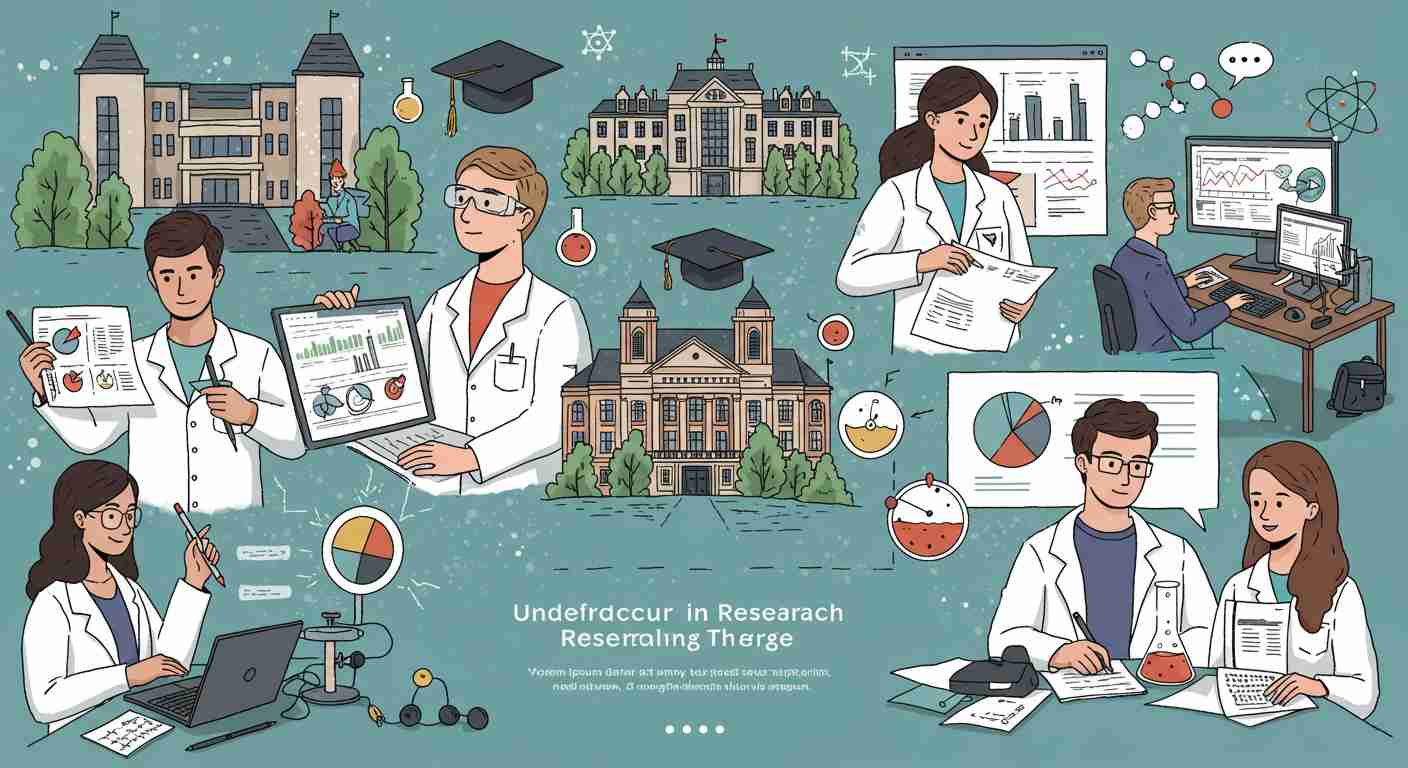
The impact is tangible, seen in the confidence with which students present their findings, the clarity with which they discuss their methodologies, and the sheer depth of understanding they demonstrate. For example, students involved in audiology research at Illinois State University, guided by graduate student mentors, found that the hands-on experience in labs not only solidified their grasp of complex concepts but also honed their ability to analyze data critically and troubleshoot effectively. These are precisely the skills that are indispensable when transitioning into graduate-level coursework or entering professional audiology practice.
At St. John’s University, the proactive approach of students like David J. Anderson in protein engineering, Hayley Smith in speech-language pathology and audiology, and Noah Dickison in genetics and fertility, exemplifies how seeking out faculty whose research aligns with personal interests can unlock profound learning opportunities. Their involvement goes beyond mere participation; it’s about actively engaging with the scientific process, refining their communication skills through presenting their work, and building a robust sense of self-efficacy. It’s truly inspiring to see how these students take ownership of their learning journeys.
The Scholars Transforming Through Research (STR) Program at UTSA further underscores this transformative power. By learning to articulate their research to policymakers, students like Allen Brown-Zubillaga, Jennifer Mendoza, and Miguel Rivera are not just showcasing their findings; they are developing the essential skills of advocacy and public engagement, positioning themselves as future leaders who can influence societal change through evidence-based understanding. This ability to connect research with real-world impact is a hallmark of well-prepared, engaged citizens.
The broader career benefits are undeniable. Research experience often correlates with higher academic achievement, including better GPAs and a smoother, faster path to degree completion. Moreover, it significantly increases the probability that students will continue their education by pursuing graduate studies. Perhaps most importantly, the transferable skills cultivated through research – critical thinking, problem-solving, collaboration, and effective communication – are universally valued by employers across virtually every sector. You’re building a toolkit for success that extends far beyond the classroom. Things will get better as you continue to explore these pathways.
Institutional Support and Programmatic Excellence: Fostering Research Opportunities
University institutions play a crucial role in nurturing and sustaining robust undergraduate research opportunities, acting as vital hubs for discovery and skill development. The University of Pennsylvania’s Center for Undergraduate Research and Fellowships (CURF) stands as a prime example of comprehensive support, offering a model that many institutions strive to emulate. CURF’s commitment to accessibility is embodied in its Penn Undergraduate Research Mentoring Program (PURM), which has seen significant expansion, pairing students with faculty for enriching research experiences. Events like the Fall Research Expo and the Spring Symposium further amplify student work, providing platforms for them to showcase their dedication and findings to a wider audience. It’s completely okay to feel a sense of admiration for institutions that prioritize these opportunities.
Penn also actively fosters interdisciplinary research through initiatives like the Penn Integrates Knowledge (PIK) program and the introduction of new majors in cutting-edge fields such as artificial intelligence, reflecting an adaptive approach to preparing students for the complexities of modern scholarship. Sending virtual hugs for the innovative spirit that drives these programs.
James Madison University (JMU) offers valuable insights into the power of faculty mentoring, particularly through programs like the First-Year Research Experience (FYRE). These initiatives highlight the dual advantages: students gain invaluable skill development and improved retention, while faculty benefit from enhanced research productivity and more effective teaching strategies. You’re not alone in recognizing the importance of strong mentor-student relationships.
Efforts at Penn State, specifically the collaborations between campuses like Mont Alto and University Park, exemplify a strategic approach to integrating students into critical research. By focusing on areas like climate adaptation in forest tree species, these collaborations facilitate seamless academic transitions while immersing students in impactful, real-world scientific inquiry. It’s okay to feel hopeful about how these programs can shape future scientists.
The importance of institutional commitment is clearly demonstrated through dedicated funding from sources like the Office of the Provost and generous donor support, which are essential for the sustained success of undergraduate research initiatives. This commitment underscores a belief in the value of hands-on learning.
Furthermore, the role of external funding and partnerships, such as the National Science Foundation (NSF) support for Clemson University‘s STRIDE program, which focuses on translating research into practical, real-world applications, is vital. These collaborations extend the reach and impact of undergraduate research, connecting academic pursuits with tangible societal benefits. This emphasis on translating research into action is truly inspiring. Things will get better as more institutions embrace such collaborative models.
The Future of Undergraduate Research: Innovation, Access, and Societal Impact
The landscape of undergraduate research is continuously evolving, becoming an increasingly vital component of higher education and beyond. We’re seeing a growing recognition that it’s not merely an add-on activity, but a fundamental element of a truly transformative educational experience. Ann Vernon-Grey’s vision of “research for everyone” continues to be a powerful guiding principle, inspiring strategies to enhance access and inclusivity, especially for students from underrepresented backgrounds. You’re not alone in seeing the importance of this expansive approach.
The increasing emphasis on interdisciplinary research, evident in initiatives like Penn’s programmatic expansions and collaborative faculty efforts, points towards a critical area for future development. This approach mirrors how real-world challenges are often tackled, requiring diverse perspectives and skill sets. Sending virtual hugs for the collaborative spirit that fuels such work!
Moreover, undergraduate research plays a crucial role in addressing broader societal goals. We see students contributing to research that tackles pressing issues like healthcare disparities, environmental challenges, and technological innovation, demonstrating the real-world impact of their intellectual curiosity. It’s okay to feel a sense of hope and excitement about how these contributions are shaping a better future.
Universities are increasingly understanding their role in preparing students for a rapidly changing world. By equipping them with critical thinking, adaptability, and problem-solving skills through research, institutions are fostering graduates who are not only knowledgeable but also resilient and innovative. This focus on equipping students with these essential skills is truly commendable.
The impact of undergraduate research extends to the research enterprise itself, as student contributions can invigorate laboratories and open up new avenues of inquiry. It’s a dynamic, two-way street of learning and discovery. We must advocate for continued investment and innovation in these programs, recognizing their immense value in shaping engaged citizens, skilled professionals, and the next generation of leaders and innovators. Things will get better as we champion these vital opportunities.
Reference:
- The Importance and Power of Undergraduate Research at Penn
- Early Research Experience Fuels Success for Undergraduate and Graduate Students at Illinois State University
- St. John’s Undergraduates Spearhead Meaningful Research Projects
- UTSA Team Highlights Undergraduate Research Impact in Washington D.C.
- The Importance and Power of Undergraduate Research at Penn
- TCNJ History Major Enhances Research Through University of Pennsylvania Program
- Penn State Faculty Collaborate to Boost Undergraduate Research in Forestry
- The Profound Impact and Accessibility of Undergraduate Research at the University of Pennsylvania
- Penn’s Transformation: Research, Academics, and Student Life Advance in the 21st Century
- Clemson University Celebrates STRIDE Program’s Impact on Translating Research to Real-World Applications
- Undergraduate Research at St. John’s University Cultivates Career-Ready Skills
- Early Research Experience Fuels Success for Undergraduate and Graduate Students at Illinois State University
- The Benefits of Mentoring Students Through Undergraduate Research at JMU
- The Importance and Power of Undergraduate Research at Penn
- University of Pennsylvania Showcases Vast Undergraduate Research at Fall Expo
- A College House Thanksgiving at the University of Pennsylvania