
Virginia Tech’s Engineering Mechanics Program Merger: A New Era of Interdisciplinary Collaboration
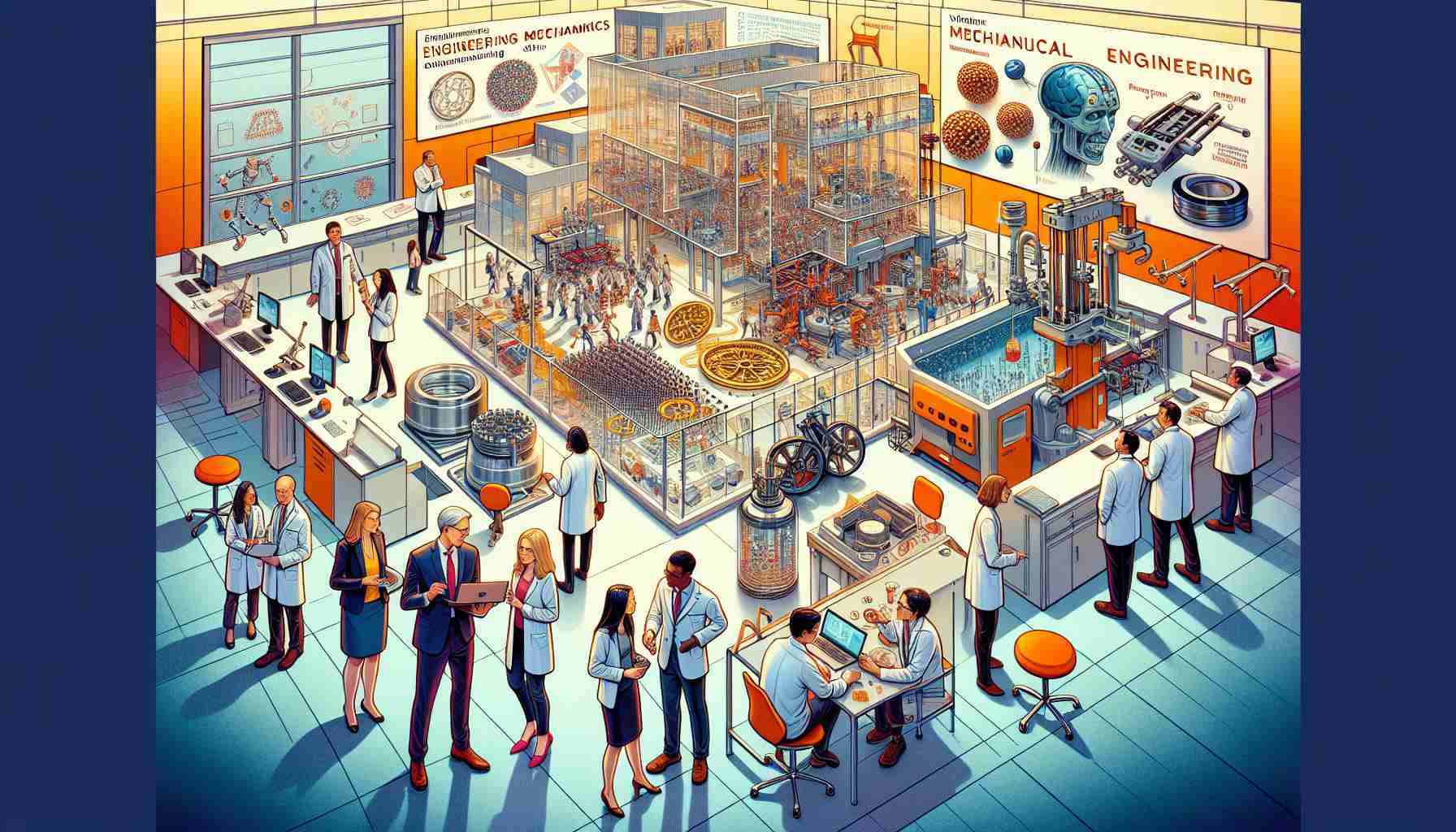
On August 15, 2024, Virginia Tech announced a significant shift in its academic structure: the Engineering Mechanics program will merge with the Department of Mechanical Engineering. This strategic move is poised to create a wealth of research, design, and collaboration opportunities for both faculty and students. Starting July 1, 2024, the merger will ensure that existing students can continue their studies without disruption while maintaining the integrity of graduate degrees and undergraduate minors. The transition will also see 14 faculty members and 8 staff members join the Mechanical Engineering department, with all positions retained.
The historical collaboration between researchers in engineering mechanics and mechanical engineering has spanned decades, particularly in fields such as composite materials, adhesives, and fuel cells. This merger is expected to enhance communication and collaboration between the two disciplines, fostering joint projects in dynamics, fluid mechanics, solid mechanics, and biomechanics. Mark Stremler, a professor in the Mechanical Engineering department, emphasized that both engineering mechanics and mechanical engineering practitioners focus on solving problems based on mechanics. The integration of these two fields will open new avenues for research, particularly in cutting-edge areas.
Virginia Tech’s Mechanical Engineering department plans to establish an advanced manufacturing center to address the rapidly evolving demands of the industry. This merger will facilitate collaboration among faculty, especially in the realm of bio-inspired innovation, which is crucial for advancing cancer research and the development of medical devices.
The newly integrated faculty includes several renowned scholars in the fields of bio-inspiration and mechanics. Professor Brian Lattimer from the Mechanical Engineering department noted that the inclusion of the Engineering Mechanics program will elevate the overall quality of the department, creating more opportunities, particularly in the areas of material behavior, multifunctionality of composites, and the development of new applications.
The Importance of Interdisciplinary Collaboration in Engineering
The merger of the Engineering Mechanics program with the Mechanical Engineering department at Virginia Tech is not an isolated event; it reflects a broader trend in U.S. higher education where interdisciplinary collaboration is increasingly recognized as essential for advancing research and innovation. The integration of diverse fields can lead to groundbreaking discoveries and solutions to complex problems that single disciplines may struggle to address.
For instance, the establishment of the Collaboratory for Biomedical and Bioengineering Innovation at the University of Connecticut (2024 USNews Ranking: 58) (UConn) serves as a prime example of how interdisciplinary collaboration can enhance research capabilities. Launched on April 2, 2024, this laboratory aims to foster cooperation between biomedical and bioengineering researchers, providing a unified environment for inventing, developing, and adapting existing biotechnologies to tackle new challenges in the life sciences. Leslie Shor, the associate dean of the engineering school, highlighted the need to break down artificial barriers between biomedical researchers and engineers, who often lead in technological advancements.
The Collaboratory’s mission is to promote the dissemination of emerging technologies across various fields, thereby enhancing their value and accelerating the pace of discovery. This aligns with the goals of the Virginia Tech merger, where the combined expertise of engineering mechanics and mechanical engineering can lead to innovative solutions in areas such as energy materials and medical devices.
Advanced Manufacturing Center: A Response to Industry Needs
The establishment of an advanced manufacturing center at Virginia Tech is a direct response to the growing demands of the industry. On February 29, 2024, the university received a $3 million grant from the U.S. Department of Defense to develop next-generation energetic materials. This project will leverage additive manufacturing (3D printing) technology to explore safer and more efficient propellants, explosives, fuels, and other reactive materials used in rocket engines and munitions.
Virginia Tech has already established a global reputation in the field of additive manufacturing, and this project will bring together experts in propulsion, energetic materials, and novel materials to advance this new technology. The collaboration with the Radford Army Ammunition Plant, located just five miles from the campus, will further enhance the region’s innovation capabilities while supporting national security and economic development.
The current manufacturing processes for energetic materials have remained largely unchanged since World War II. Virginia Tech’s research aims to explore the potential of modern 3D printing technologies to improve the performance and safety of these materials, potentially enabling on-site manufacturing to meet evolving demands. This initiative not only provides students with practical learning opportunities but also offers continuing education for existing professionals, ensuring that the workforce remains up-to-date with the latest research and developments.
Greg Young, a leading expert in propulsion and energetic materials, expressed the hope that this project will educate students on safely conducting hazardous operations while accelerating workforce development to meet the needs of the Radford Army Ammunition Plant and the New River Valley region.
Bio-Inspired Innovation: A Catalyst for Medical Advancements
The role of bio-inspired innovation in cancer research and medical device development is another critical aspect of the merger between the Engineering Mechanics program and the Mechanical Engineering department at Virginia Tech. On August 10, 2024, a study published in Scientific Reports systematically assessed the relationship between biomimicry research and the Sustainable Development Goals (SDGs), revealing the interdisciplinary interactions that biomimicry can facilitate in health, sustainability, and energy.
The study identified two primary thematic clusters: the first focuses on health, collaboration, and terrestrial biology (SDGs 3, 17, and 15), emphasizing the role of biomimicry in medical innovation, sustainable collaboration, and land management. This highlights the potential of biomimicry in medical technology, underscoring the necessity of cross-sector collaboration and ecosystem protection. The second cluster revolves around clean water, energy, infrastructure, and marine biology (SDGs 6, 7, 9, and 14), showcasing the application of nature-inspired solutions to sustainability challenges, including energy generation and water purification.
The prominence of SDG 7 within this cluster indicates the significant contributions of biomimicry to sustainable energy practices. The analysis of thematic clusters further reveals the broad applicability of biomimicry and its role in enhancing sustainable energy access and promoting ecosystem protection. Emerging research themes such as meta-heuristic algorithms, nanogenerators, exosomes, and bioprinting indicate that this field is rapidly evolving.
The study provides a comprehensive overview of the trajectory of biomimicry development, emphasizing its importance in advancing global sustainable development efforts. It also highlights the challenges of translating biomimicry discoveries into commercial applications, including overcoming skill gaps, engineering mindsets, business acumen, and funding obstacles.
Conclusion: A Vision for the Future
The merger of the Engineering Mechanics program with the Mechanical Engineering department at Virginia Tech represents a significant step forward in fostering interdisciplinary collaboration within the engineering field. By integrating these two programs, Virginia Tech is not only enhancing its research capabilities but also positioning itself as a leader in addressing the complex challenges of the modern world.
The establishment of an advanced manufacturing center and the emphasis on bio-inspired innovation further illustrate the university’s commitment to driving innovation and economic growth. As demonstrated by the Collaboratory for Biomedical and Bioengineering Innovation at UConn, breaking down barriers between disciplines can lead to groundbreaking discoveries and solutions that benefit society as a whole.
In summary, the merger at Virginia Tech is a reflection of a broader trend in U.S. higher education, where interdisciplinary collaboration is increasingly recognized as essential for advancing research and innovation. By fostering an environment that encourages cooperation among diverse fields, Virginia Tech is paving the way for future advancements in engineering, healthcare, and sustainable development. The potential for new research directions, enhanced educational opportunities, and impactful innovations is immense, and the university is well-positioned to lead the charge in these critical areas.
News References:
- New Opportunities for Engineering Mechanics at Virginia Tech
- Stefan Duma Named Interim Head of Biomedical Engineering and Mechanics at Virginia Tech
- UConn Launches Collaboratory for Biomedical and Bioengineering Innovation
- Next Generation of Energetic Materials Development at Virginia Tech
- Mapping Biomimicry Research to Sustainable Development Goals