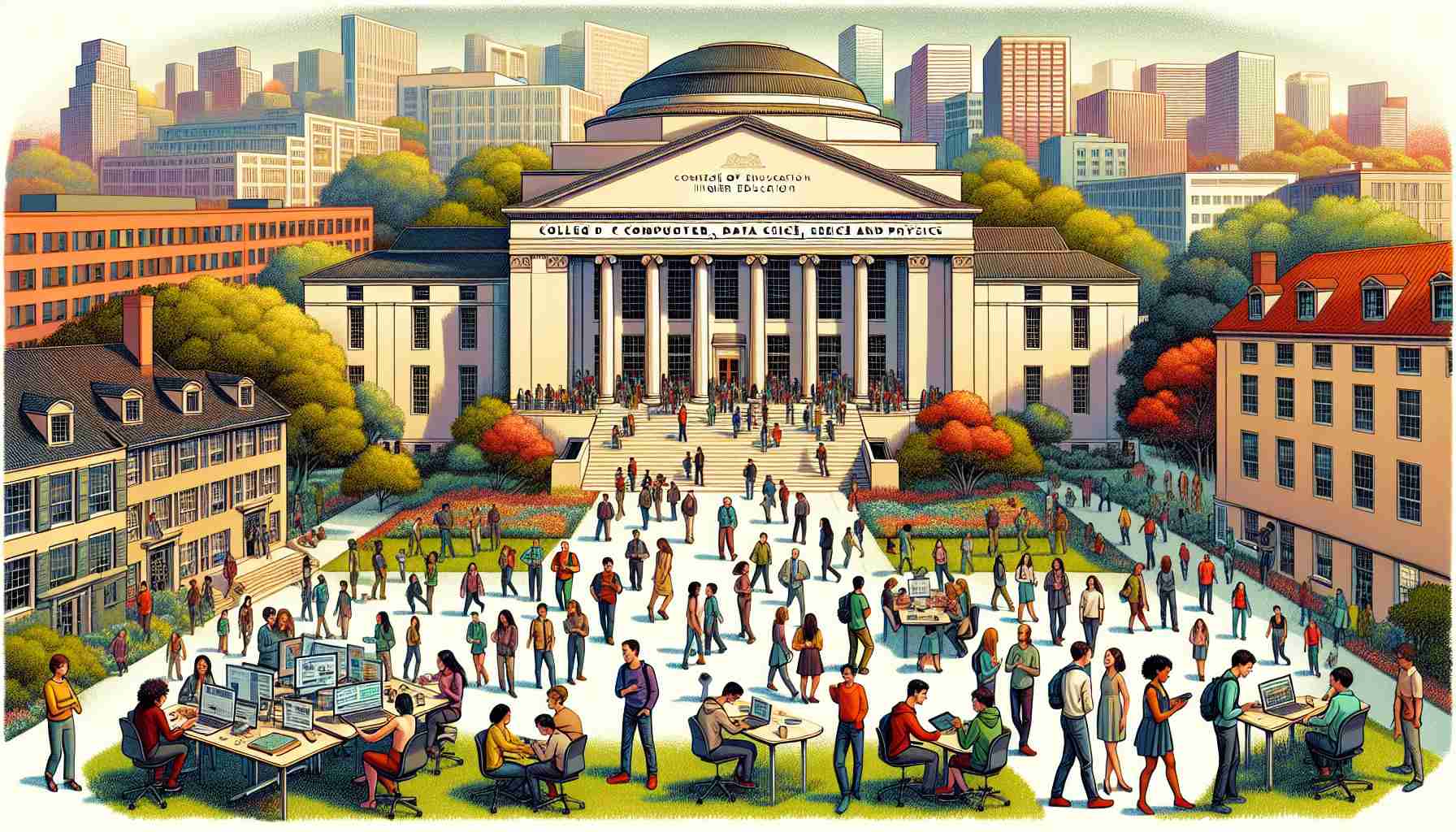
The Establishment of the College of Computer, Data Science, and Physics at William & Mary: A New Era in Interdisciplinary Education
On July 23, 2024, the State Council of Higher Education for Virginia (SCHEV) approved the establishment of the College of Computer, Data Science, and Physics at the College of William & Mary (W&M). This new college represents a significant advancement in the integration of the humanities and sciences, aiming to equip students with the skills necessary to thrive in a data-rich world. The college will consolidate four high-performance disciplines at W&M: Applied Science, Computer Science, Data Science, and Physics, with plans for a formal launch in the fall of 2025. This marks the sixth college at W&M since its founding and the first new college in over 50 years.
W&M President Katherine A. Rowe emphasized that the future job market will favor those who can solve emerging problems, with machine learning, artificial intelligence, and computational modeling at the core of 21st-century humanities education. The foundation for this new college has been laid through extensive feedback and consultation processes, designed to provide greater space and opportunities for research and academic collaboration. The college will be centrally located on campus and will be activated with the completion of the fourth phase of the Integrated Science Center, expected to attract world-class faculty and external investment.
Provost Peggy Agouris noted that innovation has been a part of W&M since its inception, and the new college will serve as a catalyst for countless new discoveries, collaborations, and synergies. The establishment of this college will provide greater visibility and autonomy for these high-performance disciplines and serve as a single point of contact for external collaborations. The four disciplines have already shown strong growth in external investment and student enrollment, with over $9 million in external funding in 2023. This new structure will further enhance the integration of high-impact research in data-intensive fields with academic and career preparation, meeting the needs of students and employers while achieving the goals of W&M’s Vision 2026 strategic plan.
The Impact of Interdisciplinary Education on Job Market Trends
The establishment of the College of Computer, Data Science, and Physics at W&M is a timely response to the evolving job market, which increasingly values interdisciplinary education. As industries become more complex and interconnected, employers are seeking graduates who possess a diverse skill set that spans multiple disciplines. The integration of computer science, data science, and physics with the humanities is particularly relevant in today’s data-driven economy.
For instance, the research conducted by faculty at Western Michigan University (2024 USNews Ranking: 304) (WMU) illustrates the importance of interdisciplinary approaches in addressing real-world challenges. Faculty members have made significant strides in various fields of applied research, aiming to drive innovation and efficiency in business practices. Professor Sime Curkovic’s work on managing inflation’s impact on supply chains through price index management exemplifies how interdisciplinary research can lead to practical solutions that enhance competitiveness in fluctuating markets.
Similarly, Assistant Professor Zag Davaadorj’s focus on financial technology (FinTech) addresses issues such as the digital divide and peer-to-peer lending, providing insights for policymakers and businesses on ensuring equitable access to financial services, particularly in underserved communities. These examples underscore the necessity of equipping students with a broad range of skills that can be applied across various sectors.
Moreover, the rise of artificial intelligence and machine learning has further emphasized the need for interdisciplinary education. As W&M’s new college aims to integrate these technologies into its curriculum, students will be better prepared to navigate the complexities of modern workplaces. The ability to analyze data, understand computational models, and apply scientific principles will be invaluable in a job market that increasingly prioritizes technological proficiency.
The Role of External Investment in Higher Education Institutions
The establishment of the College of Computer, Data Science, and Physics at W&M also highlights the critical role of external investment in higher education institutions. The college’s anticipated growth in external funding, evidenced by the $9 million in external investment in 2023, is a testament to the increasing interest from private and public sectors in supporting academic initiatives that align with industry needs.
External investment not only provides financial resources for research and development but also fosters partnerships between academic institutions and industry leaders. These collaborations can lead to innovative research projects, internships, and job placements for students, ultimately enhancing their employability. As seen in the case of the Philippines, where the government is considering easing restrictions on foreign investment in higher education, the potential for increased funding and resources can significantly impact the quality and competitiveness of academic programs.
However, the influx of external investment must be approached with caution. Concerns about the potential influence of corporate interests on academic integrity and the prioritization of profit over education must be addressed. Institutions like W&M must strike a balance between securing funding and maintaining their commitment to academic excellence and ethical standards.
The Importance of Data Science and Machine Learning in Humanities Education
The integration of data science and machine learning into humanities education is becoming increasingly vital as technology continues to shape our world. The appointment of James Dobson as the AI Special Advisor at Dartmouth College exemplifies this trend. Dobson’s role involves developing a plan to expand Dartmouth’s engagement with AI technologies, supporting the college’s research and curriculum goals.
Dartmouth’s commitment to incorporating AI into its academic framework reflects a broader recognition of the potential for technology to enhance teaching, learning, and research. By examining the historical evolution of AI and its implications, Dobson aims to foster a critical understanding of these technologies among students and faculty alike. This approach aligns with W&M’s vision for its new college, which seeks to prepare students for a future where data literacy and technological proficiency are essential.
The intersection of data science and the humanities also opens up new avenues for research and innovation. As students learn to analyze and interpret data within a humanistic context, they can contribute to a deeper understanding of societal issues and cultural phenomena. This interdisciplinary approach not only enriches the educational experience but also equips students with the skills needed to address complex challenges in various fields.
Future of Academic Collaboration in Research and Innovation
The establishment of the College of Computer, Data Science, and Physics at W&M signals a commitment to fostering academic collaboration in research and innovation. As institutions increasingly recognize the value of interdisciplinary approaches, the potential for groundbreaking discoveries and advancements in knowledge grows.
For example, Toronto Metropolitan University (TMU) is actively engaging in innovative research to address global challenges such as migration, healthcare equity, and responsible digital technology. By collaborating with local and global partners, TMU is not only responding to current societal needs but also anticipating future demands. This proactive approach to research exemplifies the kind of academic collaboration that W&M aims to cultivate through its new college.
The emphasis on collaboration extends beyond individual institutions; it encompasses partnerships with industry, government, and non-profit organizations. By working together, these entities can leverage their respective strengths to tackle pressing issues and drive innovation. W&M’s new college is poised to become a hub for such collaborations, attracting world-class faculty and external investment that will enhance its research capabilities.
Conclusion
The establishment of the College of Computer, Data Science, and Physics at the College of William & Mary marks a significant milestone in the evolution of interdisciplinary education. By integrating high-performance disciplines such as Applied Science, Computer Science, Data Science, and Physics, W&M is preparing its students for a future where data literacy and technological proficiency are paramount.
The college’s focus on external investment, the importance of data science and machine learning in humanities education, and the potential for academic collaboration in research and innovation all contribute to a comprehensive approach to education that meets the needs of today’s job market. As W&M embarks on this new chapter, it is poised to become a leader in shaping the future of higher education, fostering an environment where students can thrive in a data-rich world.
In summary, the new college at W&M is not just an addition to the institution; it is a response to the changing landscape of education and employment. By embracing interdisciplinary approaches and fostering collaboration, W&M is ensuring that its graduates are well-equipped to navigate the complexities of the modern world, ultimately contributing to a more innovative and equitable society.